
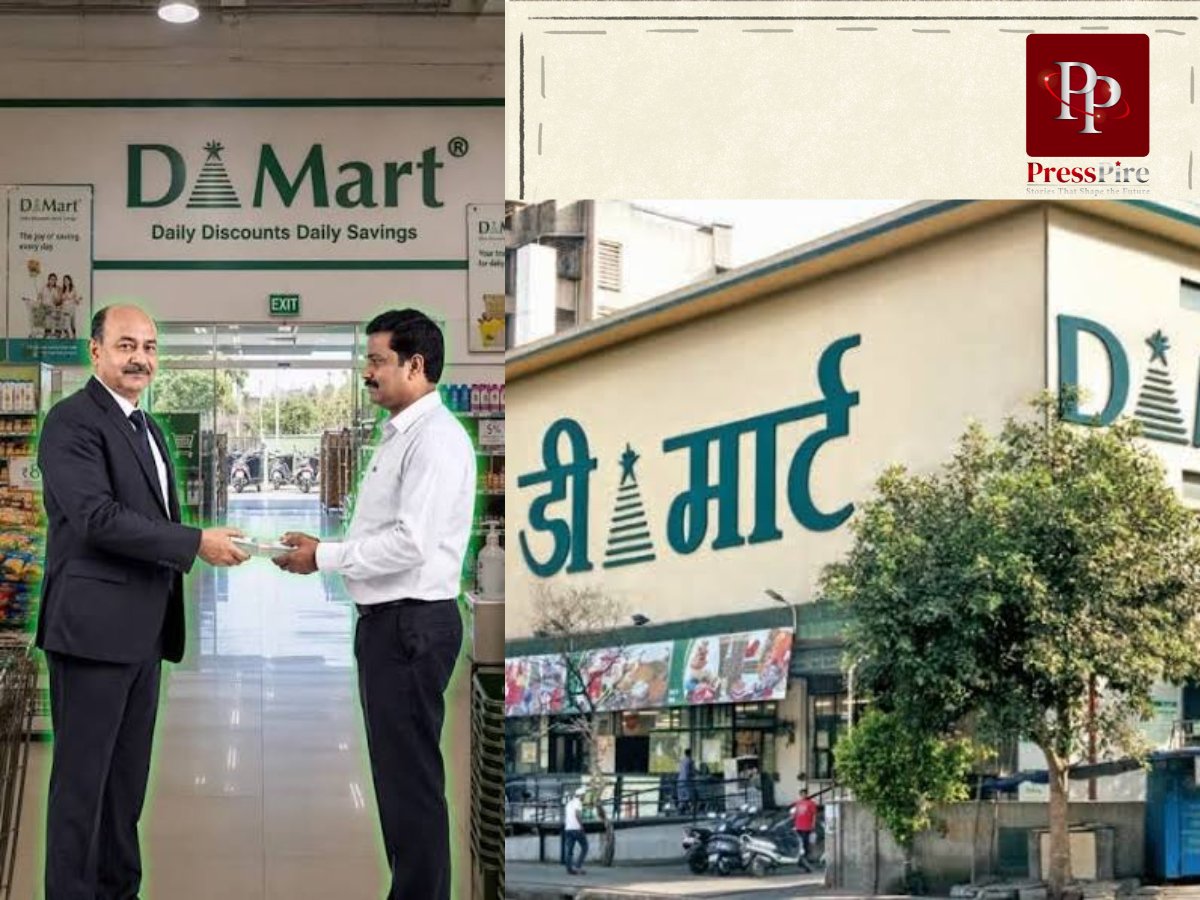
From One Store to a Retail Empire: The Remarkable Story of D-Mart
In a country where retail is often driven by discounts, advertisements, and aggressive expansion, Avenue Supermarts, better known through its retail chain D-Mart, built success through an entirely different formula: discipline, patience, and deep understanding of Indian consumers. What began as a single store in Mumbai has today become one of India’s most trusted and profitable retail brands, redefining the supermarket business without ever making noise about it.
The Beginning: A Simple Idea with Sharp Observation
The story of D-Mart started in 2002, when veteran investor and businessman Radhakishan Damani opened the first D-Mart store in Powai, Mumbai. At the time, India’s organised retail market was still developing. Local kirana stores dominated neighbourhood shopping, while large-format retail was considered a risky experiment.
Damani did not enter the business to create a glamorous retail brand. His vision was practical and rooted in consumer behaviour. He noticed that Indian families were extremely price-sensitive but also loyal to stores that consistently offered value. Instead of attracting customers through temporary offers, he focused on keeping prices permanently low. This idea became the foundation of D-Mart’s growth strategy.
Unlike many entrepreneurs who rush toward expansion, Damani preferred caution. He believed retail was not about opening the maximum number of stores but about ensuring every store remained profitable. That philosophy would later separate D-Mart from many retail chains that struggled with losses despite rapid growth.
The Product Strategy That Changed Grocery Retail
What truly made D-Mart successful was not just the business model, but its understanding of products and purchasing behaviour. D-Mart carefully studied what middle-class Indian families bought every month, groceries, cooking oil, detergents, packaged foods, kitchen essentials, personal care products, and daily household items. Instead of filling shelves with endless premium options, the company focused heavily on high-demand essentials that moved quickly. This approach allowed D-Mart to maintain faster inventory turnover compared to competitors.
The company also built strong relationships with suppliers and purchased products in bulk. Because of this, D-Mart received products at lower costs and passed a portion of those savings to customers. Over time, shoppers realised that buying monthly groceries from D-Mart genuinely reduced household expenses.
That trust became its biggest strength.
Another key part of D-Mart’s product strategy was localisation. The company understood that shopping habits differ across regions in India. Stores in Maharashtra stocked products different from stores in Gujarat or Karnataka. This regional product adaptation helped customers feel familiar with the brand while maintaining operational efficiency.
Unlike modern retail chains that invested heavily in décor and luxury experiences, D-Mart stores remained simple and functional. Wide aisles, bulk packaging, stack-based displays, and straightforward layouts helped reduce operational costs. Every decision inside the store was designed around one question: how to keep prices lower for customers.
Quiet Expansion, Powerful Results
As D-Mart’s popularity increased, the company slowly expanded across western and southern India before entering other regions. However, it never followed the aggressive “growth-at-any-cost” model common among startups and retail chains. One of the most unique aspects of D-Mart’s business was its preference for owning store properties instead of renting them. While this required higher upfront investment, it protected the company from rising rental costs in the long run and improved profitability. This patient approach produced extraordinary financial stability.
By the time D-Mart launched its Initial Public Offering (IPO) in 2017, investors had already recognised the strength of its business fundamentals. The IPO became one of India’s most successful stock market debuts, and Avenue Supermarts quickly emerged as one of the country’s most valuable retail companies. Today, D-Mart operates hundreds of stores across India and serves millions of customers every month. Despite growing competition from online grocery platforms and quick-commerce startups, the brand continues to attract shoppers because of one core promise: reliable value.
Why Customers Continue to Trust D-Mart
D-Mart’s success cannot be explained only through pricing. The company built emotional trust with middle-class households. For many families, a monthly D-Mart visit became a routine activity associated with savings and smart budgeting. Customers often purchased goods in bulk because they believed prices would remain lower than nearby alternatives.
The company also maintained consistency. Whether in Mumbai, Pune, Hyderabad, or Ahmedabad, shoppers experienced similar pricing discipline and product availability. That consistency strengthened customer loyalty over time.
Another reason behind D-Mart’s success is operational efficiency. The company avoided excessive advertising expenses and relied heavily on word-of-mouth growth. While competitors spent aggressively on branding campaigns, D-Mart focused on supply chains, inventory management, and vendor relationships. In many ways, D-Mart succeeded by mastering fundamentals rather than chasing trends.
The Digital Challenge and the Road Ahead
The future, however, presents new challenges. India’s retail market is changing rapidly with the rise of e-commerce, quick delivery apps, and digital-first grocery platforms. Consumers increasingly expect home delivery, app-based ordering, and faster shopping experiences. Recognising this shift, D-Mart introduced D-Mart Ready, its online grocery platform, in selected cities. While the company entered digital retail later than competitors, it has approached online expansion with the same caution and operational discipline that shaped its offline success.
Industry experts believe D-Mart’s biggest advantage remains its supply-chain efficiency and deep understanding of value-conscious consumers. Even in the digital age, affordability continues to influence Indian shopping decisions.
The company’s future growth will likely depend on balancing physical retail strength with smarter digital integration.
A Retail Story Built on Patience
D-Mart’s journey stands apart in India’s startup and business landscape because it was never driven by hype. There were no dramatic marketing campaigns, celebrity endorsements, or overnight expansion stories. Instead, its rise came from understanding ordinary consumers better than anyone else.
From one modest store in Powai to becoming one of India’s most respected retail giants, D-Mart proved that sustainable growth often comes from consistency, operational discipline, and customer trust. In an era obsessed with speed, D-Mart built an empire through patience and that may ultimately remain its greatest competitive advantage.