
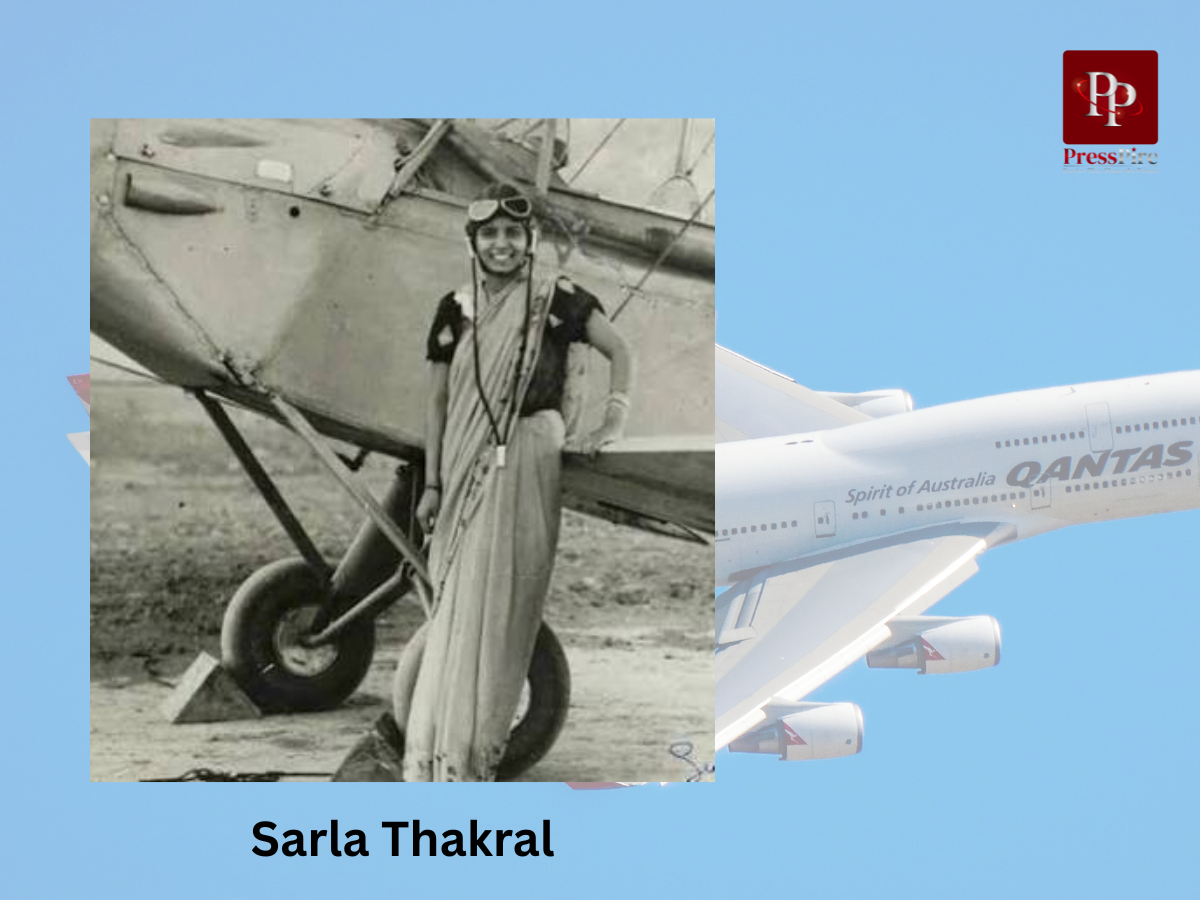
Sarla Thakral: The Woman Who Refused to Stay Grounded
A Dream That Took Flight Before India Did
Long before women in India were encouraged to dream beyond traditional roles, Sarla Thakral dared to look at the sky and believe it belonged to her too. At just 21 years old, she became the first Indian woman to fly an aircraft in 1936, a milestone that was not only historic but revolutionary for a country still under British rule.
Her story is not merely about aviation. It is about courage, reinvention, resilience, and the power of quietly breaking barriers without demanding applause. Sarla Thakral’s leadership did not emerge from positions of authority or political influence. Instead, it came from her willingness to challenge social norms at a time when women were expected to remain confined within domestic spaces. Even today, decades later, her journey continues to inspire women to rise above limitations imposed by society.
The Early Years: Courage Rooted in Curiosity
Born in 1914 into a conservative Punjabi family in Delhi, Sarla grew up during an era when women’s education itself was considered unnecessary in many households. However, destiny shifted when she married P.D. Sharma, who came from a progressive family deeply involved in aviation.
Her husband and father-in-law encouraged her to learn flying — an extraordinary decision in pre-independence India. At a time when most women had never stepped into a cockpit, Sarla enrolled in aviation training at the Lahore Flying Club.
Wearing a saree and carrying determination stronger than fear, she completed her flying hours and earned her “A” license after flying solo in a Gypsy Moth aircraft. Newspapers across India celebrated the achievement of the young woman pilot who challenged stereotypes with grace rather than rebellion. But her leadership began not with fame, but with the courage to attempt what no Indian woman before her had attempted.
Breaking the Sky Barrier
Sarla Thakral’s achievement carried a deeper meaning than personal success. In the 1930s, aviation represented freedom, intelligence, and modernity. By entering that world, she sent a powerful message to Indian women: capability is not defined by gender.
She trained further to earn a commercial pilot license and had already logged over 1,000 flying hours, a remarkable feat for that era. Yet, what made her truly impactful was not only her skill but the symbolism attached to her success.
At a time when Indian women were rarely visible in public professions, Sarla became proof that women could excel in highly technical and demanding fields. She represented confidence without arrogance and ambition without abandoning cultural identity. Her leadership style was subtle but transformative. She did not lead through speeches. She led through action.
When Tragedy Forced Her to Reinvent Herself
Life, however, tested her strength in unimaginable ways. Her husband died in an air crash when she was still very young. The tragedy abruptly changed the course of her aviation career.
Soon after, World War II led to the suspension of civilian pilot training, making it impossible for her to continue flying professionally. For many people, such setbacks would have ended their aspirations permanently.
But Sarla Thakral refused to let adversity define her future. Instead of surrendering to grief, she reinvented herself. She moved into the world of art, textile design, and business. She became a successful entrepreneur and skilled designer, building a respected career in Delhi’s creative circles. This phase of her life revealed another dimension of her leadership, resilience. True leaders are not those who never fail; they are those who find purpose even after losing everything they once built.
The Quiet Power of Influence
Unlike many public figures, Sarla Thakral did not spend her life seeking recognition. Yet her influence traveled across generations. She became an icon for women in aviation long before diversity and inclusion became popular conversations. Every Indian woman pilot who entered a cockpit after her walked through a door Sarla had opened decades earlier.
Her story also reshaped perceptions within Indian society. She demonstrated that women could balance personal tragedy, professional ambition, and societal expectations without losing dignity or determination.
Importantly, her impact was not limited to aviation. She inspired women to believe that reinvention is possible at any stage of life. Whether in careers, education, or entrepreneurship, Sarla’s life showed that setbacks do not erase capability. That lesson remains deeply relevant even today.
Why Sarla Thakral Still Matters
Modern India celebrates women achievers in science, sports, politics, and business. But pioneers like Sarla Thakral laid the emotional and cultural foundation for that progress long before opportunities became accessible.
Her success mattered because she challenged invisible barriers. She entered a profession where women were almost absent and succeeded not through privilege alone, but through discipline and courage.
More importantly, she humanized ambition for Indian women. She proved that dreaming big did not require abandoning femininity, family values, or cultural identity.
In today’s world, where leadership is often associated with power and visibility, Sarla’s life offers a different perspective. Real leadership sometimes begins quietly, with one person deciding not to accept the limits society has created.
Legacy Written Across the Indian Sky
Sarla Thakral passed away in 2008, but her legacy continues to soar. She remains one of the most important early figures in Indian aviation history and a symbol of fearless womanhood.
Her story is not just about becoming the first Indian woman pilot. It is about becoming the first woman to show countless others that impossible dreams can become reality. She did not simply fly an aircraft. She lifted the imagination of an entire generation.