
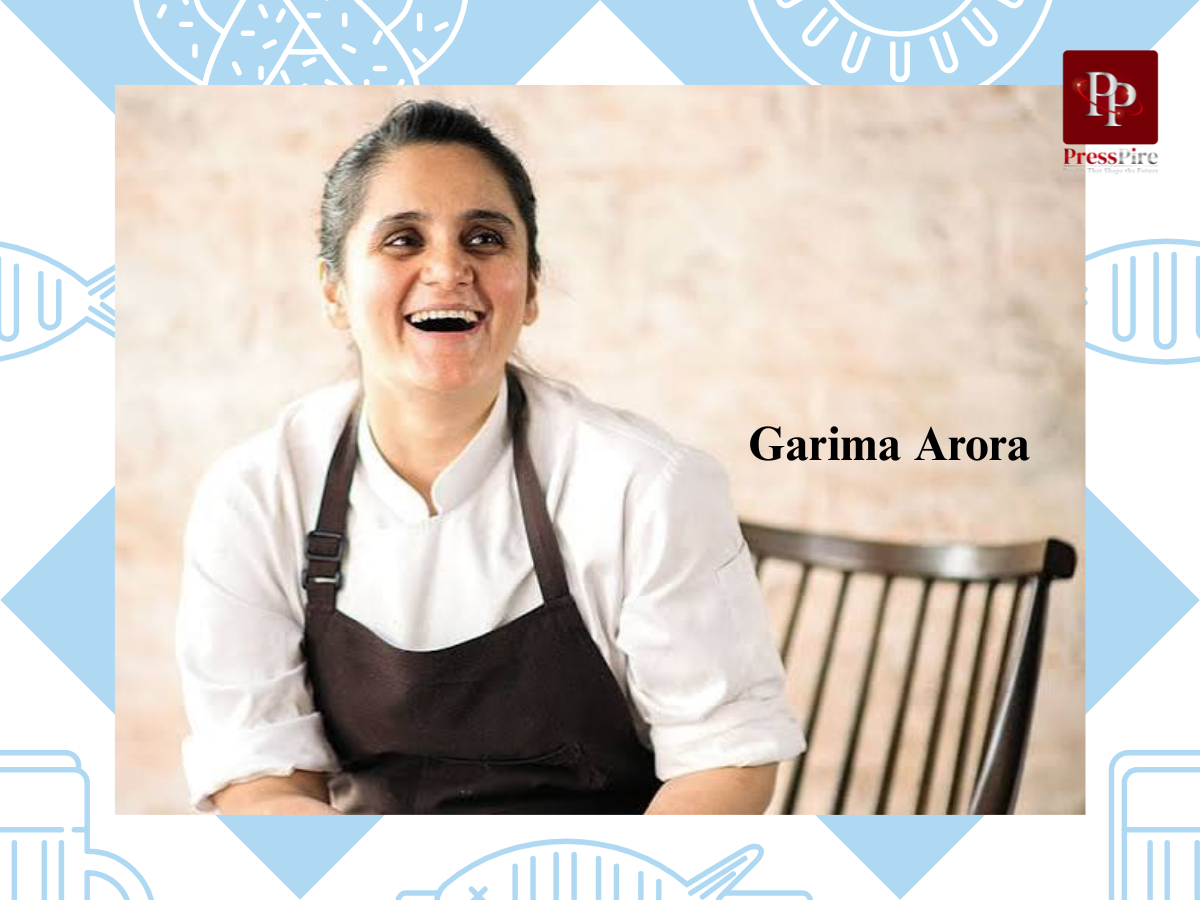
Garima Arora: The Woman Who Redefined India’s Culinary Identity on the Global Stage
From Mumbai Dreams to Michelin Glory
Long before the world recognised her as India’s first female chef to earn a Michelin star, Garima Arora was simply a young girl in Mumbai fascinated by food, flavours, and stories. Raised in a Punjabi household where meals were celebrated as moments of connection, she grew up watching her father experiment with recipes inspired by his travels. Those early kitchen memories quietly planted the seeds of a future that would eventually transform India’s global culinary narrative.
Interestingly, Arora did not begin her career in a professional kitchen. She studied journalism and briefly worked as a journalist before realising that her true calling lay elsewhere. While many spend years ignoring their inner instincts, Garima chose courage over comfort. Leaving behind a stable career, she moved to Paris to study at the prestigious Le Cordon Bleu culinary school, a decision that changed her life forever.
At a time when professional kitchens across the world were still heavily male-dominated, Arora entered the culinary world with determination, discipline, and a willingness to start from scratch.
Learning in the World’s Toughest Kitchens
Garima Arora’s journey was never built overnight. After culinary school, she trained under some of the biggest names in global gastronomy, including Gordon Ramsay, René Redzepi of Noma, and Indian culinary icon Gaggan Anand.
Working in these demanding kitchens taught her more than technique. It taught her resilience. Long hours, physical exhaustion, relentless pressure, and constant perfection became part of her daily routine. Yet, instead of trying to imitate Western culinary traditions, Arora slowly began discovering the immense depth of Indian food.
That realisation became the turning point of her leadership story. She understood that Indian cuisine had often been misunderstood globally, reduced to stereotypes and simplified flavours. Arora wanted to change that perception. She wanted the world to see Indian food not merely as comfort cuisine, but as a sophisticated culinary art rooted in history, science, and culture.
Gaa: A Restaurant That Became a Movement
In 2017, Garima Arora opened her restaurant, Gaa, in Bangkok. The name itself means “crow” in Hindi, a bird often seen as ordinary, yet deeply intelligent and adaptable. Much like its name, Gaa challenged expectations.
The restaurant combined traditional Indian cooking philosophies with Thai ingredients and modern techniques. Instead of serving familiar restaurant-style Indian dishes, Arora introduced diners to forgotten regional ingredients, ancient preservation methods, and layered storytelling through food. Every dish at Gaa carried identity, memory, and research. The culinary world quickly took notice.
In 2018, Garima Arora became the first Indian woman chef to receive a Michelin star. A few years later, Gaa earned a second Michelin star, making her the first Indian woman to achieve that milestone. However, what made her success truly remarkable was not just the award itself, it was what the award represented. Her victory became symbolic for countless women across industries who were trying to enter spaces traditionally dominated by men.
Leadership Beyond the Kitchen
What separates Garima Arora from many successful chefs is her larger purpose. She never treated success as a personal achievement alone. Instead, she used her platform to create conversations around Indian culinary heritage, sustainability, and representation.
One of her most impactful initiatives was Food Forward India, a project aimed at documenting, preserving, and reimagining Indian cuisine for future generations. Through this initiative, she encouraged chefs, researchers, and food thinkers to view Indian food with seriousness and academic depth.
This was leadership in its truest form not simply building a successful brand, but creating a movement bigger than oneself. Arora consistently highlighted how Indian cuisine had influenced food cultures across Asia for centuries. She believed India possessed one of the richest culinary histories in the world, yet lacked structured documentation and global positioning. Her mission became clear: to give Indian food the respect and recognition it deserved internationally.
Breaking Stereotypes with Quiet Strength
Garima Arora’s story is also deeply inspiring because of the way she leads. Unlike loud celebrity personalities often associated with fine dining, her leadership style is calm, thoughtful, and deeply disciplined.
She built credibility through consistency rather than spectacle. As a woman leading high-performance kitchens, balancing entrepreneurship, creativity, and motherhood, she became a modern symbol of perseverance. Her journey showed that leadership does not always need aggression; sometimes, it is built through clarity, patience, and vision.
Even while appearing as a judge on MasterChef India and gaining mainstream popularity, Arora continued focusing on mentorship and innovation rather than fame.
Why Garima Arora’s Impact Matters
Garima Arora’s impact goes far beyond Michelin stars or global recognition. She changed the way Indian cuisine is viewed internationally. More importantly, she inspired a new generation of Indian women to dream fearlessly in unconventional careers.
Her journey proves that success is not only about talent. It is about conviction, the willingness to walk away from certainty, embrace discomfort, and build something meaningful from the ground up. Today, Garima Arora stands not just as a celebrated chef, but as a cultural ambassador for India. Through food, leadership, and purpose-driven innovation, she has rewritten the possibilities for Indian gastronomy on the world stage.
And perhaps that is her greatest achievement of all, not simply serving extraordinary food, but creating a lasting legacy that continues to inspire far beyond the kitchen.