
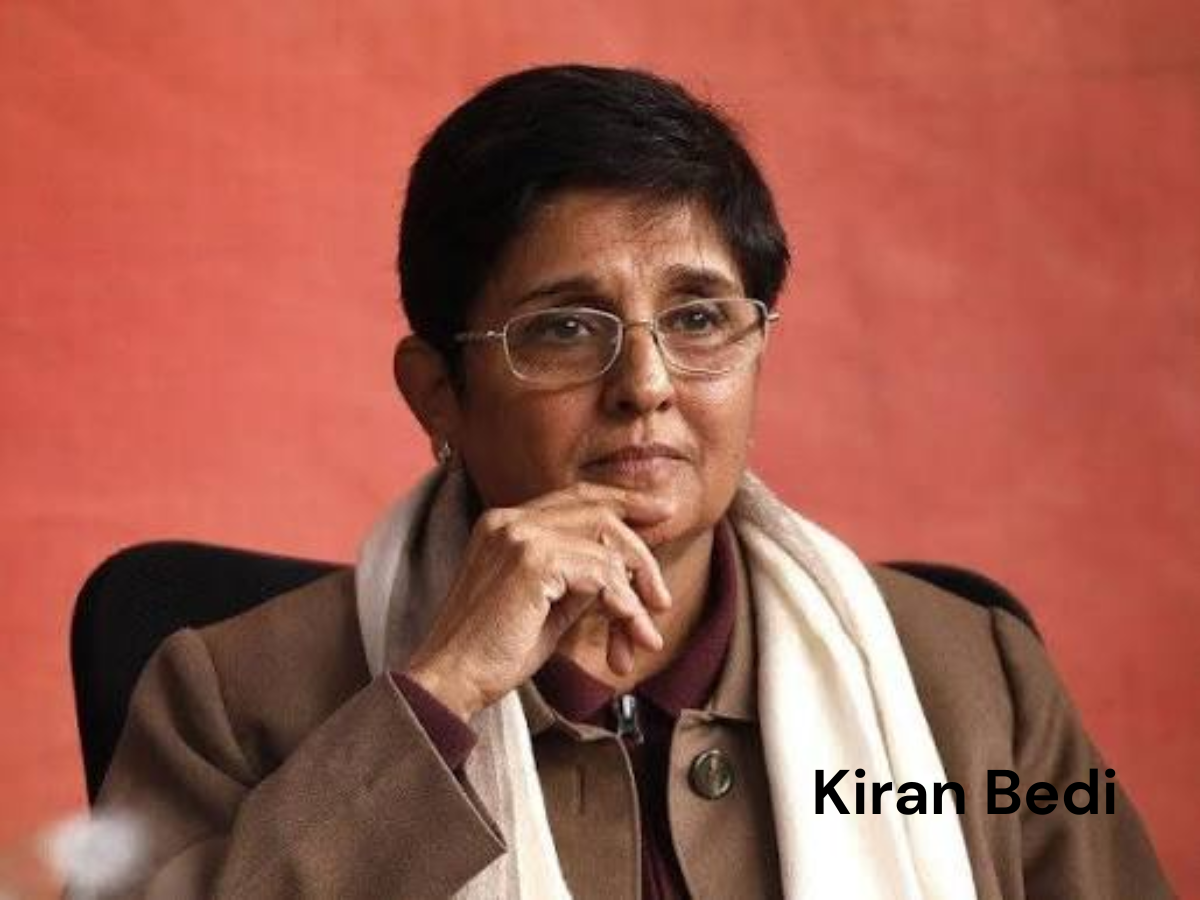
Kiran Bedi: The Woman Who Redefined Leadership with Courage and Compassion
The Girl Who Refused to Accept Limits
Long before she became one of India’s most respected officers and reformers, Kiran Bedi was simply a young girl growing up in Amritsar with big dreams and an even bigger determination. Born in 1949 into a progressive Punjabi family, she was raised in an environment where education and discipline were valued deeply. At a time when many families still believed girls should remain within traditional boundaries, her parents encouraged her to study, play sports, and think independently.
This early support shaped her fearless personality. Kiran Bedi was not only academically bright but also a national-level tennis player. The sport taught her discipline, focus, and resilience qualities that would later define her leadership style. While society often expected women to follow predictable paths, she was already preparing to challenge the system.
Her life changed forever in 1972 when she became the first woman to join the Indian Police Service (IPS). It was not just a personal achievement; it was a historic moment for India. In a profession dominated entirely by men, her entry symbolized the breaking of an invisible wall.
Walking into a Man’s World
Joining the police force was not easy for Kiran Bedi. She entered a system where many doubted whether a woman could handle authority, discipline, and public pressure. Instead of trying to fit in quietly, she chose to prove herself through action.
During her early postings, she became known for her strict discipline and fearless attitude. She believed that rules should apply equally to everyone, regardless of status or power. One of the most talked-about incidents from her career happened in Delhi when she ordered the towing away of a wrongly parked vehicle belonging to a powerful political figure connected to the Prime Minister’s Office. The media soon gave her the nickname “Crane Bedi.”
While the incident appeared small, it sent a strong message to the country, that the law should not bend before influence. This courage made her admired by common citizens, though it also brought criticism and resistance from powerful circles.
Kiran Bedi’s leadership was different because it was rooted in integrity. She did not seek popularity; she focused on fairness and accountability. That is what made people trust her.
The Prison That Became a Place of Reform
The most defining chapter of Kiran Bedi’s career came when she was appointed Inspector General of Tihar Jail in Delhi in 1993. At the time, Tihar was infamous for violence, corruption, overcrowding, and inhuman conditions. Most people saw prisons only as places for punishment. Kiran Bedi saw them as places where broken lives could be rebuilt.
Instead of using fear as a tool of control, she introduced compassion, education, and reform. She brought meditation programs, vocational training, literacy classes, and counseling sessions into the prison system. She encouraged prisoners to learn skills and reconnect with their humanity.
Her approach shocked many people. Critics believed criminals did not deserve kindness. But Kiran Bedi believed leadership was not about controlling people through fear—it was about creating an environment where transformation became possible.
The results were remarkable. Conditions inside Tihar improved significantly, violence reduced, and prisoners began participating actively in educational and rehabilitation activities. Her reforms attracted international attention and earned her the prestigious Ramon Magsaysay Award, often called Asia’s Nobel Prize.
What made her impact extraordinary was not merely administrative success. She changed the way India thought about prisons and rehabilitation. She proved that leadership can be both strong and compassionate at the same time.
Beyond Uniform: A Mission for Social Change
Even after facing professional challenges and political resistance during her service, Kiran Bedi never stopped working for society. After retiring from the police force, she focused on social activism, education, anti-drug campaigns, and prison reform through organizations such as Navjyoti India Foundation and India Vision Foundation.
She also became a strong public voice on issues like corruption, governance, women’s empowerment, and accountability. During the anti-corruption movement led by social activist Anna Hazare in 2011, she emerged as one of the prominent faces demanding transparency in public life.
Her leadership extended beyond government positions because it was driven by purpose rather than authority. Whether speaking to students, reforming prisons, or advocating for cleaner governance, she consistently encouraged citizens to take responsibility for society.
In 2016, she was appointed Lieutenant Governor of Puducherry, where she once again became known for her hands-on administrative approach and direct engagement with people. Though her tenure saw political disagreements, it reinforced her image as a leader unafraid to challenge conventional systems.
Why Kiran Bedi’s Leadership Created Lasting Impact
Kiran Bedi’s impact lies not only in her achievements but in the values she represented. She entered spaces where women were rarely seen and proved that leadership has nothing to do with gender. Her courage inspired countless women across India to pursue careers in public service, law enforcement, and administration.
What truly distinguishes her leadership is her ability to combine discipline with empathy. Many leaders enforce rules; few attempt to transform lives. Kiran Bedi understood that real leadership is not about power alone, it is about creating meaningful change.
Her story continues to inspire because it reflects persistence against resistance. She faced criticism, opposition, and institutional barriers throughout her career, yet she remained committed to her principles. In a society often influenced by hierarchy and influence, she stood for honesty and accountability.
Kiran Bedi’s journey is ultimately the story of a woman who refused to accept limitations imposed by society. Through courage, reform, and unwavering determination, she transformed not only institutions but also public thinking. Her legacy reminds us that impactful leadership begins when one person dares to challenge the ordinary and chooses service over comfort.