
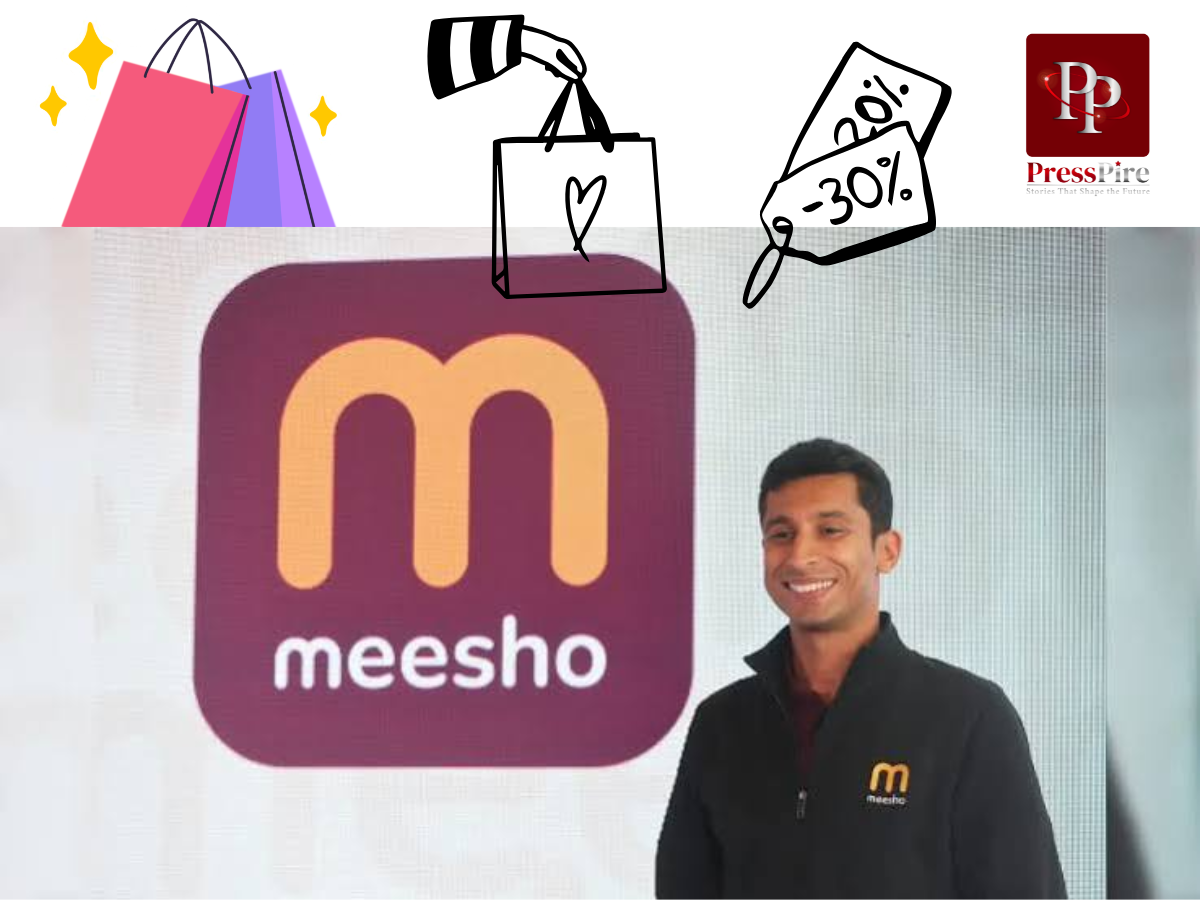
Meesho: The Startup That Rewrote India’s E-Commerce Story
From a Small Idea to a National Movement
In the crowded world of Indian startups, few companies have managed to reshape consumer behavior as dramatically as Meesho. What began as a modest attempt to help small businesses sell online eventually evolved into one of India’s largest social commerce platforms. But Meesho’s real achievement lies not just in valuations or downloads it lies in how it unlocked entrepreneurship for millions of ordinary Indians, especially women from smaller towns.
At a time when India’s e-commerce market was dominated by large marketplaces serving urban customers, Meesho identified a gap that others ignored: millions of small sellers lacked the knowledge, resources, and infrastructure to build an online business. Instead of competing directly with established giants, Meesho created an entirely different model — one based on social networks, trust, and community-driven selling.
The Early Spark: Selling Through Social Media
The company was founded in 2015 by Vidit Aatrey and Sanjeev Barnwal, both graduates of the Indian Institute of Technology Delhi. Initially, the founders experimented with helping local fashion stores establish an online presence. However, during their early interactions with small merchants, they noticed something surprising: many sellers were already using platforms like WhatsApp and Facebook informally to reach customers. This observation became the foundation of Meesho’s business model.
Instead of forcing sellers to build websites or invest heavily in digital marketing, Meesho allowed individuals to become resellers using social media platforms they already understood. A homemaker in Jaipur, a college student in Pune, or a boutique owner in Surat could simply browse products on Meesho, share them through WhatsApp or Instagram, add their own margin, and earn profits without maintaining inventory. It was e-commerce simplified for Bharat.
The Product That Solved a Real Problem
Meesho’s biggest strength was not technology alone — it was product understanding. The platform addressed several barriers that prevented small Indian sellers from entering online commerce.
First, it removed the need for upfront investment. Traditional businesses required inventory, warehousing, and logistics management. Meesho allowed resellers to operate with almost zero capital. Sellers only needed a smartphone and internet access.
Second, the platform understood the psychology of trust in smaller Indian cities. Many consumers were hesitant to buy from unknown online stores. But when products were recommended by a friend, relative, or local reseller through WhatsApp groups, trust increased naturally. Meesho successfully blended social relationships with commerce.
Third, the company focused aggressively on affordability. Instead of premium products aimed at metro consumers, Meesho concentrated on value-driven categories such as fashion, home essentials, beauty products, and kitchen items. This positioning helped the platform expand rapidly across Tier-2 and Tier-3 cities where price sensitivity was high.
The company also simplified logistics and payments. Sellers did not need to negotiate with courier companies or manage complicated delivery systems. Meesho handled shipping, order tracking, returns, and customer support, allowing small entrepreneurs to focus purely on selling.
Cracking the Code of Bharat
While many startups targeted urban India, Meesho built its empire in smaller towns and semi-urban regions. This decision proved transformational.
The platform’s language, pricing, and user interface were designed for first-time internet users. It recognized that India’s next wave of digital consumers would not necessarily come from Delhi, Mumbai, or Bengaluru. They would emerge from cities like Indore, Nagpur, Patna, and Coimbatore.
As smartphone adoption and affordable mobile data exploded across India after the launch of Reliance Jio, Meesho’s growth accelerated rapidly. Millions of users who had never sold products online suddenly found an accessible pathway into digital commerce.
One of Meesho’s most significant contributions was enabling financial independence for women. Thousands of homemakers began earning supplemental income through reselling, often operating entirely from their homes. In many cases, Meesho became less of an app and more of an economic opportunity.
Investor Confidence and Rapid Expansion
As Meesho’s user base grew, investors quickly recognized its potential. The startup attracted backing from major global firms including SoftBank Group, Meta Platforms, and Prosus. The company expanded beyond social reselling into a broader e-commerce marketplace model. It onboarded manufacturers and direct suppliers while reducing commissions to attract more sellers. Meesho also introduced features aimed at improving discovery, customer retention, and logistics efficiency.
What made the growth particularly remarkable was its scale in non-metro India. Unlike many startups that struggled to monetize beyond urban markets, Meesho became deeply embedded in everyday shopping behavior across smaller cities.
Challenges Along the Way
Meesho’s journey was not entirely smooth. The company faced criticism around product quality, counterfeit items, and inconsistent seller experiences during periods of rapid expansion. Managing millions of small sellers while maintaining quality standards became a significant operational challenge.
Competition also intensified as larger e-commerce companies began focusing more aggressively on value commerce and regional markets. Yet Meesho retained a strong advantage through its deep understanding of social selling behavior and grassroots distribution network.
The startup’s ability to adapt became crucial. It invested heavily in improving logistics, customer experience, and supply-chain reliability while balancing growth with operational sustainability.
The Road Ahead: Can Meesho Define the Future of Indian Commerce?
Today, Meesho represents far more than a startup success story. It reflects a larger shift in Indian commerce, one where digital entrepreneurship is no longer limited to major cities or heavily funded businesses.
The future for Meesho will likely depend on how effectively it balances affordability with trust and quality. As India’s online shopping market matures, consumers will expect better products, faster deliveries, and more reliable experiences.
At the same time, Meesho is uniquely positioned to benefit from India’s next wave of internet users. Its strongest advantage remains its understanding of Bharat, the millions of consumers and entrepreneurs outside metropolitan India who are now entering the digital economy.
If the first chapter of Indian e-commerce belonged to urban marketplaces, Meesho’s story suggests the next chapter may belong to community-led commerce powered by small entrepreneurs. And that may ultimately become the company’s biggest legacy.