
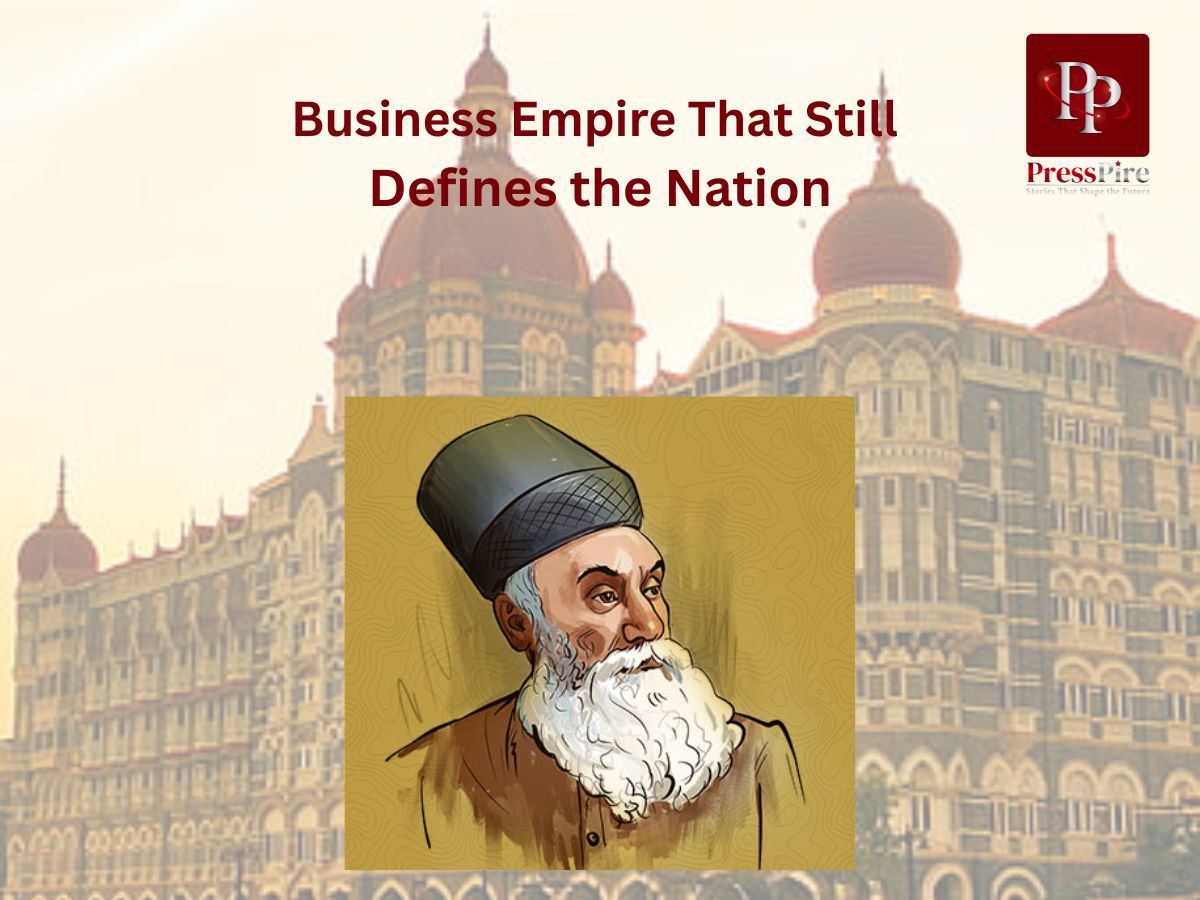
The Visionary Who Industrialized India: How Jamsetji Tata Laid the Foundation of a Business Empire That Still Defines the Nation
Early Life and Business Background
Jamsetji Tata envisioned building world-class Indian industries long before India emerged as a modern industrial economy.
Born in 1839 in Navsari, Gujarat, Jamsetji Nusserwanji Tata came from a Parsi business family involved in trading activities. He later moved to Bombay, now Mumbai, where he joined his father’s trading firm and gained exposure to global commerce during the early stages of industrial globalization. At the time, India was under British colonial rule, and the country’s economy depended heavily on imported industrial goods while domestic manufacturing remained underdeveloped.
The Vision for Industrial Self-Reliance
During the mid-19th century, Tata recognized that India needed strong domestic industries to reduce dependence on British imports and create long-term economic growth.
Unlike many businessmen of his era who focused primarily on trading, Tata believed India required industrial infrastructure, manufacturing capability, and scientific advancement to achieve economic independence. This long-term nation-building vision became the foundation of what would later evolve into Tata Group.
Building a Successful Textile Business
One of Jamsetji Tata’s earliest major ventures was in the textile industry.
In 1868, he founded a private trading company with relatively modest capital. Later, in 1877, he established the Central India Spinning, Weaving and Manufacturing Company in Nagpur.
The textile business became highly successful because Tata emphasized operational efficiency, modern machinery, and worker welfare. Unlike many industrialists of his time, he introduced progressive labor practices such as improved working conditions, pension systems, and accident compensation policies long before such measures became standard in Indian industry.
The Dream of an Indian Steel Industry
Although his textile ventures succeeded, Tata’s ambitions extended far beyond fabrics and manufacturing.
He identified three major priorities that he believed were essential for India’s industrial future:
- Steel production
- Hydroelectric power
- Scientific education
At the time, India relied heavily on imported steel despite rising demand from railways, infrastructure, and engineering projects.
Jamsetji Tata envisioned building a domestic steel industry capable of supporting India’s industrial development. Although he did not live to see the project completed, his vision eventually led to the establishment of Tata Steel in 1907 under the leadership of his successors. Tata Steel later became one of Asia’s largest steel producers and played a central role in India’s industrialization journey. The industrial city of Jamshedpur, named after Jamsetji Tata, emerged as one of India’s earliest planned industrial townships.
Advancing India’s Power Infrastructure
Jamsetji Tata also understood that industrial growth required reliable electricity infrastructure. He initiated plans for hydroelectric projects in western India to support industrial expansion and urban development. These early efforts eventually evolved into Tata Power, one of India’s oldest and largest energy companies. His focus on infrastructure development demonstrated his broader vision for long-term national progress rather than short-term commercial gain.
Championing Scientific Education and Research
Another defining aspect of Tata’s vision was his strong belief in scientific research and higher education. During his travels abroad, he studied leading universities and research institutions across Europe and North America. Inspired by these institutions, he proposed establishing a world-class scientific research center in India. This vision ultimately contributed to the creation of Indian Institute of Science in Bengaluru, now considered one of India’s premier scientific and research institutions. Jamsetji Tata pledged a substantial portion of his personal wealth toward this initiative, reflecting his belief that education and science were essential for national development.
The Taj Mahal Palace Hotel
One of Tata’s most iconic projects was the Taj Mahal Palace Hotel in Mumbai, which opened in 1903. According to widely documented historical accounts, Tata envisioned creating a luxury hotel that matched international standards and represented Indian excellence during colonial rule. Over time, the Taj Mahal Palace became one of India’s most recognized hospitality landmarks and a symbol of Indian enterprise and sophistication.
A Philosophy of Business and Social Responsibility
Jamsetji Tata believed that business success should contribute directly to national development rather than simply personal wealth accumulation.
His leadership philosophy combined industrial growth with social responsibility, employee welfare, and institution-building. This approach later became deeply embedded within the Tata Group’s organizational culture. Another defining feature of the Tata Group was its ownership structure. A significant portion of Tata Sons is controlled by philanthropic trusts.
This structure allows a large share of profits to support healthcare, education, rural development, scientific research, and social welfare initiatives across India.
Expansion of the Tata Empire
Over the decades, the Tata Group expanded into multiple sectors including steel, automobiles, information technology, aviation, hospitality, telecommunications, chemicals, retail, and consumer products.
Major companies such as Tata Motors, Tata Consultancy Services, Titan Company, and Tata Power became major contributors to India’s industrial and economic growth.
Successive leaders including J. R. D. Tata and Ratan Tata further strengthened the group’s global presence and diversified operations internationally.
Jamsetji Tata’s Lasting Legacy
Today, Tata Group operates in over 100 countries and generates billions in annual revenue across multiple industries. Yet the foundation of this vast business empire can still be traced back to Jamsetji Tata’s original vision of industrial self-reliance, scientific progress, ethical leadership, and nation-building. Jamsetji Tata’s entrepreneurial journey remains one of the most influential business stories in Indian history. His long-term thinking, institutional approach to business, and commitment to social impact helped shape not only one of the world’s largest business groups but also India’s industrial development itself.