The Myth Maker Who Redefined Leadership: The Remarkable Journey of Devdutt Pattanaik
From Medicine to Mythology: An Unlikely Beginning
Long before he became one of India’s most influential thought leaders, Devdutt Pattanaik was living a life far removed from the world of storytelling and leadership conversations. Born in Mumbai in 1970, he grew up in a conservative household where academics and stable careers were valued above all else. Like many middle-class Indian students of the 1980s, he followed the conventional path and pursued a degree in medicine.
But even during his years as a medical student, Pattanaik found himself deeply fascinated by mythology, culture, and human behaviour. While medicine explained the human body, myths explained the human mind. That distinction would eventually shape the course of his life.
After completing his medical education, he worked in the pharmaceutical industry for several years. By all practical standards, he had a successful corporate career. Yet, something remained incomplete. The rigid structures of corporate life could not satisfy his curiosity about ancient stories, symbols, and the philosophies hidden within Indian epics.
At a time when mythology was often dismissed as outdated or religiously rigid, Pattanaik saw it differently. He believed myths were cultural truths that shaped societies, businesses, and leadership styles. That belief became the foundation of his life’s work.
Betting on Stories Before the World Was Ready
Leaving behind a stable corporate career to pursue mythology full-time was not an easy decision. India, during the late 1990s and early 2000s, did not have a mainstream audience for mythological interpretation outside religious discourse. The idea of discussing leadership lessons through the Mahabharata or Ramayana in boardrooms sounded unconventional, even risky. Yet Pattanaik persisted.
He started writing books, conducting talks, and contributing columns that interpreted mythology through a modern lens. Instead of retelling ancient stories, he decoded them. He connected mythology with management, governance, emotions, and organisational culture. This approach slowly began attracting professionals, entrepreneurs, and business leaders who were searching for deeper insights into human behaviour.
His breakthrough came when corporate India realised that leadership was not just about strategy and numbers. It was also about empathy, ethics, decision-making, and understanding people. Pattanaik’s storytelling offered precisely that.
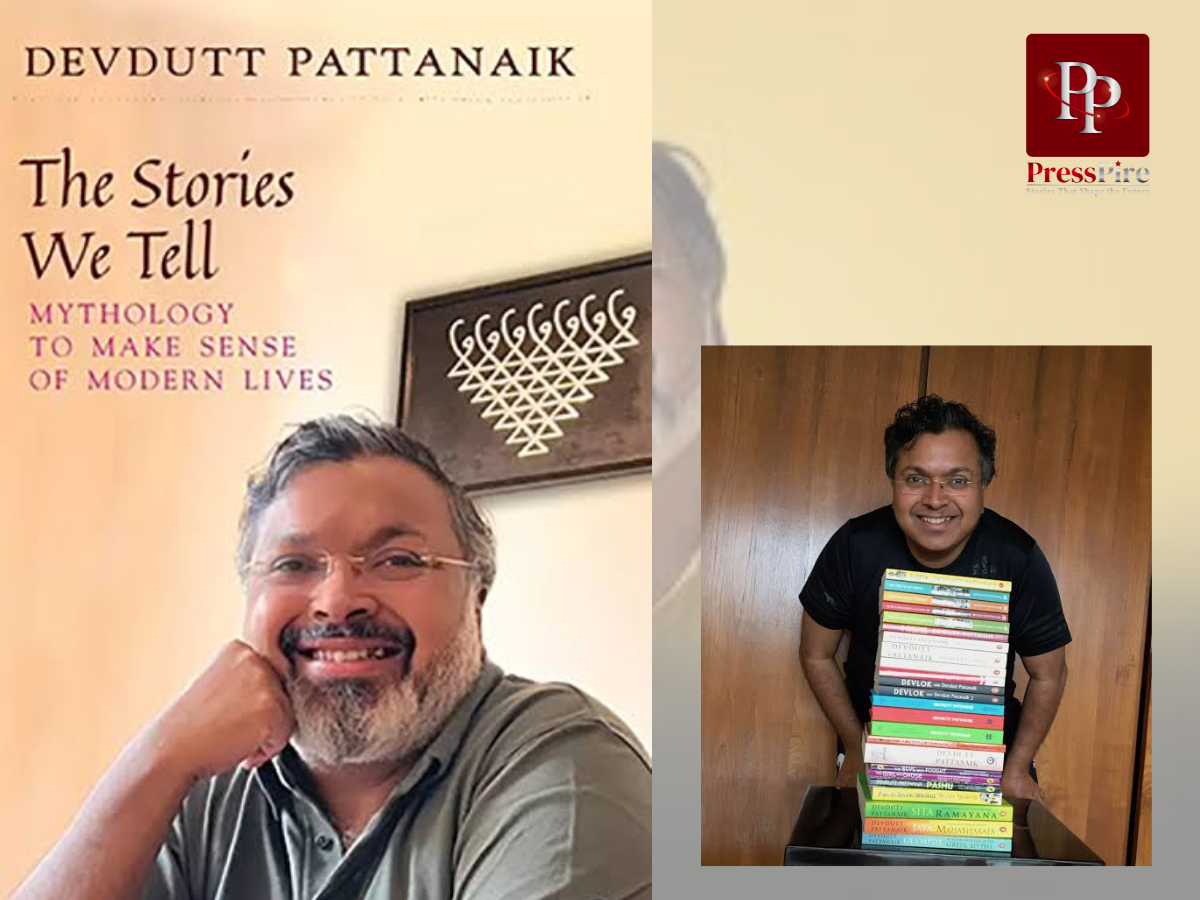
Over time, his books such as Jaya, Sita, My Gita, and Business Sutra transformed him into a household name. He was no longer just an author; he became a bridge between ancient wisdom and modern leadership.
The Rise of a Thought Leadership Brand
Unlike many motivational speakers who focused only on success formulas, Pattanaik built his identity around perspective. He challenged the Western idea that leadership was solely about competition and achievement. Instead, he introduced Indian philosophical concepts that emphasised balance, responsibility, and coexistence.
One of his most significant contributions was bringing mythology into corporate conversations without making it religious. This distinction mattered enormously in a diverse and modern workplace.
His sessions at leadership summits, multinational companies, and startup events gained popularity because they offered something different. He spoke about Krishna’s diplomacy, Ram’s responsibility, and the Pandavas’ moral dilemmas not as religious lessons but as reflections of human complexity.
That ability to simplify deep cultural concepts made him relatable across industries. As social media and digital platforms expanded, Pattanaik’s influence grew even further. Short video clips, podcasts, and leadership discussions introduced his ideas to younger audiences. Entrepreneurs, founders, and executives began referencing his work while discussing organisational culture and decision-making.
Without creating a traditional startup, Pattanaik effectively built a knowledge-driven intellectual enterprise around storytelling, consulting, writing, and public speaking.
Why His Ideas Connected With Modern India
The timing of Pattanaik’s rise also played a major role in his success. India’s startup ecosystem was rapidly evolving. Founders were building ambitious companies, but many struggled with burnout, leadership conflicts, and cultural disconnect within teams. Western management theories often felt transactional and distant from Indian realities.
Pattanaik filled that gap by offering culturally rooted leadership insights. He spoke about the importance of context over rigid rules. He argued that every leader operates within stories shaped by upbringing, society, and belief systems. This idea resonated strongly with Indian entrepreneurs trying to balance growth with values.
His work also became impactful because he encouraged introspection rather than blind ambition. In a world obsessed with hustle culture, Pattanaik reminded leaders that wisdom and emotional intelligence matter just as much as scale and valuation.
Perhaps his greatest strength has been his ability to remain accessible. Despite becoming a bestselling author and respected speaker, he communicates with clarity rather than intellectual arrogance. His storytelling style feels conversational, making even complex philosophies easy to understand.
More Than a Mythologist
Today, Devdutt Pattanaik stands as one of India’s most distinctive voices in leadership thought. He has authored dozens of books, delivered lectures across the world, and reshaped how mythology is viewed in professional spaces. But his journey is larger than personal success.
He proved that unconventional ideas can create extraordinary impact when pursued with conviction. At a time when few believed mythology could influence boardrooms or startups, Pattanaik built an entirely new category of thought leadership. His story is not about overnight success or disruptive technology. It is about intellectual courage, the courage to pursue an unusual passion, trust cultural wisdom, and communicate timeless ideas in a modern world. In doing so, Devdutt Pattanaik did more than build a career. He changed the way thousands of leaders think about ambition, power, and purpose.