House of Masaba: How a Bold Print Label Became One of India’s Most Recognisable Fashion Brands
In an industry where trends change overnight and designer labels often struggle to scale beyond couture, House of Masaba managed to build something rare, a fashion business with a distinct visual identity, strong cultural recall, and mass-market relevance. What started in 2009 as a young designer’s experiment with unconventional prints has today evolved into a multi-category lifestyle brand spanning apparel, beauty, jewellery, fragrances, and digital commerce.
The Beginning: When Indian Fashion Was Playing Safe
When House of Masaba entered the market, Indian fashion was dominated by traditional bridal couture, heavily embellished ethnic wear, and luxury labels that catered primarily to elite audiences. Contemporary Indian prints with humour, colour, and pop references were almost absent from mainstream designer fashion. This gap became the foundation of the brand’s identity.
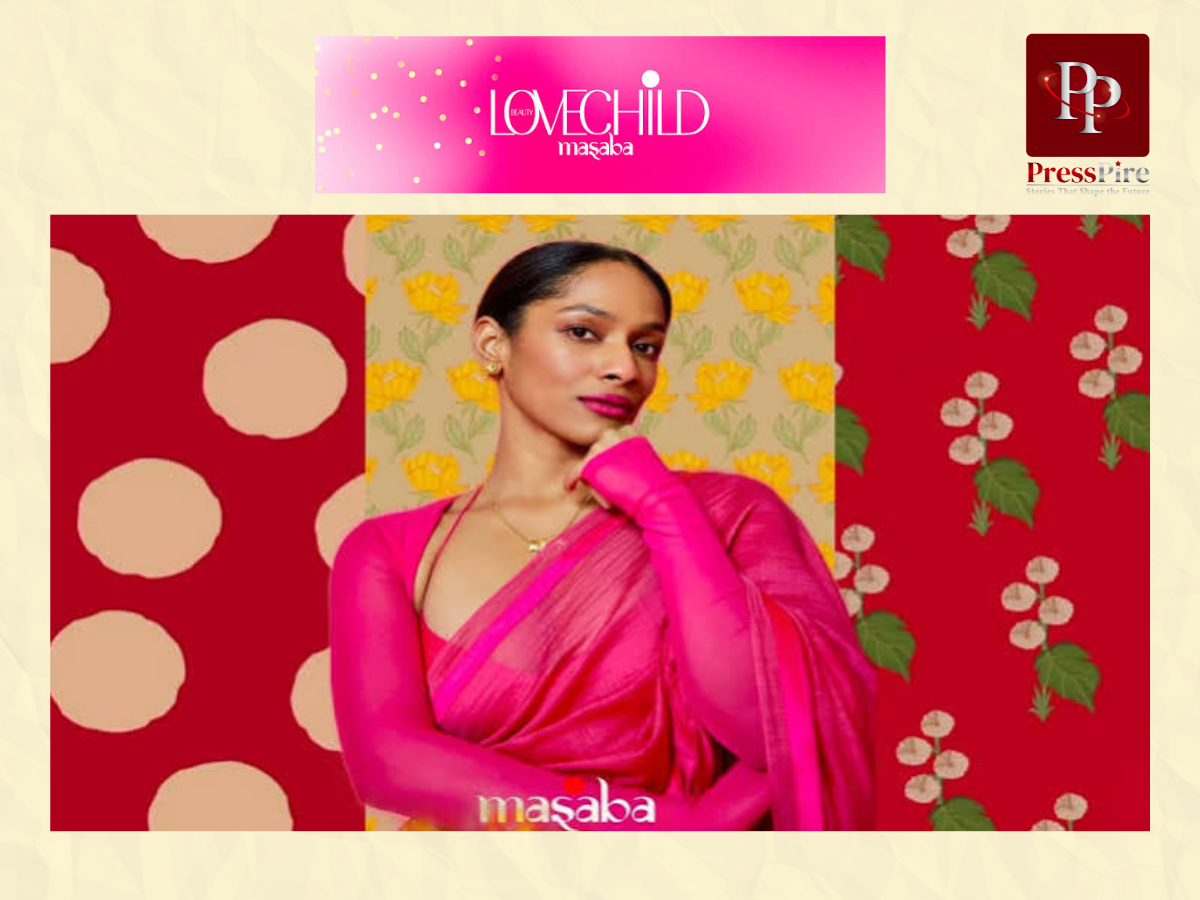
Masaba Gupta launched the label at just 19, but the story of the brand was never merely about a young founder. The real breakthrough came from the product philosophy itself; Indian silhouettes redesigned with fearless prints. Sarees featured motifs inspired by lipstick marks, cameras, palm trees, cows, and tribal art. Jackets were paired with lehengas. Neon colours entered ethnic wear at a time when bridal fashion still revolved around maroons and golds. The products looked unmistakably different. That visual language became the biggest asset of the brand. Customers could identify a House of Masaba outfit almost instantly, something few Indian labels had achieved at the time.
Prints That Became a Signature
Most fashion brands spend years trying to create recall. House of Masaba achieved it through prints. The label’s quirky motifs became conversation starters across fashion circles, Bollywood events, and social media. Instead of chasing European aesthetics, the brand leaned deeply into Indian culture while packaging it in a youthful, global format.
This approach widened its audience dramatically. Young professionals, celebrities, brides, and even first-time designer wear buyers found the brand approachable. The clothes did not feel intimidating like luxury couture, yet they carried enough individuality to stand apart from mass fashion.
The label effectively positioned itself between premium designer wear and accessible contemporary fashion, a difficult space that few Indian brands had successfully occupied.
Beyond Couture: Turning Fashion Into a Lifestyle Business
The biggest shift in the House of Masaba story came when the brand stopped behaving like a designer label and started operating like a consumer brand.
Instead of limiting itself to runway collections, the company expanded aggressively into categories that could scale faster than couture. Ready-to-wear collections, jewellery, accessories, beauty products, and fragrances became central to its growth strategy.
Its collaboration with Nykaa marked a major milestone in this transformation. The brand first entered beauty through lipstick and nail polish collaborations before launching perfumes under the Masaba label. The move was strategically important.
Fashion labels globally have long understood that beauty products create stronger repeat purchases than apparel. House of Masaba adopted this model early in India’s growing lifestyle market. The packaging retained the brand’s signature playful aesthetic, ensuring that even non-fashion customers connected instantly with the visual identity.
The fragrance launch, “Burn Babe,” further reinforced the idea that House of Masaba was no longer just selling clothing, it was selling a lifestyle experience.
Scaling Up: Investors, Stores, and National Expansion
By 2019, the company had completed a decade in business and was ready for institutional growth. House of Masaba raised nearly $1 million in funding led by Flipkart co-founder Binny Bansal and other investors.
The investment helped the brand strengthen infrastructure, expand distribution, and grow retail presence across Indian cities. At the time, the label already operated stores in cities including Mumbai, Delhi, Bengaluru, Hyderabad, Pune, and Kolkata.
Unlike many designer brands dependent only on flagship boutiques, House of Masaba embraced omnichannel retail early. E-commerce, social media-driven discovery, celebrity placements, and offline retail worked together to increase visibility.
This blend of digital storytelling and product accessibility proved highly effective, especially among younger consumers.
The Aditya Birla Backing That Changed the Game
A defining chapter arrived in 2022 when Aditya Birla Fashion and Retail acquired a majority stake in House of Masaba.
The acquisition gave the brand access to large-scale manufacturing, supply chains, retail expertise, and national expansion opportunities. More importantly, it validated House of Masaba as a scalable business rather than a personality-driven designer label.
After the acquisition, the company accelerated its focus on beauty and younger consumers through the launch of LoveChild, its beauty brand extension. The company also identified tier-2 and tier-3 cities as major growth drivers, reflecting changing consumption patterns in India’s fashion and beauty market.
This strategy aligns with broader industry trends where aspirational consumers outside metros are increasingly driving premium lifestyle purchases.
The Future: From Fashion Label to Cultural Brand
Today, House of Masaba sits at an interesting intersection of fashion, beauty, entertainment, and digital culture.
Its success has less to do with couture craftsmanship alone and more to do with brand memory. The label built a recognisable visual identity in a crowded market and consistently extended that identity across categories.
The future growth of the brand will likely depend on three factors, deeper penetration into affordable luxury, stronger beauty expansion, and international positioning among global Indian consumers.
India’s lifestyle market is evolving rapidly, and consumers increasingly prefer brands with personality and storytelling. House of Masaba already possesses both.
What began as a print-focused fashion experiment has now become a modern Indian lifestyle business, one that proved bold design, when paired with smart brand building, can grow far beyond the runway.