
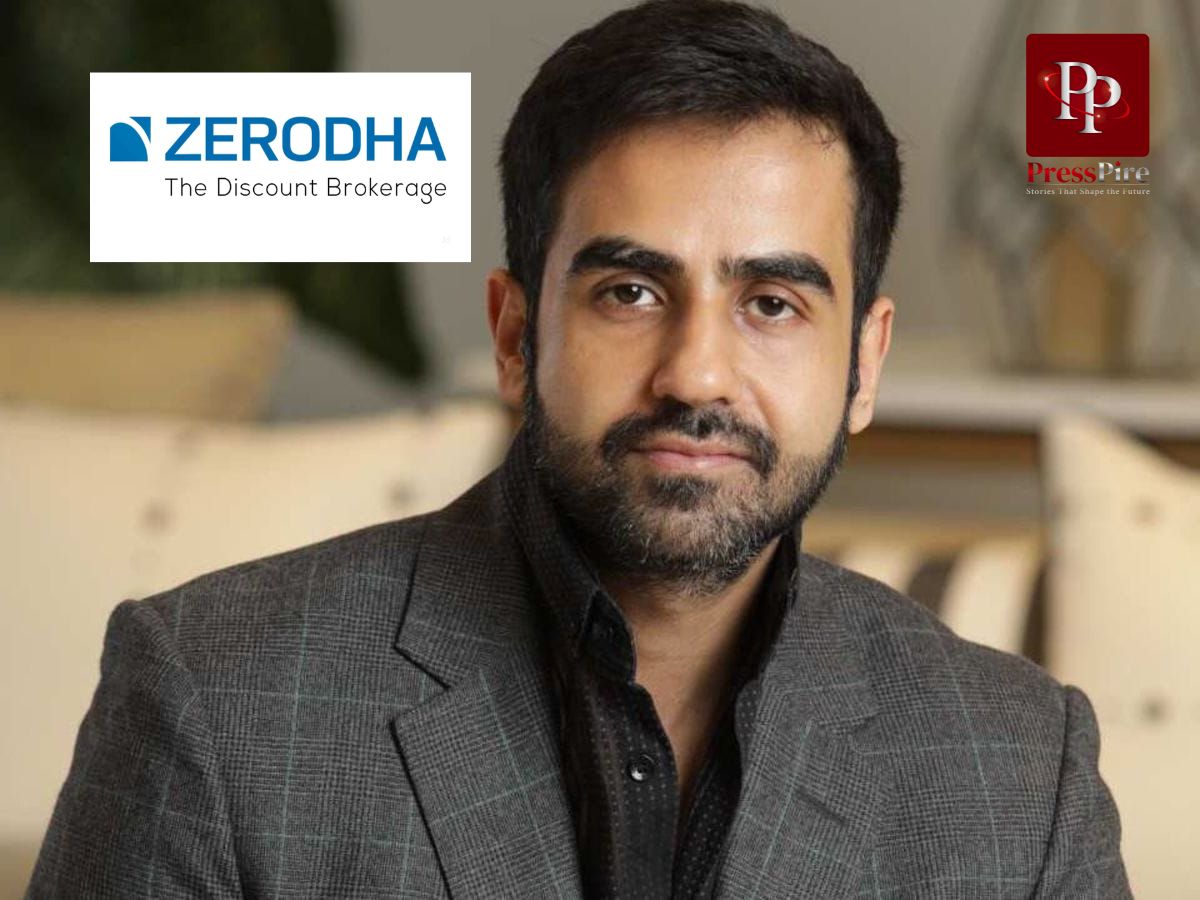
The Trader Who Disrupted Dalal Street: How Nithin Kamath Built Zerodha Into India’s Largest Brokerage without an external funding
Introduction: Changing India’s Brokerage Industry
At a time when India’s fintech sector was dominated by traditional brokerage firms charging high commissions, Nithin Kamath introduced a low-cost trading platform that transformed retail investing in the country. Zerodha, founded in 2010 by Nithin Kamath and Nikhil Kamath, became India’s largest stock brokerage without raising venture capital or following aggressive startup expansion models.
Early Interest in the Stock Market
Nithin Kamath’s journey into financial markets began long before Zerodha was launched. He started trading in the stock market during his teenage years while simultaneously working at a call center to support himself financially.
Unlike many founders from elite financial backgrounds, Kamath built his understanding of trading through direct market participation and years of personal experience.
Identifying Problems in Traditional Brokerage Firms
After nearly a decade as a trader, Kamath identified a major inefficiency in India’s brokerage ecosystem. Retail investors were paying high brokerage fees while receiving outdated trading experiences.
Most traditional firms depended heavily on offline operations and lacked user-friendly digital platforms.
The Birth of Zerodha in 2010
In 2010, Nithin and Nikhil Kamath launched Zerodha with the goal of removing “barriers” from stock market participation.
The name “Zerodha” itself was derived from combining “zero” and the Sanskrit word “rodha,” meaning barrier. The company introduced a discount brokerage model that significantly reduced trading costs for retail investors.
Perfect Timing in India’s Digital Investing Boom
One of Zerodha’s biggest advantages was timing. India’s retail investing ecosystem was gradually shifting online, smartphone adoption was increasing, and younger investors were becoming more interested in equities and mutual funds.
Zerodha capitalized on this shift by offering a technology-first trading experience.
Growing Without Venture Capital
Unlike many fintech startups that relied on heavy advertising and customer acquisition spending, Zerodha focused primarily on product development and word-of-mouth growth.
Nithin Kamath repeatedly stated in interviews that the company deliberately avoided external funding to maintain operational independence.
Why Staying Bootstrapped Became a Competitive Advantage
The absence of investor pressure allowed Zerodha to scale gradually while remaining profitable.
Kamath later explained that being bootstrapped helped the company focus on customer trust instead of chasing unrealistic growth targets. This approach became a defining feature of Zerodha’s brand identity.
Building a Technology-First Brokerage Platform
Technology became central to Zerodha’s expansion strategy. The company launched:
- Kite — a modern trading platform designed for speed and simplicity
- Coin — a platform for direct mutual fund investments
- Varsity — an educational platform focused on financial literacy
These products helped Zerodha create a seamless investing ecosystem for retail users.
Varsity and the Focus on Financial Education
Varsity by Zerodha became particularly influential because it addressed a major gap in India’s investing ecosystem — lack of accessible financial education.
Instead of relying solely on acquisition campaigns, Zerodha invested heavily in educating users about:
- Trading
- Investing
- Risk management
- Market fundamentals
This educational approach strengthened long-term customer trust.
Operational Discipline and Sustainable Growth
Another critical aspect of Zerodha’s rise was operational discipline. The company avoided excessive diversification during its early years and concentrated on core brokerage services.
While many startups focused on rapid scaling across multiple verticals, Zerodha strengthened profitability before expanding into adjacent financial products.
Benefiting from India’s Digital Transformation
The company also benefited from India’s broader digital transformation. Several factors accelerated Zerodha’s growth:
- Rising internet penetration
- Smartphone adoption
- Simplified KYC processes
- Increasing retail participation in stock markets
Together, these trends helped bring millions of new investors into the market.
Achieving Scale While Remaining Founder-Owned
Over time, Zerodha became one of the few Indian startups to achieve massive scale while remaining entirely founder-owned.
The company eventually crossed millions of active users and consistently reported strong profitability without relying on external investors.
Nithin Kamath’s Views on Startup Culture
Nithin Kamath built a strong reputation within India’s startup ecosystem for promoting sustainable entrepreneurship.
He openly criticized growth-at-all-costs business models and repeatedly highlighted the risks associated with excessive venture capital dependency.
Expanding Beyond Brokerage Through Rainmatter
The company later expanded its influence through Rainmatter, an initiative supporting fintech and climate-focused startups.
Through Rainmatter, Zerodha invested in companies working across:
- Financial technology
- Sustainability
- Health innovation
- Climate solutions
Transparency as a Brand Strength
Kamath’s communication style further differentiated Zerodha from many fintech brands.
He frequently interacted directly with users on social media and public forums, openly discussing:
- Company mistakes
- Operational issues
- Product updates
- Long-term strategies
This transparency strengthened customer trust and reinforced Zerodha’s reputation as a user-focused platform.
Competing Against Heavily Funded Fintech Rivals
Despite facing competition from heavily funded fintech firms, Zerodha maintained market leadership through:
- Low-cost operations
- Strong technology infrastructure
- Consistent profitability
- Customer-centric products
The company proved that financial technology businesses in India could scale successfully without relying on continuous investor capital.
Zerodha’s Position in India’s Startup Ecosystem
By 2025, Zerodha had become one of India’s most influential fintech companies and one of the country’s strongest examples of bootstrapped entrepreneurship.
Nithin Kamath’s journey demonstrated that disciplined execution, customer trust, and technology innovation could outperform aggressive funding-driven expansion strategies.