SUGAR Cosmetics: The Bold Indian Beauty Brand That Rewrote the Rules of Makeup
In a market once dominated by international beauty giants and legacy cosmetic labels, one Indian brand managed to carve out its own identity with confidence, colour, and cultural relevance. SUGAR Cosmetics did not become successful merely because it sold makeup. It succeeded because it understood Indian consumers better than most global brands ever had.
From matte lipsticks designed for humid Indian weather to shades that suited deeper and warmer skin tones, SUGAR Cosmetics built a product-first empire that connected strongly with young Indian women. What started as a digital-first experiment soon transformed into one of India’s fastest-growing beauty startups.
Before the Glamour: A Gap Nobody Was Solving
Around the early 2010s, India’s beauty market was expanding rapidly, but there was still a noticeable disconnect between products available and the actual needs of Indian consumers. International brands often offered limited shade ranges, formulas unsuitable for tropical climates, and premium pricing that alienated younger buyers.
Consumers wanted long-lasting makeup that could survive Indian summers, oily skin, long workdays, and crowded commutes. They also wanted stylish packaging and trend-driven products without paying luxury prices.
That gap became the foundation of SUGAR Cosmetics.
The early learning came through a beauty subscription platform called Fab Bag, started by the founders before SUGAR officially launched. Through thousands of customer interactions and beauty trials, the team gained deep insight into buying behaviour, product preferences, and the frustrations Indian women faced while shopping for cosmetics.
Instead of copying Western beauty trends blindly, the founders identified an opportunity to create a truly Indian beauty brand.
Makeup That Understood Indian Skin and Indian Weather
When SUGAR Cosmetics launched in 2015, the brand entered the market with a very clear positioning, bold, affordable, cruelty-free makeup designed specifically for Indian skin tones and lifestyles. Its early product range focused heavily on high-performance essentials. Matte lipsticks, waterproof eyeliners, transfer-resistant kajals, and long-stay foundations quickly became customer favourites.
The breakthrough came with products like the “Matte As Hell Crayon Lipstick,” which became one of the brand’s signature launches. Unlike glossy lipsticks that faded quickly in heat and humidity, SUGAR’s matte products offered durability and comfort. Consumers appreciated that the products were practical for everyday Indian conditions rather than being designed only for studio-perfect looks.
The brand also paid close attention to shade diversity. While many international brands focused largely on fair skin categories, SUGAR introduced tones that worked naturally on wheatish, dusky, olive, and deeper Indian complexions.
That single decision helped the company build loyalty in a market where many customers had long felt ignored.
Digital First, But Never Limited to the Internet
SUGAR Cosmetics understood early that beauty is a category driven heavily by visual influence and community engagement. The company aggressively used social media, beauty influencers, and digital storytelling years before influencer marketing became mainstream in India.
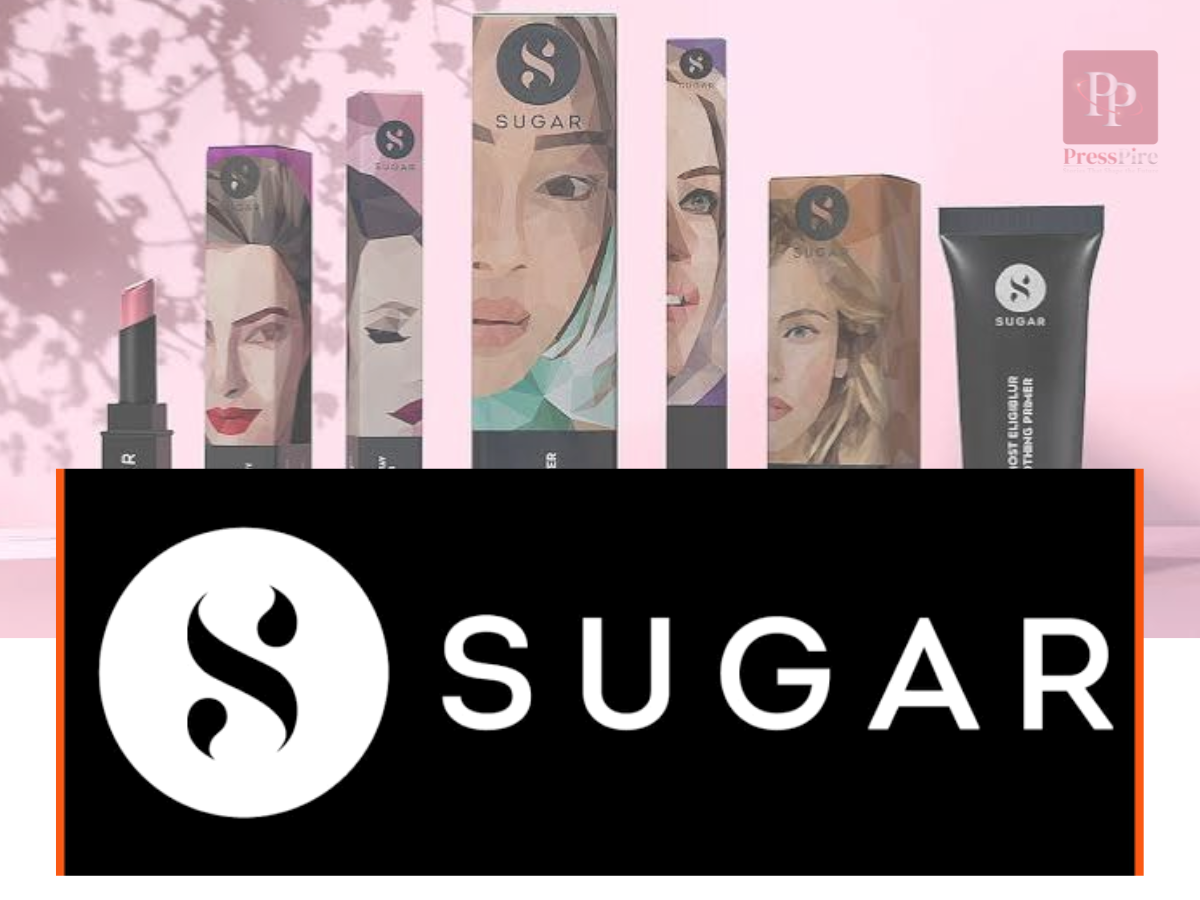
Instagram tutorials, relatable campaigns, and bold branding helped the company connect strongly with millennials and Gen Z buyers. The sleek black packaging and edgy tone gave SUGAR a personality very different from traditional cosmetic brands.
However, the real masterstroke was not staying online-only.
While many digital-first startups struggled to expand beyond e-commerce, SUGAR moved aggressively into offline retail. The company entered malls, beauty chains, kiosks, and standalone stores across India. This strategy proved crucial because Indian consumers still preferred testing beauty products physically before purchasing.
Over the years, the brand expanded into tens of thousands of retail touchpoints across hundreds of cities, including Tier-2 and Tier-3 markets. That omnichannel presence helped SUGAR compete not just with startups, but also with established multinational brands.
The Business of Beauty Gets Serious
As demand increased, investors started taking notice. The company raised multiple rounds of funding from major investors and expanded rapidly across product categories.
Beyond lipsticks and eye makeup, SUGAR gradually entered skincare, brushes, primers, moisturisers, and hybrid beauty products. The company focused heavily on continuous launches and trend-based innovation, helping it remain relevant in an industry driven by changing consumer preferences.
Its financial growth reflected that momentum. By FY23, the company reported revenue of around ₹420 crore while significantly expanding its offline operations.
More importantly, SUGAR succeeded in building something rare in India’s startup ecosystem — a beauty brand with strong recall value. Customers did not simply buy a product; they identified with the brand’s bold and unapologetic image.
The Founders Behind the Brand
Vineeta Singh and Kaushik Mukherjee built the company after years of experimentation and persistence. Vineeta Singh, an IIT and IIM graduate, famously turned down a high-paying corporate offer to pursue entrepreneurship.
But the real strength of the founders lay not in dramatic startup stories, but in their ability to understand consumer behaviour and patiently build a scalable brand over time.
The Road Ahead: More Than Just Makeup
Today, SUGAR Cosmetics stands among India’s most recognised homegrown beauty brands. The company continues to expand through new categories, Gen Z-focused launches, and wider retail penetration.
The future of the brand appears closely tied to India’s growing appetite for affordable premium beauty products. As younger consumers increasingly choose local brands over international labels, SUGAR is positioned strongly to benefit from that shift.
What makes the company’s story remarkable is not just its revenue or valuation. It is the fact that SUGAR Cosmetics proved an Indian beauty brand could compete confidently in a market once ruled almost entirely by global giants.
And it achieved that by staying deeply rooted in the needs of Indian consumers — one lipstick shade, one eyeliner, and one bold campaign at a time.