
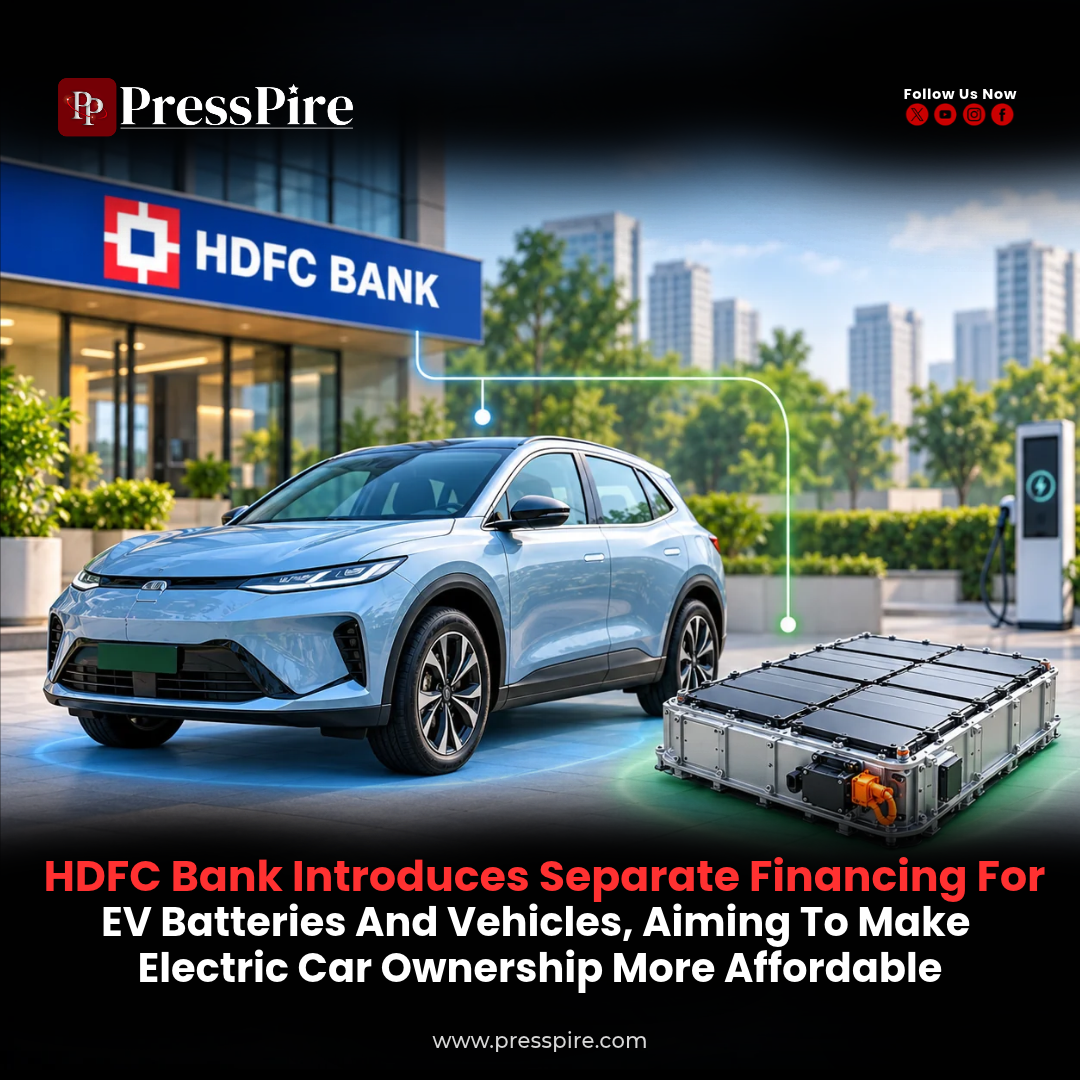
HDFC Bank’s electric car financing option allows different repayment periods for the vehicle and its battery, aiming to make monthly instalments more manageable.
The HDFC Bank Flexi EV Loan introduces a different approach to financing an electric car: structuring repayments separately for the vehicle body and battery.
Called the Flexi Electric Car Loan, the product allows customers to repay the battery component over a longer period. The HDFC Bank aims to give buyers greater flexibility over their monthly equated instalments, commonly known as EMIs.
For someone considering an electric car, this could make the monthly payment easier to manage. However, a longer repayment period also affects the overall borrowing cost, making it important to examine both the instalment and the total amount repayable.
How the HDFC Bank Flexi EV Loan Works
The financing structure divides the loan into components with different repayment timelines.
According to the HDFC Bank announcement, the battery portion can have a longer tenure than the vehicle body portion. This allows customers to spread part of the purchase cost over additional months.
An October 7 report by ETAuto described the following structure:
| Loan component | Reported share of the loan | Maximum reported repayment period |
|---|---|---|
| Portion A | Approximately 70% | 84 months, or seven years |
| Portion B | Approximately 30% | 96 months, or eight years |
The report illustrated this with a ₹20 lakh loan, where ₹14 lakh could be repaid over five years and the remaining ₹6 lakh over eight years.
These figures describe a reported financing arrangement. The actual split, tenure and eligibility should be confirmed in the borrower’s written offer.
Why Separate Battery Financing Matters
The battery represents a substantial part of an electric vehicle’s cost. Financing that component over a longer period changes how quickly the buyer needs to repay it.
For households comparing monthly expenses, that flexibility could influence whether an electric car fits their budget.
The benefit comes from the timing of repayments. The battery remains part of the financed purchase, and the borrower must repay the amount due under the loan agreement.
The reported 70:30 allocation should also be understood as a financing structure. It does not establish that every electric car’s battery accounts for exactly 30% of its purchase price.
Could the Loan Reduce Monthly EMIs?
For the same principal and interest rate, extending a standard amortising loan’s repayment period generally lowers the monthly instalment. This is because the amount borrowed is spread across more payments.
Under a split structure, the combined monthly outflow may therefore be lower than repaying the entire loan over the shorter tenure.
However, the longer-running portion continues after the shorter one has been cleared. Buyers need to understand the payment schedule across the full borrowing period.
A useful comparison is to request two quotations for the same car and down payment: one using a conventional repayment structure and another using the Flexi option. Comparing those offers can show the monthly difference and the total repayment under each arrangement.
Lower Instalments and Total Borrowing Cost
A smaller monthly instalment can improve cash flow, but it does not automatically reduce the cost of financing.
At the same interest rate, keeping a loan outstanding for longer generally increases the total interest paid. Processing fees and other applicable charges can also affect the comparison.
Three figures are particularly useful:
- Monthly repayment: The combined amount payable for all financing components.
- Annual percentage rate: The annual borrowing cost, including interest and applicable charges.
- Total amount repayable: The principal, interest and relevant costs over the full repayment period.
Looking at these figures together provides a clearer picture than comparing advertised EMIs alone.
How Battery Repayments Compare With Fuel Spending
HDFC Bank has positioned the battery EMI as potentially comparable with the running cost of an internal combustion engine vehicle.
That comparison is part of the bank’s affordability proposition. Its relevance will depend on the buyer’s actual usage.
Someone travelling long distances may have a different fuel-cost comparison from a person driving occasionally. Charging prices, access to home charging and the chosen vehicle will also influence ongoing expenses.
A complete ownership budget should account for financing, charging, insurance, servicing and any charging equipment required. Comparing only the battery EMI with petrol or diesel spending would leave out other costs.
Availability and Terms Buyers Should Confirm
The HDFC Bank announcement says the product is available through its network of more than 9,700 branches and covers electric vehicles from leading manufacturers.
Buyers should confirm whether their selected model qualifies and obtain an offer showing the terms for each financed component.
Before signing, the key details to check include:
- The financed amount and required down payment.
- The repayment period and interest rate for each component.
- The combined EMI and how it changes over time.
- Processing fees and other charges.
- Prepayment or foreclosure conditions.
- The outstanding amount if the car is sold before repayment ends.
The Key Facts Statement and repayment schedule can help buyers review these details in a consistent format.
Battery Warranty and Financing Are Separate Considerations
A longer battery repayment period should also be considered alongside the manufacturer’s warranty.
Buyers should check the warranty’s duration, distance limit, battery-health conditions and exclusions. Loan tenure alone does not establish how long the manufacturer will cover the battery.
Separate battery financing also does not, by itself, establish a battery rental or subscription arrangement. The purchase documents and financing agreement should explain ownership, payment obligations and any associated service conditions.
What the New Financing Option Means for EV Buyers
The HDFC Bank Flexi EV Loan gives electric car buyers another way to organise repayments around their monthly budget.
Its potential appeal is greater flexibility: a longer battery repayment period may reduce the initial monthly outflow and make an EV purchase more manageable.
The financial outcome will depend on the sanctioned interest rate, loan split, tenure and charges. Buyers can assess the offer most clearly by comparing the full repayment schedule with other available financing options for the same vehicle.
For more insights navigate: PressPire | Stories That Shape the Future
Read previous article here : tasmac-digital-payments-1000-rule-november-2026/
Follow PressPire on Facebook | Instagram | LinkedIn | YouTube
PressPire | Stories That Shape the Future