GSLV-F18 Launch: How NVS-03 Will Strengthen India’s NavIC Navigation System
ISRO’s successful mission carries a new navigation satellite into orbit, supporting India’s efforts to improve independent positioning, navigation and timing services.
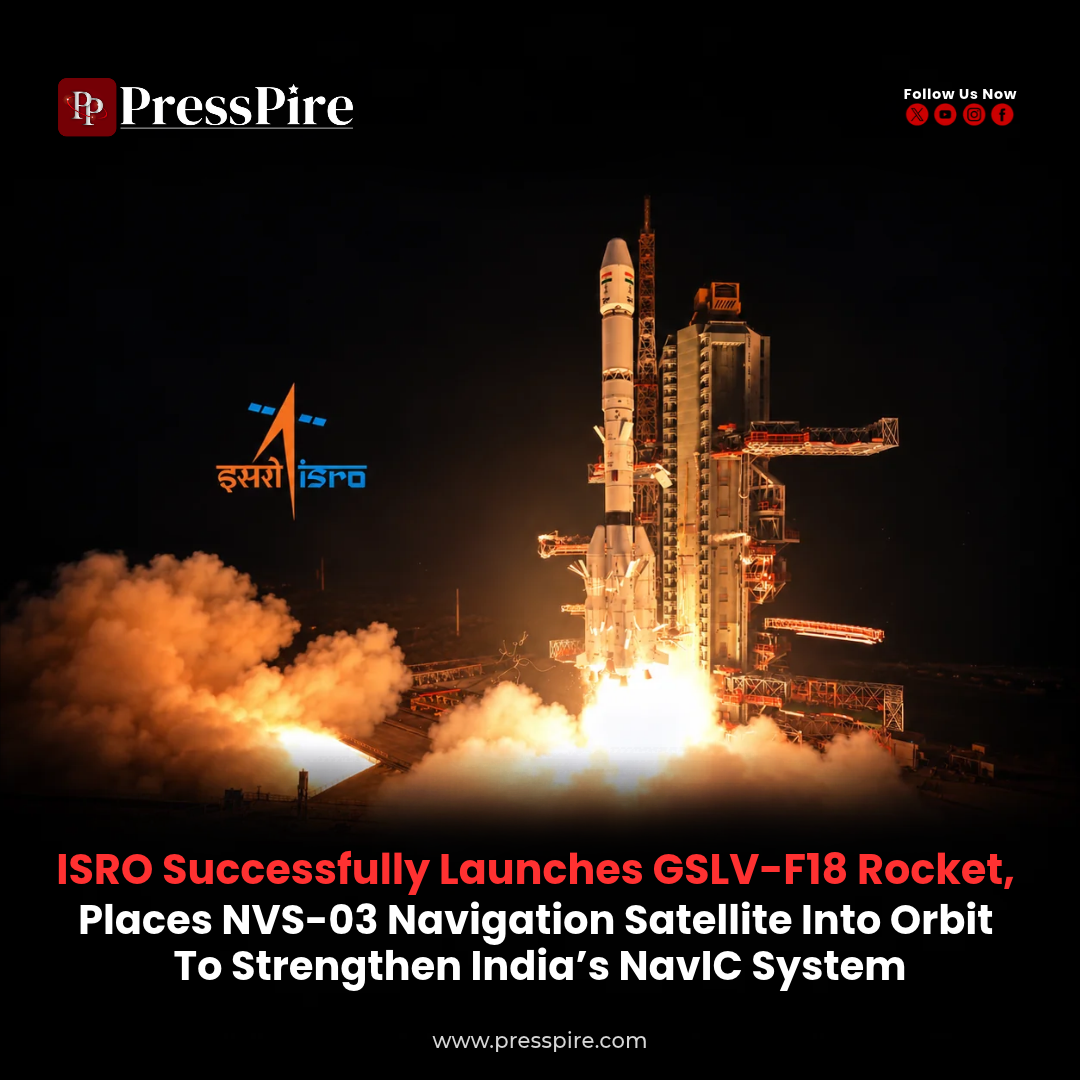
The GSLV-F18 launch has delivered another important milestone for India’s space programme. The Indian Space Research Organisation successfully launched the rocket carrying the NVS-03 navigation satellite from Sriharikota at 11:51 pm IST on 30 October 2026.
The spacecraft separated from the GSLV-F18 approximately 18 minutes after liftoff and entered its intended Geosynchronous Transfer Orbit, or GTO.
NVS-03 is intended to strengthen Navigation with Indian Constellation, commonly known as NavIC, India’s regional satellite navigation system. Its arrival comes as the country works to improve the availability and continuity of its navigation services.
GSLV-F18 Launch: Key Mission Details
| Detail | Information |
|---|---|
| Space agency | Indian Space Research Organisation |
| Launch vehicle | GSLV-F18 |
| Satellite | NVS-03 |
| Launch date | 30 October 2026 |
| Liftoff time | 11:51 pm IST |
| Launch location | Second Launch Pad, Satish Dhawan Space Centre, Sriharikota |
| Initial destination | Geosynchronous Transfer Orbit |
| GSLV mission number | 20th flight |
The mission used a three-stage rocket approximately 50 metres tall, with a liftoff mass of around 420 tonnes.
Its upper stage uses cryogenic propulsion, which helps provide the energy required to deliver the spacecraft into its transfer orbit.
What Reaching the Transfer Orbit Means
A transfer orbit is an intermediate stage in the satellite’s journey towards its operational position.
After separation from the launch vehicle, the spacecraft uses its onboard systems for activities such as establishing communications, generating power and carrying out orbital manoeuvres.
For NVS-03, successful orbital injection confirms that the rocket completed its delivery task. Subsequent satellite operations and checks establish readiness for navigation service.
This distinction helps explain why a successful launch is followed by further work in space. The rocket places the satellite on the required trajectory, while the spacecraft must then complete its own deployment and operational preparations.
What Is Different About NVS-03?
NVS-03 is the third satellite in NavIC’s second-generation navigation satellite series.
It carries an indigenously developed atomic clock alongside procured atomic clocks. These clocks provide the precise timing reference needed for satellite navigation.
Navigation receivers determine their location using signals transmitted by satellites. Accurate timing helps them calculate how far those signals have travelled, making the clock a central part of the navigation system.
NVS-03 also carries the L1 navigation signal, alongside the existing L5 and S-band signals. This continues the expansion of NavIC’s signal capabilities.
How NavIC Supports Navigation in India
NavIC provides positioning, navigation and timing services across India and a surrounding region extending approximately 1,500 kilometres beyond the country’s boundary.
The system combines satellites with ground infrastructure that monitors their operation and maintains the navigation service.
Its two service categories are:
- Standard Positioning Service, intended for civilian users.
- Restricted Service, intended for authorised strategic users.
ISRO identifies applications including transport, location-based services, surveying, scientific research and time synchronisation.
For businesses, these capabilities can support functions such as tracking vehicles, managing transport operations and coordinating systems that need a reliable time reference.
Why the L1 Signal Matters
ISRO says NavIC’s L1 signal is designed to be interoperable with signals from other global navigation satellite systems.
Interoperability allows compatible equipment to work with signals from multiple navigation systems. This can broaden the opportunities for NavIC to be incorporated into receivers and commercial products.
However, access depends on the receiving equipment supporting the relevant signals. The practical benefits will therefore develop through both satellite deployment and the availability of compatible hardware.
For consumers, the longer-term significance lies in wider access to India’s navigation infrastructure through devices and services that support it.
Why Strengthening the Constellation Is Important
The mission follows a period of reduced satellite availability within NavIC.
In a July 2026 parliamentary reply, the Department of Space said three satellites were available for positioning, navigation and timing services. It explained that at least four operational satellites were required for basic standalone positioning, while timing services remained functional.
The programme had also experienced a setback with NVS-02, launched in January 2025.
ISRO’s subsequent review found that an electrical activation signal had failed to reach a valve required for orbit-raising operations. The satellite consequently could not complete the planned transition to its operational orbit.
These developments explain the importance of adding NVS-03 and continuing the constellation’s renewal.
What Comes Next for NavIC?
Following the successful GSLV-F18 launch, attention turns to NVS-03’s orbital operations, system checks and integration into the navigation service.
The wider programme also includes additional satellites. In its July update, the Department of Space said NVS-04 and NVS-05 were at an advanced stage of development.
For India, maintaining NavIC requires sustained investment in spacecraft, ground systems, precise timing and compatible receivers.
NVS-03 advances that effort by adding new navigation hardware in orbit. Its contribution will ultimately be measured through the availability and reliability of the services delivered to users.
For more insights navigate: PressPire | Stories That Shape the Future
Read previous article here : tasmac-digital-payments-1000-rule-november-2026/
Follow PressPire on Facebook | Instagram | LinkedIn | YouTube
PressPire | Stories That Shape the Future