
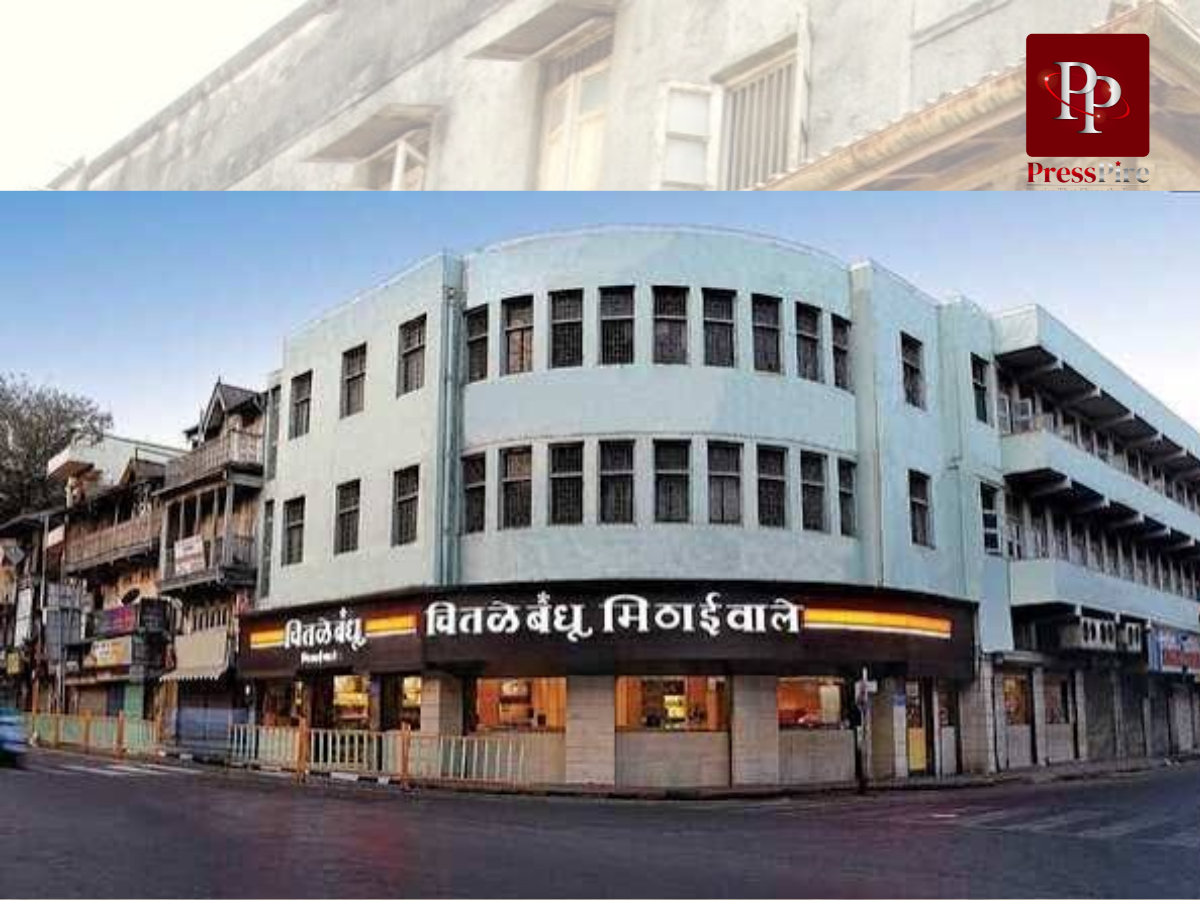
From Pune’s Narrow Lanes to 65 Countries: The Extraordinary Rise of Chitale Bandhu
The Taste That Maharashtra Carried Across the World
Few Indian food brands have achieved what Chitale Bandhu has managed over the last seven decades. It is not just a sweets company anymore. It is a cultural symbol for Maharashtrians across the globe. From Pune’s crowded Sadashiv Peth to supermarket shelves in the United States, Australia, Europe, and the Gulf, the yellow packet of Bakarwadi has travelled farther than anyone could have imagined in the 1950s. But behind this success lies a story far deeper than snacks and sweets. It is the story of a family business that understood trust, scale, automation, and emotional connection long before India’s startup ecosystem even existed.
A Beginning Built on Milk, Not Mithai
The Chitale story began in 1939, when Bhaskar Ganesh Chitale, popularly known as B.G. Chitale, started a small dairy business in Bhilawadi near Sangli in Maharashtra. At the time, India had limited infrastructure, poor transport systems, and almost no organised food processing industry. Running a dairy business itself was a challenge.
The family supplied fresh milk and dairy products to nearby regions. But the founders soon realised one hard truth about dairy, it could not scale easily because products are perishable. That early understanding quietly shaped the company’s future. The next major turning point came when B.G. Chitale’s sons, Raghunathrao Chitale (Bhausaheb) and Narsinha Chitale (Rajabhau), shifted operations to Pune in the 1940s.
Pune Gave the Brand its identity of what it is today
In 1950, the Chitale brothers opened their first store in Pune. The business initially focused on milk products, pedhas, shrikhand, amrakhand, and traditional Maharashtrian sweets. Unlike flashy businesses chasing expansion, Chitale Bandhu grew slowly and carefully.
The company became known for something simple yet rare, consistency.
Customers knew the taste would never change. During festivals, weddings, and family celebrations, buying sweets from Chitale became a ritual in Pune households. The brand reflected the city’s personality itself: disciplined, understated, and dependable. Even their strict shop timings became legendary among Punekars.
The Snack That Changed Indian FMCG History
Every successful company has one defining product. For Chitale Bandhu, that product was Bakarwadi. Originally a Gujarati snack, Bakarwadi entered Chitale’s kitchen in the 1970s. But the company gave it a completely new identity. Bhausaheb Chitale altered the flavour profile, making it spicier and sharper for Maharashtrian taste buds. What followed was extraordinary.
At a time when India’s packaged snack market barely existed, Chitale Bandhu recognised an opportunity most businesses missed: people wanted traditional snacks with hygiene, consistency, and shelf life.
Bakarwadi stopped being just a farsan item. It became an emotion.
People travelling from Pune began carrying packets for relatives in Mumbai, Nagpur, Nashik, and eventually abroad. Slowly, the snack became inseparable from the city’s identity.
The Bold Decision That Took Chitale Global
Most traditional Indian food businesses remained local because scaling handmade products was difficult. Chitale Bandhu solved this problem through automation.
In the late 1980s, the company began experimenting with machine-assisted production. Rajabhau Chitale reportedly drew inspiration from foreign manufacturing systems during international industrial visits. By the 1990s, Chitale Bandhu had become one of India’s first companies to automate Bakarwadi production. The decision was risky.
Indian consumers strongly associated handmade food with authenticity. But automation helped Chitale solve three critical problems simultaneously; consistency, hygiene, and large-scale production.
Today, the company manufactures thousands of kilograms of Bakarwadi daily using highly automated systems. Nearly 80 percent of its production operates in automated environments to reduce contamination and maintain standardised quality. This shift transformed Chitale from a regional sweet shop into an organised FMCG powerhouse.
From Maharashtra Favourite to International Brand
The early 2000s opened a completely new chapter for the company.
As Indian professionals migrated abroad during the IT boom, demand for familiar Indian snacks increased globally. Chitale Bandhu recognised the emotional power of nostalgia. In 2004, the company started exporting products to markets including the US, UAE, and Singapore.
Today, Chitale Bandhu exports to more than 65 countries across Europe, North America, Australia, Southeast Asia, and the Gulf region. Its sprawling automated facility near Pune now produces over 250 products ranging from sweets and namkeen to shrikhand, instant mixes, and festive snacks. What once operated from a 500-square-foot shop has evolved into a globally recognised Indian food brand.
Reinventing Tradition Without Losing Identity
One reason Chitale Bandhu survived while many traditional businesses faded is its willingness to evolve. The newer generation focused heavily on packaging, retail expansion, exports, automation, and branding. The company also modernised distribution and expanded into organised retail formats, kiosks, and express stores. Its collaboration with Sachin Tendulkar as brand ambassador signalled a larger national ambition.
Yet, despite all the scale, Chitale Bandhu still sells something bigger than snacks. It sells familiarity. For a Maharashtrian student living in New Jersey or a family in Dubai, opening a packet of Chitale bhakarwadi often feels less like eating a snack and more like reconnecting with home.
The Future: Can Chitale Become India’s Next Global Snack Giant?
Very few Indian regional brands have managed to transform a local snack into a global identity the way Chitale Bandhu did with Bakarwadi. And that journey, from a modest dairy business in rural Maharashtra to shelves across 65 countries is what makes Chitale Bandhu one of India’s most remarkable food startup stories.