
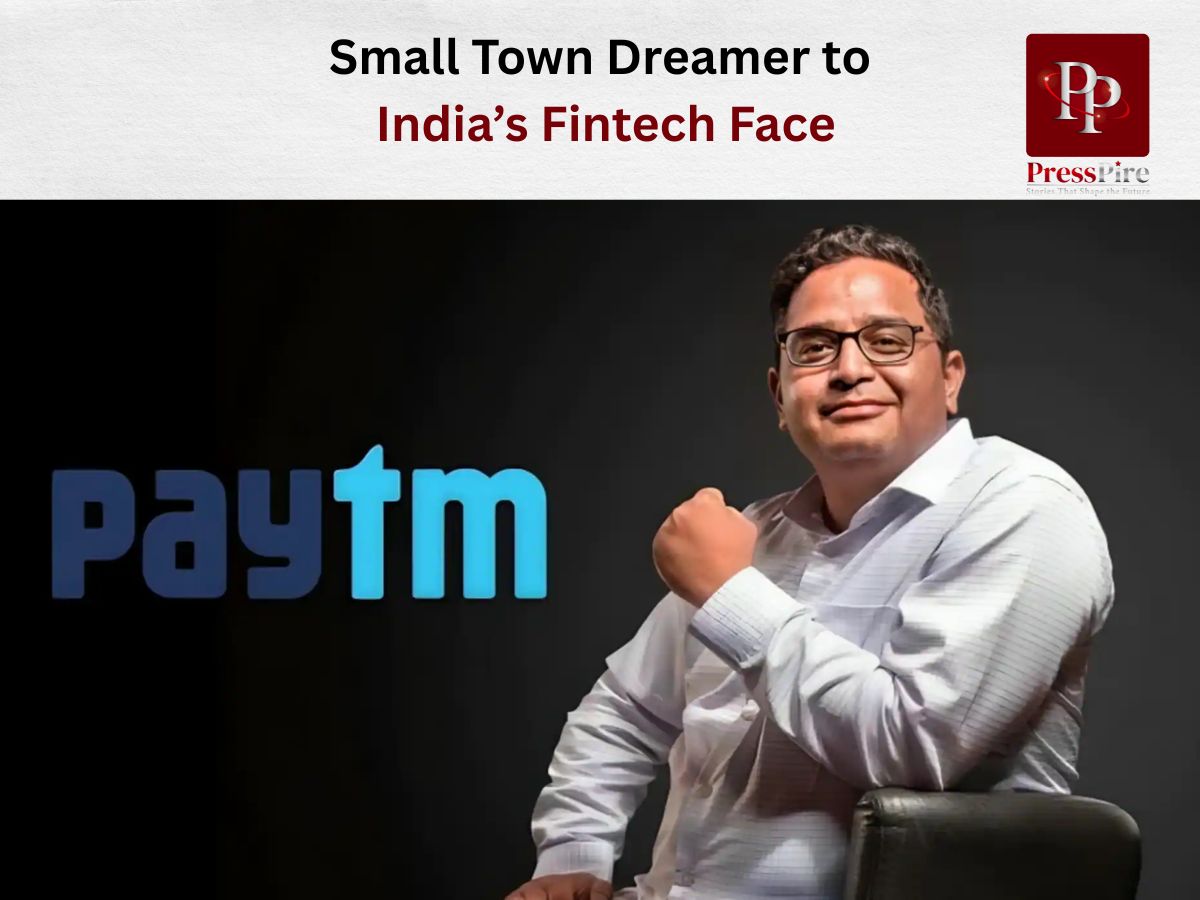
From a Small Town Dreamer to India’s Fintech Face: How Vijay Shekhar Sharma Built Paytm Into a Digital Payments Giant
Early Life and Educational Struggles
Vijay Shekhar Sharma became one of India’s most influential fintech entrepreneurs by recognizing the future potential of digital payments long before they became mainstream.
Born in Aligarh, Uttar Pradesh, Sharma came from a middle-class background and studied in a Hindi-medium school. He later joined Delhi Technological University for engineering studies. However, the transition into an English-speaking academic environment created significant language challenges during his early college years. Despite these difficulties, Sharma developed a strong interest in technology, innovation, and entrepreneurship.
The Beginning of One97 Communications
In the late 1990s, Sharma founded One97 Communications during the early expansion phase of India’s telecom industry.
Initially, the company focused on mobile content and value-added telecom services. For several years, One97 primarily operated in telecom-based digital solutions. However, Sharma recognized the growing importance of mobile internet and digital financial infrastructure well before fintech emerged as a dominant startup category in India. This long-term vision laid the foundation for what would eventually become Paytm.
Launching Paytm and Entering Digital Payments
In 2010, Paytm was launched under One97 Communications as a prepaid mobile recharge and bill payment platform.
At first, the platform focused on services such as mobile recharges, DTH payments, and utility bill transactions. As smartphone adoption and internet accessibility increased across India, Paytm rapidly expanded into digital wallets, online payments, ticket bookings, commerce, and merchant payment systems. The company’s growth accelerated significantly after the launch of the Paytm Wallet in 2014.
Demonetization and Rapid Expansion
One of the biggest turning points in Paytm’s history came during India’s demonetization drive in 2016. The sudden reduction in cash circulation dramatically increased demand for digital transactions, and Paytm emerged as one of the largest beneficiaries of this shift toward cashless payments.
The company rapidly expanded its merchant network using QR-code-based payment systems, enabling even small shops, street vendors, and local businesses to accept digital transactions. This merchant-first approach became one of Paytm’s most important growth drivers.
Expanding Beyond Payments
Sharma also focused on building a larger financial ecosystem beyond simple payment services. Paytm gradually expanded into multiple financial segments including insurance, lending, wealth management, stockbroking, and digital banking services. Paytm Payments Bank became a major part of the company’s broader financial infrastructure ambitions.
The company attracted major investments from global firms such as Alibaba and SoftBank. Over time, Paytm became one of India’s highest-valued fintech startups and among the country’s most recognized technology brands.
IPO Success and Regulatory Challenges
In 2021, One97 Communications launched what became India’s largest IPO at the time. Although Paytm’s post-listing market performance experienced volatility, the public offering marked a major milestone for India’s startup ecosystem.
However, the company also faced regulatory scrutiny and operational challenges across several business areas, including issues related to Paytm Payments Bank and employee stock-option regulations. In 2025, Vijay Shekhar Sharma relinquished millions of employee stock options following regulatory reviews related to ESOP allocations. Despite these setbacks, Sharma continued emphasizing innovation in artificial intelligence, financial infrastructure, and digital commerce.
Paytm’s Impact on India’s Digital Economy
One of Sharma’s most significant contributions to India’s startup ecosystem was normalizing digital payments for everyday users. At a time when cash dominated retail transactions, Paytm simplified mobile payments for millions of Indians.
The company’s QR-code ecosystem became especially influential among small merchants and local businesses. By reducing technical barriers to digital transactions, Paytm accelerated financial digitization across both urban and rural India. Paytm played a central role in changing how consumers, vendors, and businesses interacted with digital financial services.
Leadership, Persistence, and Entrepreneurial Legacy
Vijay Shekhar Sharma’s entrepreneurial journey became widely admired because of his non-elite background and persistence through multiple business cycles.
From struggling with English communication in college to building a publicly listed fintech giant, his career reflected the growing accessibility of India’s digital economy and startup ecosystem. Sharma frequently spoke about innovation, resilience, and the future impact of AI on business operations and employment, further strengthening his reputation as a forward-looking entrepreneur.
Paytm Today
Today, Paytm operates across payments, commerce, merchant infrastructure, and financial services while serving millions of consumers and businesses across India. Vijay Shekhar Sharma remains one of India’s most recognized fintech leaders and continues to play an important role in the country’s digital transformation journey.