
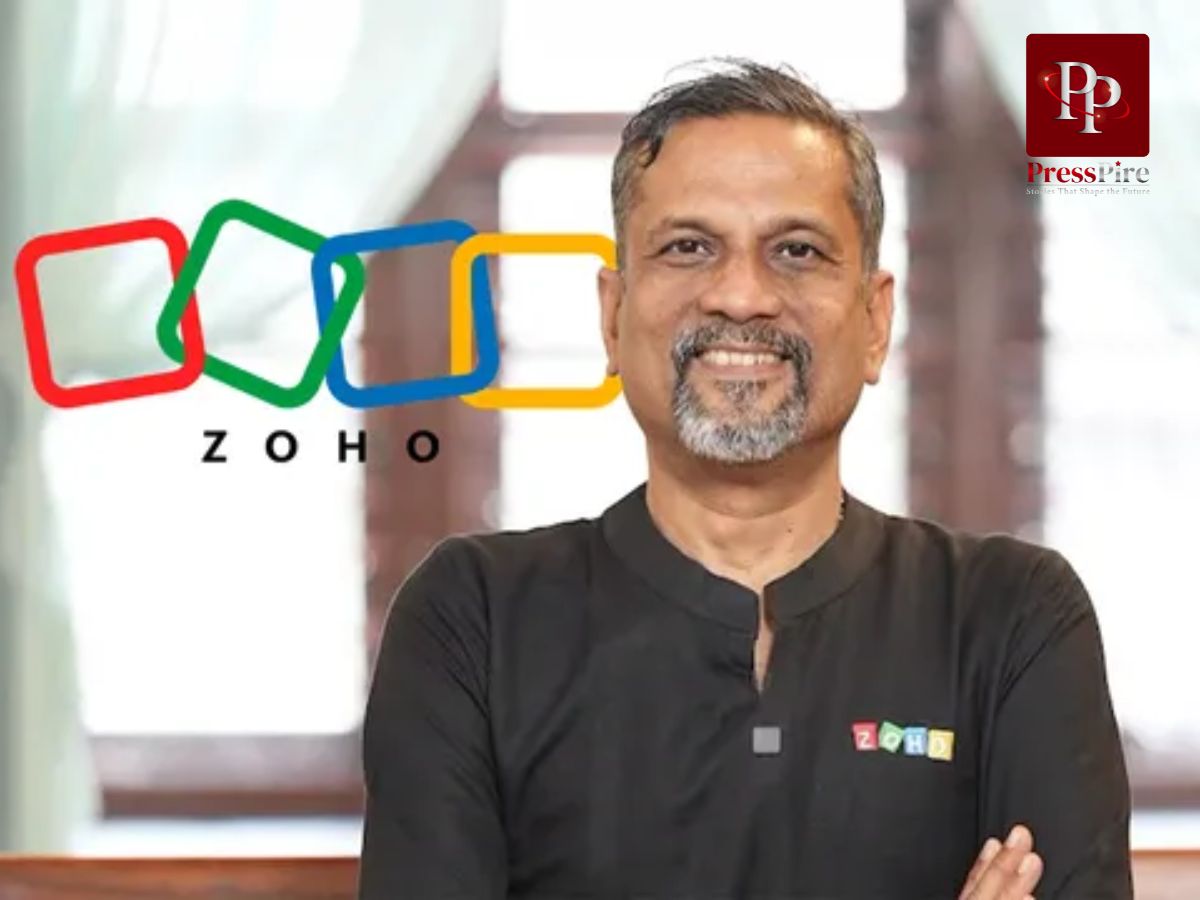
From Village Classrooms to Global SaaS: How Sridhar Vembu Built Zoho Without Silicon Valley Funding
Introduction: A Different Kind of Tech Success Story
While most technology startups chase investor funding, aggressive valuations, and rapid expansion, Sridhar Vembu built Zoho Corporation using a completely different philosophy. The Zoho founder created one of India’s most successful software companies without relying on venture capital, public listings, or Silicon Valley growth tactics. His approach to entrepreneurship, talent development, and rural economic growth has made Zoho one of the most unique success stories in the global SaaS industry.
Early Life and Educational Background
Sridhar Vembu was born in Tamil Nadu and completed his engineering degree at Indian Institute of Technology Madras before pursuing a PhD in Electrical Engineering from Princeton University. Unlike many Indian engineers who chose stable corporate careers in the United States, Vembu eventually moved toward entrepreneurship during the early internet era.
The Founding of AdventNet
In 1996, Vembu, along with his brothers Kumar Vembu and Sekar Vembu and colleague Tony Thomas, co-founded a company called Zoho Corporation, originally known as AdventNet. Initially, the business focused on network management software for telecom companies and enterprise clients. At that stage, the company operated with limited resources and concentrated heavily on engineering-driven product development rather than aggressive sales operations.
Early Challenges in the US Software Market
During the company’s early years, one of the biggest challenges was acquiring customers in the highly competitive US software market. Vembu later took responsibility for business development and sales despite admitting publicly that he was not naturally skilled at enterprise sales. According to accounts shared in business interviews and entrepreneurial analyses, some customers later admitted they would have paid significantly more for Zoho’s products than the company initially charged.
Despite operating on thin margins during the initial phase, AdventNet reinvested its earnings into product development instead of focusing on founder payouts or rapid expansion. This disciplined capital allocation later became one of Zoho’s strongest competitive advantages.
Rejecting Venture Capital During the Dot-Com Boom
The late 1990s brought rapid growth for technology businesses, especially during the dot-com boom. AdventNet crossed important revenue milestones during this period and reportedly received venture capital interest, including a funding offer at a substantial valuation. However, Sridhar Vembu chose not to raise external investment capital.
That decision proved critical when the dot-com crash hit global technology markets in 2000. Thousands of internet companies shut down due to unsustainable business models and overdependence on investor funding.
How Zoho Survived the Dot-Com Crash
Zoho survived because of three major factors:
- Profitability
- Low operating costs
- Strong cash reserves
Since the company had no investor pressure and maintained financial discipline, it was able to continue product development even during market instability.
The Rise of ManageEngine
Following the crash, the company launched ManageEngine in 2002, focusing on IT infrastructure management software. This business became a strong revenue generator and strengthened the company’s position in enterprise technology markets.
Entering the SaaS Industry with Zoho
The next major transformation came in 2005 when the company launched its cloud software division under the Zoho brand. At a time when Software-as-a-Service (SaaS) was still emerging globally, Zoho started building browser-based productivity and business applications for enterprises and small businesses.
Building an Integrated Software Ecosystem
Instead of creating only one flagship product, Zoho pursued an ecosystem strategy. The company developed:
- CRM software
- Email platforms
- Accounting tools
- Project management systems
- Analytics products
- HR software
- Workplace collaboration applications
Over time, Zoho created more than 50 integrated business applications serving companies across multiple industries.
This integrated product ecosystem became Zoho’s biggest differentiator against competitors. Businesses preferred unified software systems that reduced dependency on multiple vendors and simplified operational workflows.
Solving the Talent Problem Through Education
As Zoho scaled globally, another challenge emerged, hiring skilled engineering talent at sustainable costs. Instead of competing aggressively for expensive urban technology professionals, Sridhar Vembu introduced a highly unconventional solution called Zoho University, now known as Zoho Schools of Learning.
Zoho Schools of Learning: A Unique Hiring Model
The initiative focused on training students directly from rural and economically modest backgrounds. Students received free technical education in:
- Programming
- Mathematics
- Communication
- Software development
They were also provided stipends during training before eventually joining Zoho as full-time employees.
This strategy solved multiple business problems simultaneously. Zoho created its own engineering talent pipeline, reduced hiring costs, improved employee retention, and expanded opportunities for students outside elite educational institutions.
Promoting Rural Economic Development
Vembu also became widely recognized for promoting rural economic decentralization. While most Indian technology companies concentrated operations in metropolitan cities like Bengaluru, Hyderabad, and Chennai, Zoho expanded into smaller towns such as Tenkasi and Kumbakonam.
According to Vembu, rural offices reduce infrastructure costs, improve employee quality of life, and create local economic development.
Ahead of the Remote Work Revolution
This philosophy gained global attention during the COVID-19 pandemic when remote and distributed work models became mainstream worldwide.
Remaining Independent and Bootstrapped
Another defining feature of Zoho’s growth journey has been its continued independence. Unlike many SaaS startups that eventually go public or depend heavily on acquisitions, Zoho remained privately owned and bootstrapped. The company crossed $1 billion in annual revenue while maintaining profitability and ownership control.
Sridhar Vembu’s Business Philosophy
Sridhar Vembu has consistently criticized startup ecosystems that prioritize valuation growth over sustainable business fundamentals. In interviews, he has emphasized that customer satisfaction, engineering quality, and long-term resilience are more important than short-term investor expectations.
His leadership philosophy combines old-fashioned financial discipline with modern software innovation.
Competing with Global Software Giants
Today, Zoho operates globally, serves millions of users, and competes directly with enterprise software giants including Microsoft, Oracle, and Salesforce.
National Recognition and Honors
In 2021, Sridhar Vembu received the Padma Shri, one of India’s highest civilian honors, recognizing his contributions to technology and entrepreneurship.