
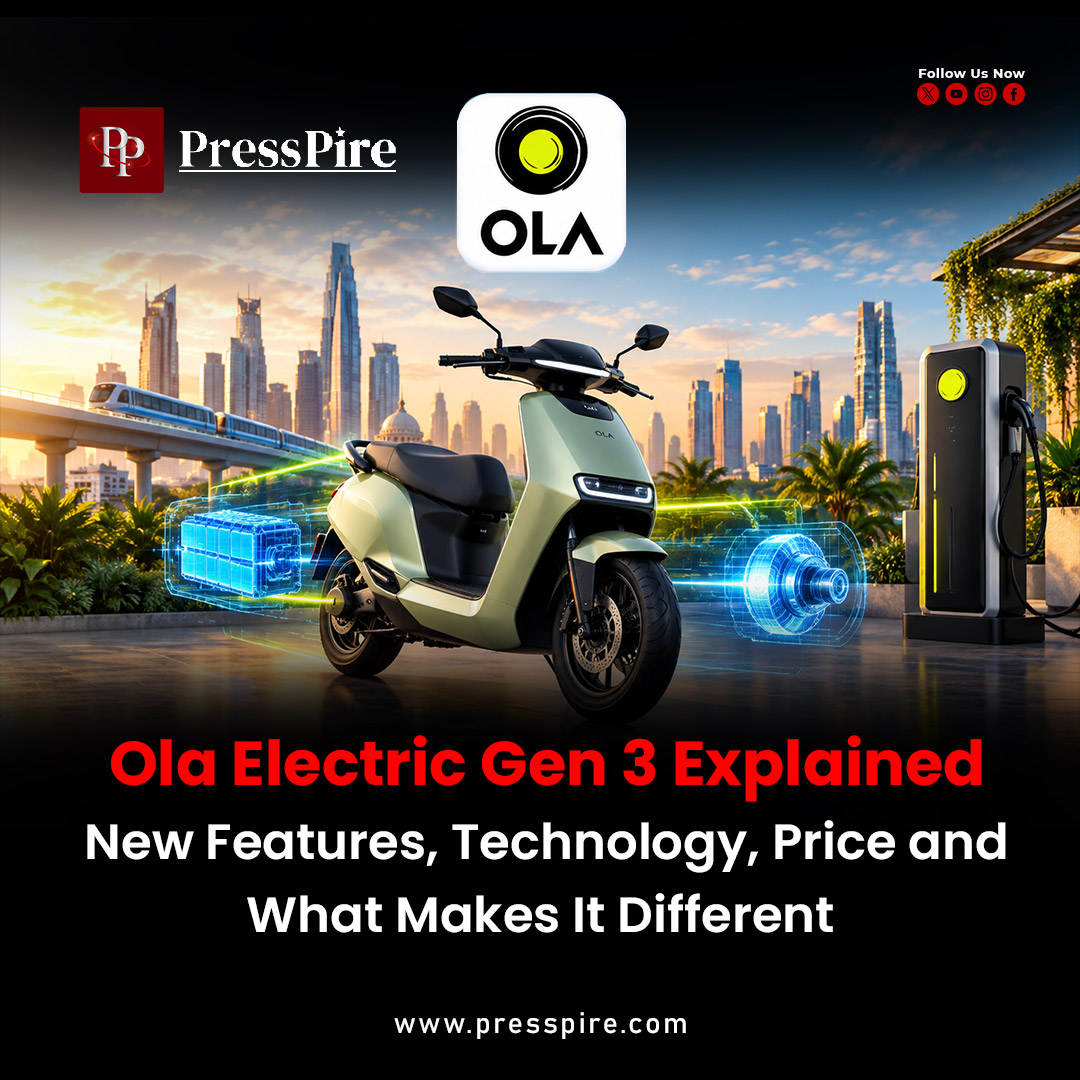
Ola Electric Gen 3 Explained: New Features, Technology, Price and What Makes It Different
Ola Electric Gen 3 Explained as the company introduces its next-generation electric scooter platform with improved performance, advanced technology, enhanced safety features, and updated battery systems. The Gen 3 platform represents Ola Electric’s latest effort to strengthen its position in India’s rapidly growing electric vehicle market.
The electric two-wheeler segment in India has witnessed significant growth as consumers increasingly look for alternatives to traditional petrol-powered vehicles. Factors such as rising fuel costs, government support for electric mobility, and increasing awareness about sustainable transportation have accelerated EV adoption.
With the Gen 3 platform, Ola Electric aims to improve efficiency, performance, and ownership experience while continuing to compete with other major players in India’s electric scooter industry.
Ola Electric Gen 3 Explained: How the New Platform Improves Electric Scooters
Ola Electric Gen 3 Explained through a completely redesigned platform that focuses on improving multiple aspects of electric scooter technology. The company has introduced changes across the motor, battery architecture, electronics, software, and vehicle design.
The Gen 3 platform is built around Ola Electric’s approach of integrating hardware and software into a single ecosystem. This includes improvements in battery efficiency, performance management, and connected vehicle features.
Unlike traditional scooter development, modern electric vehicles rely heavily on software capabilities. Features such as smart diagnostics, connected services, and over-the-air updates have become important parts of the EV ownership experience.
Ola Electric has focused on creating a platform that can support different scooter models while maintaining common technological foundations.
Ola Electric Gen 3 Explained: New Battery Technology and Performance Improvements
Ola Electric Gen 3 Explained with a focus on battery improvements, which remain one of the most important areas in electric vehicle development.
The Gen 3 scooters feature updated battery technology designed to improve energy efficiency and overall performance. Battery capacity, range, charging capability, and thermal management are key factors that influence the daily usability of electric scooters.
Ola Electric has worked on improving the battery pack design and integration to deliver better performance compared with previous generations.
The company has also focused on developing its own battery technology capabilities as part of its long-term EV strategy.
Battery innovation is becoming increasingly important as electric vehicle manufacturers compete to provide longer range, faster charging, and better durability.
Ola Electric Gen 3 Explained: Advanced Motor Technology and Better Efficiency
A major highlight of Ola Electric Gen 3 Explained is the introduction of improvements in motor technology.
Electric motors directly influence acceleration, efficiency, and overall riding performance. The Gen 3 platform includes upgraded motor systems designed to provide better power delivery while improving efficiency.
The company has focused on creating a more integrated vehicle architecture where different components work together to improve performance.
Electric scooter manufacturers are increasingly investing in motor technology because efficient motors can help improve both riding experience and battery utilisation.
Ola Electric’s Gen 3 platform reflects the broader industry trend of developing more advanced electric powertrains for urban mobility.
Ola Electric Gen 3 Explained: New Safety and Software Features
Ola Electric Gen 3 Explained also includes improvements in safety and smart technology features.
Modern electric scooters are increasingly becoming software-driven vehicles. Features such as connected applications, vehicle monitoring, and digital controls are becoming common expectations among consumers.
The Gen 3 platform includes enhanced electronic systems designed to improve vehicle management and user experience.
Safety remains an important focus area for electric vehicle manufacturers. Technologies related to battery management, vehicle stability, and system monitoring play a crucial role in ensuring reliable EV operation.
Ola Electric has continued to develop its software ecosystem to provide a more connected ownership experience.
Ola Electric Gen 3 Explained: Models, Variants and Pricing Details
Ola Electric Gen 3 Explained through multiple scooter models designed to address different customer requirements.
The Gen 3 range includes different variants with varying battery capacities, performance levels, and features.
Ola Electric has positioned its scooters across different price segments to attract a wider range of customers, from daily commuters to users looking for higher-performance electric scooters.
Pricing remains one of the biggest factors influencing EV adoption in India. Electric vehicle companies are working to make products more affordable while maintaining advanced technology.
The final price of electric scooters depends on factors such as battery capacity, features, state subsidies, and market conditions.
Ola Electric Gen 3 Explained: How It Compares With Previous Generations
Ola Electric Gen 3 Explained as an evolution from the company’s earlier electric scooter platforms.
Previous Ola Electric scooters introduced consumers to connected electric mobility with features such as digital displays, software updates, and app-based controls.
The Gen 3 platform builds on this foundation by focusing on:
Improved Engineering
The platform introduces changes aimed at improving efficiency and performance.
Better Integration
Hardware and software systems are designed to work together more effectively.
Enhanced Customer Experience
Digital features and smart capabilities continue to play an important role in ownership.
The transition from earlier generations to Gen 3 represents Ola Electric’s attempt to improve product maturity and address changing customer expectations.
Ola Electric Gen 3 Explained: Role in India’s Growing Electric Vehicle Market
Ola Electric Gen 3 Explained within the larger transformation of India’s automobile industry.
India has become one of the fastest-growing electric two-wheeler markets globally. Companies are investing heavily in manufacturing capacity, battery technology, charging infrastructure, and research and development.
Ola Electric has played a major role in increasing consumer awareness about electric scooters in India.
The company’s manufacturing facility in Tamil Nadu and its focus on localised EV development are part of its broader strategy to build an electric mobility ecosystem.
The competition in India’s EV market is increasing as established automobile companies and startups introduce new electric products.
Ola Electric Gen 3 Explained: What Makes the Platform Different
Ola Electric Gen 3 Explained through its focus on combining performance, software, and electric vehicle innovation into one platform.
The company’s approach is based on developing more than just an electric scooter. It aims to create a connected mobility experience supported by technology.
Key areas that differentiate the Gen 3 platform include:
- Integrated vehicle architecture
- Advanced battery systems
- Software-driven features
- Improved efficiency
- Focus on Indian consumer requirements
As electric mobility continues to expand, manufacturers that can combine technology, affordability, and reliability will play an important role in shaping the future of transportation.
For more insights navigate: PressPire | Stories That Shape the Future
Read previous article here: Pixxel Raises $100 Million: How India’s Spacetech Startup Is Building the Future of Earth Observation
Follow PressPire on Facebook | Instagram | LinkedIn | YouTube
PressPire | Stories That Shape the Future