
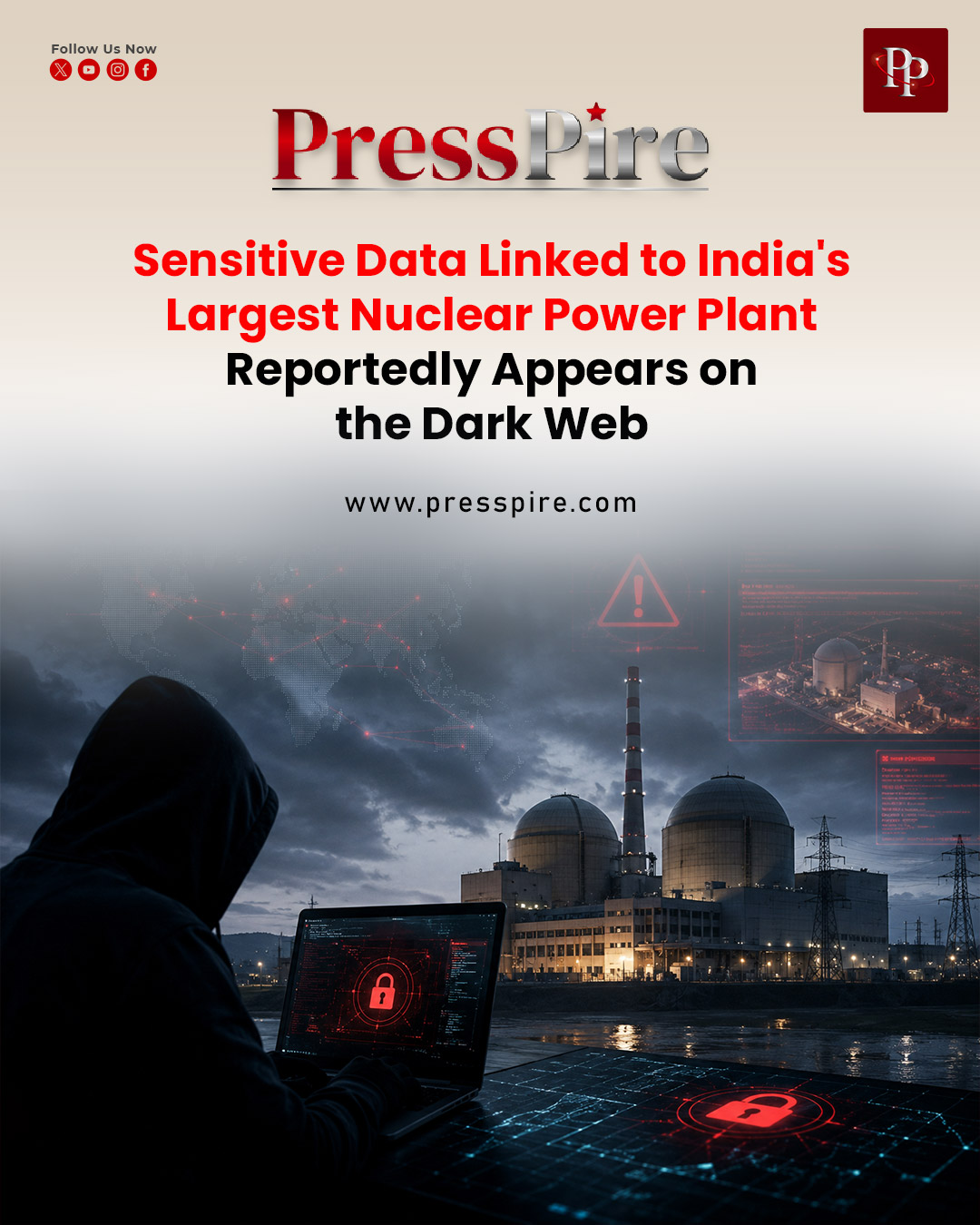
Sensitive Data Linked to India’s Largest Nuclear Power Plant Reportedly Appears on the Dark Web
Sensitive data reportedly linked to India’s largest nuclear power plant has surfaced on the dark web, raising cybersecurity concerns, national security questions, and the urgent need for stronger digital infrastructure. Sensitive data reportedly connected to India’s largest nuclear power plant has allegedly surfaced on the dark web, triggering concerns over cybersecurity, national infrastructure protection, and digital resilience. While authorities continue to assess the authenticity and impact of the claims, the incident highlights the growing cyber threats facing critical infrastructure worldwide.
Modern warfare is no longer confined to borders, missiles, or military strength. Increasingly, it is being fought through keyboards, malicious software, and stolen databases hidden within the internet’s darkest corners. The latest claims surrounding India’s Largest Nuclear Power Plant Dark Web incident have once again highlighted how digital vulnerabilities can quickly evolve into matters of national importance. Reports circulating among cybersecurity researchers suggest that sensitive information allegedly linked to India’s largest nuclear power facility has surfaced on a well-known dark web forum, prompting renewed discussions around the protection of critical infrastructure. While authorities are continuing to verify the authenticity, scope, and origin of the reported data, the incident has already reignited concerns about cybersecurity preparedness in one of the world’s fastest-growing digital economies. Nuclear facilities represent some of the most strategically important assets of any nation, making them attractive targets for cybercriminals, espionage groups, and state-sponsored threat actors. Even if the reported leak ultimately proves to contain limited operational value, the very possibility that information associated with such infrastructure could be traded on underground marketplaces underscores the changing nature of modern security risks. As India continues expanding its digital capabilities alongside its energy ambitions, safeguarding sensitive information has become as critical as protecting physical infrastructure itself.
Why India’s Largest Nuclear Power Plant Dark Web Claims Matter
The reports surrounding the India’s Largest Nuclear Power Plant Dark Web incident have attracted widespread attention because they involve infrastructure that plays a vital role in India’s energy security. Cybersecurity researchers monitoring underground marketplaces allegedly identified datasets claimed to be associated with the country’s largest nuclear power station, raising immediate questions regarding the nature of the exposed information. At the time of reporting, officials had not confirmed whether the data was authentic, outdated, duplicated from previous breaches, or falsely advertised by cybercriminals seeking financial gain. Such uncertainty is common in dark web marketplaces, where threat actors frequently exaggerate claims to attract buyers. Nevertheless, experts caution against dismissing these listings outright, as even seemingly minor information such as employee records, vendor details, internal documentation, network configurations, or login credentials can become valuable pieces in larger cyberattack campaigns. Nuclear facilities worldwide have increasingly invested in advanced cyber defenses, yet attackers continue evolving their methods through phishing campaigns, credential theft, ransomware, insider threats, and supply-chain compromises. The incident therefore serves as an important reminder that cybersecurity extends far beyond preventing system intrusions; it also requires continuous monitoring of leaked information, rapid incident response, employee awareness, vendor security, and collaboration between public institutions and cybersecurity specialists to reduce long-term risks.
India’s Largest Nuclear Power Plant Dark Web Incident Raises Cybersecurity Questions
Whether or not the reported data ultimately proves genuine, the India’s Largest Nuclear Power Plant Dark Web incident has brought renewed attention to the broader cybersecurity challenges facing critical infrastructure worldwide. Modern nuclear facilities rely on highly sophisticated digital systems to support administration, communication, logistics, maintenance, and operational monitoring. Although core reactor control systems are typically isolated through strict network segmentation and multiple security layers, surrounding business systems remain connected to external networks, making them potential entry points for cybercriminals. Global incidents over the past decade have demonstrated that attackers increasingly target peripheral systems before attempting to escalate access through compromised credentials or trusted third-party vendors. This evolving threat landscape means organizations must secure every digital asset rather than focusing solely on operational technology. India’s expanding digital ecosystem, rapid industrial modernization, and growing geopolitical importance have naturally increased its exposure to sophisticated cyber threats originating from criminal syndicates as well as advanced persistent threat groups. Continuous vulnerability assessments, zero-trust architecture, multifactor authentication, endpoint detection systems, and real-time threat intelligence sharing are therefore becoming essential components of national cybersecurity strategy rather than optional technological investments.
How Critical Infrastructure Became a Prime Cyber Target
Critical infrastructure has emerged as one of the most attractive targets for cyber attackers because disruptions can create consequences far beyond financial losses. Energy facilities, healthcare systems, transportation networks, telecommunications, financial institutions, water utilities, and government departments collectively form the backbone of modern societies, making them high-value objectives for espionage, sabotage, ransom demands, and geopolitical influence operations. The reported India’s Largest Nuclear Power Plant Dark Web case reflects a much broader international trend in which attackers increasingly seek information that can facilitate future operations rather than causing immediate disruption. Stolen employee identities, procurement documents, maintenance schedules, email archives, software inventories, or vendor contracts can all contribute to carefully planned intrusion campaigns months or even years later. Cybersecurity specialists therefore emphasize that organizations should treat every data exposure seriously regardless of whether sensitive operational systems appear directly affected. Strong cybersecurity today requires continuous monitoring, artificial intelligence-driven threat detection, employee awareness training, secure software development, regular penetration testing, supply-chain verification, and coordinated responses involving both public and private stakeholders. As cyber threats continue evolving, resilience depends not only on preventing attacks but also on detecting, containing, recovering from, and learning from every security incident before greater damage occurs.
India’s Largest Nuclear Power Plant Dark Web Leak and National Security
The alleged India’s Largest Nuclear Power Plant Dark Web leak also highlights the increasingly close relationship between cybersecurity and national security. Unlike conventional cybercrime targeting individuals or businesses, incidents involving strategic infrastructure often attract heightened attention because of their potential implications for economic stability, public confidence, and international relations. Governments worldwide now recognize cyberspace as an operational domain alongside land, sea, air, and space, leading to greater investments in defensive capabilities, intelligence sharing, and public-private partnerships. India has similarly strengthened its cybersecurity ecosystem through dedicated agencies responsible for monitoring threats, coordinating responses, and protecting essential services from emerging risks. However, experts consistently note that cybersecurity is not a destination but a continuous process requiring constant adaptation as attackers develop increasingly sophisticated techniques. Organizations responsible for sensitive infrastructure must therefore regularly review access controls, monitor privileged accounts, strengthen vendor risk management, update legacy systems, conduct cyber drills, and ensure rapid communication during potential security events. Transparent investigations and timely public communication also play a crucial role in preventing misinformation while maintaining confidence in national institutions responsible for safeguarding strategic assets.
What the Incident Means for India’s Cybersecurity Future
Although investigations into the reported India’s Largest Nuclear Power Plant Dark Web claims continue, the broader lesson extends well beyond a single alleged data exposure. Digital transformation has become central to economic development, industrial modernization, smart infrastructure, and public services, making cybersecurity an essential pillar of national resilience. Every organization connected to critical infrastructure must recognize that cyber defense is no longer solely the responsibility of information technology departments; it requires leadership commitment, employee participation, regulatory oversight, continuous investment, and international cooperation. As cybercriminals increasingly commercialize stolen data through dark web marketplaces, organizations must adopt proactive strategies that combine prevention, detection, intelligence gathering, and rapid response capabilities. For India, whose digital economy continues expanding at remarkable speed, protecting sensitive infrastructure will remain fundamental to sustaining public trust and supporting long-term economic growth. Whether the reported leak ultimately proves substantial or limited, it serves as a timely reminder that vigilance remains the strongest defense in an increasingly interconnected world. Strengthening cyber resilience today will not only protect vital infrastructure but also reinforce India’s position as a technologically advanced nation capable of securing its digital future against the evolving threats of tomorrow.
Cybersecurity Is Now National Security
The reported India’s Largest Nuclear Power Plant Dark Web incident is more than just another cybersecurity headline, it reflects the evolving nature of threats confronting nations in an increasingly digital world. While investigations are still underway to determine the authenticity, scope, and potential impact of the alleged leaked data, the episode underscores a broader reality: protecting critical infrastructure now demands the same level of attention as safeguarding physical assets. As cybercriminals, hacktivists, and state-sponsored groups become more sophisticated, even the possibility of sensitive information appearing on underground marketplaces is enough to trigger serious national security discussions.
For India, which continues to expand its nuclear energy capacity while simultaneously accelerating digital transformation, cybersecurity must remain a strategic priority rather than an operational afterthought. Investments in advanced threat detection, continuous monitoring, artificial intelligence-driven security systems, employee awareness, and stronger public-private collaboration will play an essential role in defending the country’s most valuable infrastructure. The future of energy security is inseparable from digital security, and every lesson learned from incidents like these can strengthen resilience against tomorrow’s threats.
As the world watches how authorities investigate and respond, one message becomes increasingly clear: in the digital era, safeguarding data is just as important as safeguarding borders. Building trust in critical infrastructure will depend not only on technological innovation but also on proactive cybersecurity governance, transparency, and preparedness against an ever-changing threat landscape.
For more insights navigate: PressPire | Stories That Shape the Future
Read previous article here: https://presspire.com/metastable-materials/
Follow PressPire on Facebook | Instagram | LinkedIn | YouTube
PressPire | Stories That Shape the Future