
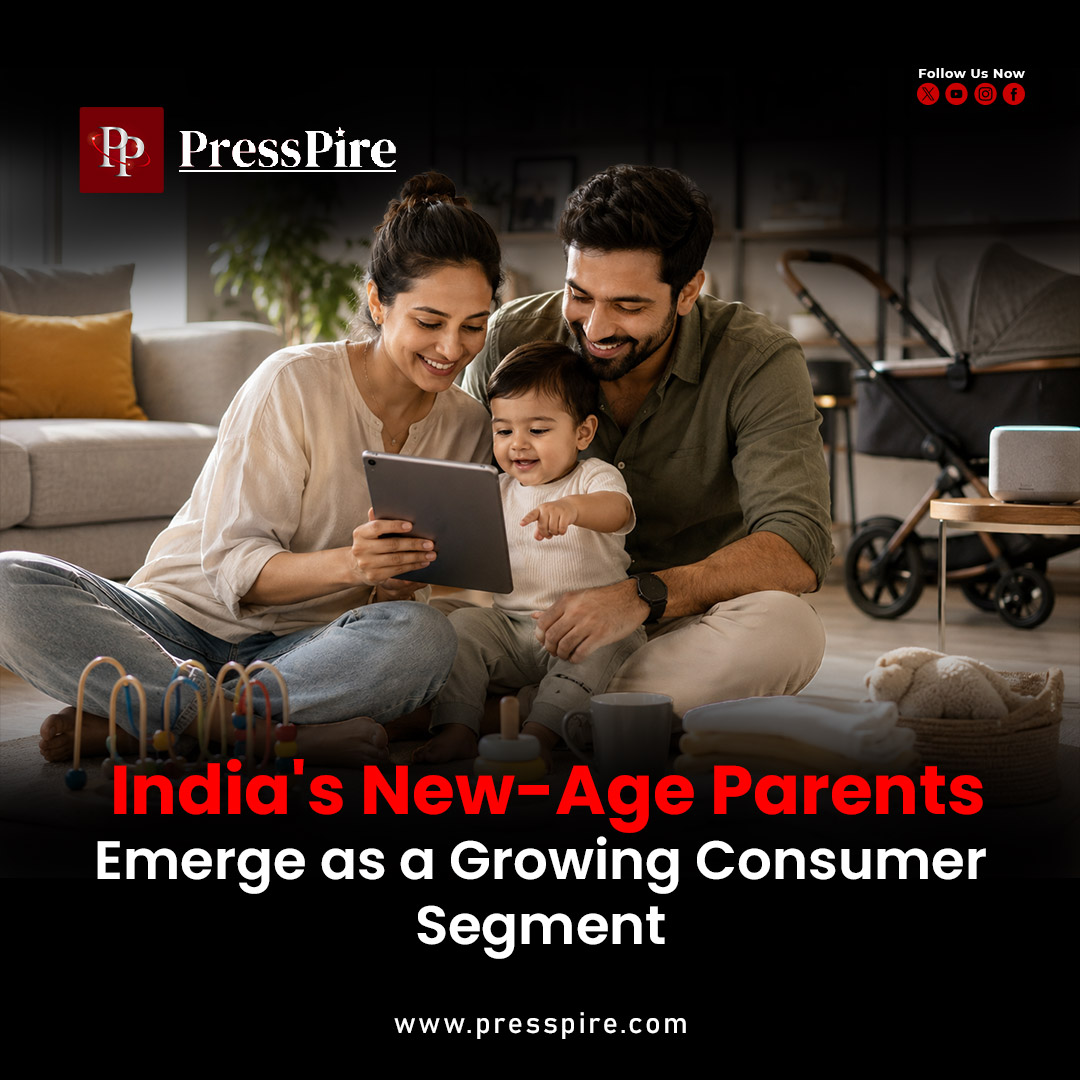
India’s New-Age Parents Emerge as a Growing Consumer Segment
India’s new-age parents are emerging as a powerful consumer segment in India. Digitally savvy, time-poor and research-driven, they are spending more on premium babycare, healthcare, education, nutrition, toys and convenience-led services while increasingly relying on e-commerce, quick commerce, social media and AI-driven recommendations.
Why India’s New-Age Parents Matter
India’s new-age parents are quietly becoming one of the country’s most important emerging consumer groups. Parenting today looks very different from what it did a generation ago. Young mothers and fathers are increasingly researching ingredients, comparing products, reading reviews, consulting experts and searching social media before making decisions for their children. The change is not limited to baby products. It extends into healthcare, education, nutrition, toys, travel, technology, wellness and household services. A recent report by ETEntrepreneur, citing Numerator research, estimates that India’s urban babycare market reached around ₹7,000 crore by 2025, while nearly two-thirds of urban households now purchase babycare products online.
This shift is creating what investors and founders increasingly describe as the “new-age parent wallet.” Unlike traditional consumption patterns, where parents primarily purchased necessities, today’s parents are increasingly willing to spend when a product promises better outcomes, greater convenience, safety or peace of mind. That makes India’s new-age parents more than a demographic group. They are becoming a distinct consumer segment with unique expectations and considerable commercial influence.
The Rise of India’s New-Age Parents
India’s new-age parents are largely digitally connected, professionally active and exposed to global parenting trends. Many urban families are also nuclear households, meaning parents often manage careers, childcare and household responsibilities with less extended-family support than previous generations. This has increased the value of products and services that save time and reduce the mental burden associated with parenting. ETEntrepreneur reports that today’s parents are researching products extensively while simultaneously having less time to process the growing amount of information available to them.
The result is a fascinating consumer behaviour: parents want more choices, but they also want someone to simplify those choices. They are willing to explore new brands if those brands can demonstrate credibility, safety and usefulness. Social media has further accelerated discovery, with parents finding products through Instagram, WhatsApp, Google and online communities. Earlier generations often relied heavily on family recommendations; new-age parents increasingly combine traditional advice with digital research and professional opinions.
Why New-Age Parents Spend More
The biggest change in the Indian parenting market is the movement from necessity-driven spending to outcome-driven spending. Parents are no longer simply asking whether a product is affordable or available. They are asking whether it is safer, healthier, more effective or more beneficial for their child. This explains the growing interest in premium babycare, organic or carefully formulated products, educational toys, developmental tools and personalised services.
Numerator research cited by ETEntrepreneur found that 62% of parents opted for premium brands for children up to at least two years old, while 67% used products without chemicals or additives until the child turned two. These numbers highlight an important commercial opportunity. Parents may be price-conscious in many areas of household spending, but when it comes to their children, perceived quality can outweigh the lowest price. For brands, therefore, the opportunity is not simply to sell more products but to build confidence around why a product deserves a place in a family’s routine.
Digital Shopping Is Changing Parenting
E-commerce and quick commerce are transforming how India’s new-age parents shop. A parent dealing with a demanding workday may not have the time to visit multiple stores for diapers, wipes, clothing, toys or skincare. Doorstep delivery has therefore moved from being a convenience to becoming part of the modern parenting infrastructure. Nearly two-thirds of urban Indian households now buy babycare products online, according to Numerator research cited in recent industry coverage.
Quick commerce is adding another layer to this transformation. Platforms focused on baby and children’s products are increasingly experimenting with curated assortments, faster delivery and offline experiences. Peeko, for example, has reported that parents are purchasing higher-value products on its platform, while apparel represents a significant portion of its sales. This suggests that parents are gradually becoming comfortable purchasing more than emergency supplies online. As trust grows, digital platforms could become regular destinations for planned parenting purchases rather than simply last-minute solutions.
Premium Babycare Gains Attention
Premium babycare is becoming one of the clearest expressions of changing parental priorities. Modern parents are increasingly interested in ingredients, product formulation, certifications, safety standards and brand transparency. They want to understand what touches their child’s skin, what goes into their food and whether a product genuinely delivers the benefit promised on its packaging. Industry commentary has also highlighted growing demand for premium and sustainable baby products as parents gain access to global information and become more conscious of product quality.
This trend is creating space for both established companies and new-age direct-to-consumer brands. Babycare startups are attempting to turn traditional practices into branded, organised products, while others are building curated marketplaces that reduce the number of decisions parents have to make. The opportunity is particularly significant because the Indian baby and kids category remains fragmented across offline stores, marketplaces, social-commerce sellers and specialised brands. Companies that can combine trust, quality, education and convenience may therefore have a strong advantage in winning the modern parent.
AI and Technology Enter Parenting
Technology is now moving beyond shopping and entering the decision-making side of parenting. Today’s parents already use search engines, social media, parenting communities and digital health platforms to answer questions about nutrition, development, sleep, products and everyday childcare. The next stage could be the rise of personalised AI-powered parenting assistance. Investors and founders cited by ETEntrepreneur see opportunities for platforms that combine information, expert advice, commerce, healthcare and AI personalisation across different stages of the parenting journey.
The opportunity is significant because parenting generates thousands of small decisions. What should a child eat? Which activity is appropriate for a particular age? What toy encourages development without excessive screen exposure? Which product is genuinely necessary? Technology can potentially reduce this cognitive load by bringing relevant information together. However, trust will remain essential. Parents may experiment with technology for convenience, but decisions involving health, safety and child development will require credible information, responsible design and expert oversight.
The Opportunity for Indian Brands
For Indian brands, India’s new-age parents represent an opportunity to rethink how products are designed, marketed and delivered. The winning proposition may not always be the cheapest product or the largest catalogue. Instead, brands could compete by solving specific parental problems. A babycare company can focus on ingredient transparency. An education brand can focus on measurable learning outcomes. A toy company can address screen-free development. A healthcare platform can simplify access to reliable information. A commerce platform can combine speed with curation.
The strongest brands will also understand that parents do not necessarily think in product categories. They think in outcomes. A parent buying a toy may actually be looking for better cognitive development. A parent purchasing skincare may be looking for safety and reassurance. A parent ordering groceries may be trying to provide better nutrition. This outcome-based approach could reshape the Indian parenting market and encourage companies to build longer relationships with families rather than relying on one-time transactions.
The Future of the Parent Consumer
The rise of India’s new-age parents signals a broader transformation in Indian consumption. What begins with babycare can extend into healthcare, education, wellness, entertainment, travel, technology and financial planning. Parents are becoming increasingly informed consumers who expect brands to respect their time, answer their questions and demonstrate real value.
The next major opportunity may therefore belong to companies that remain relevant as children grow. A platform that begins with pregnancy preparation could eventually support infant care, nutrition, education, developmental products and family wellness. Investors are already recognising this wider opportunity. Recent funding activity involving babycare and parenting startups such as OZi, Peeko and Wippi reflects growing entrepreneurial interest in solving problems across the modern parenting journey.
India’s new-age parents are not simply spending more; they are spending differently. They research before purchasing, compare before trusting and increasingly pay for convenience, quality and outcomes. For businesses, that makes them a demanding but valuable audience. For the Indian economy, it represents the emergence of a consumer category that could influence multiple industries for years to come.
As parenting becomes increasingly digital, personalised and outcome-focused, the companies that understand the parent behind the purchase will have the strongest chance of building lasting brands. The future of India’s consumer economy may not only be shaped by young shoppers themselves, but also by the young parents making carefully considered decisions for the next generation.
For more insights navigate: PressPire | Stories That Shape the Future
Read previous article here: https://presspire.com/ayati-devices/
Follow PressPire on Facebook | Instagram | LinkedIn | YouTube
PressPire | Stories That Shape the Future