
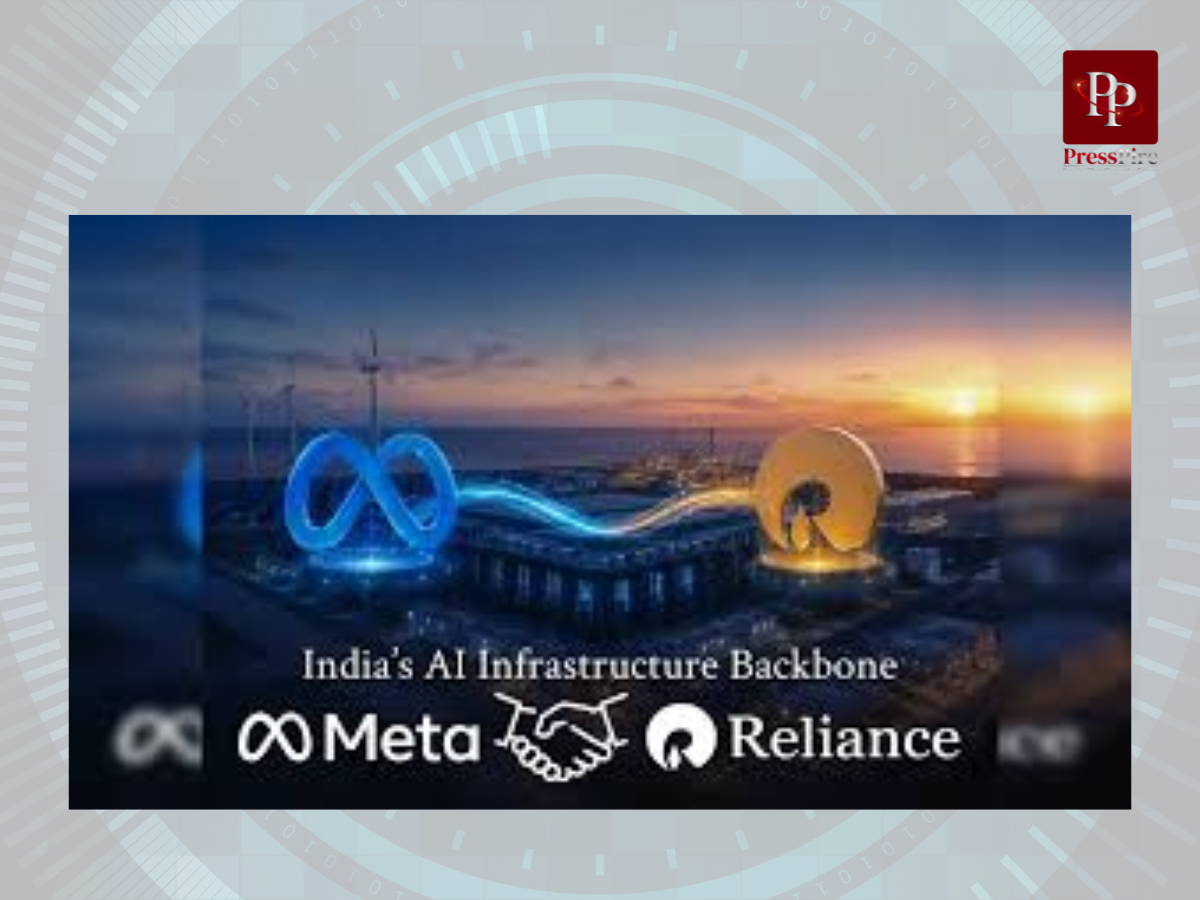
Meta-Reliance AI Data Centre in Jamnagar: Why This Project Could Redefine India’s Digital Future
Meta-Reliance: A New Chapter in India’s AI Infrastructure Race
India’s ambitions to become a global artificial intelligence powerhouse received a major boost with Meta and Reliance Industries announcing plans to develop an AI-enabled hyperscale data centre in Jamnagar, Gujarat. The project marks Meta’s first dedicated AI-ready data centre investment in India and represents one of the most significant infrastructure commitments made by a global technology company in the country’s digital economy.
Under the agreement, Reliance will develop a 168-megawatt facility that Meta will lease, with provisions for future expansion as AI computing requirements continue to grow. The project is expected to be delivered within two years and will become a critical component of Meta’s global AI infrastructure network.
While the announcement may appear to be just another data centre project, its implications extend far beyond server racks and computing hardware. It reflects India’s growing importance in the global AI ecosystem and signals the beginning of a new era where the country is not merely a consumer of digital technologies but also a host for the infrastructure that powers them.
Why Meta-Reliance Is Betting Big on India
Over the last decade, India has emerged as one of Meta’s largest and fastest-growing markets. Hundreds of millions of Indians use Facebook, Instagram and WhatsApp every day, making the country central to Meta’s long-term growth strategy.
However, the AI revolution has fundamentally changed the infrastructure needs of technology companies. Advanced AI models require enormous computing power, massive storage capacity and low-latency networks. As demand for AI applications surges globally, companies like Meta are racing to secure dedicated computing resources. India offers several advantages:
Meta-Reliance: Massive Digital User Base
With more than a billion internet users expected in the coming years, India represents one of the largest markets for AI-powered products and services.
Meta-Reliance: Growing Enterprise AI Adoption
Indian businesses are rapidly integrating AI into customer service, manufacturing, logistics, healthcare and financial services, creating substantial demand for local computing infrastructure.
Meta-Reliance: Regulatory and Data Sovereignty Requirements
As governments worldwide tighten regulations around data storage and processing, having infrastructure within national borders is becoming increasingly important. For Meta, investing in India is therefore both a business necessity and a strategic opportunity.
Why Jamnagar Has Become the Chosen Location for Meta-Reliance
For decades, Jamnagar has been synonymous with refining and energy. Reliance’s refinery complex transformed the city into one of the world’s most important energy hubs.
Now, the company appears to be positioning Jamnagar as an AI and digital infrastructure hub as well. Several factors make the location attractive:
Meta-Reliance: Access to Energy
AI data centres consume enormous amounts of electricity. Unlike traditional enterprise facilities, AI-focused centres operate high-performance GPUs and specialized processors around the clock.
Jamnagar provides access to large-scale energy infrastructure, a critical requirement for hyperscale computing operations.
Renewable Power Ecosystem
Reports indicate that the facility will be powered primarily through renewable energy sources. Meta is also expanding partnerships with renewable energy providers to support nearly one gigawatt of clean energy capacity in India.
Industrial Infrastructure at Meta-Reliance
Reliance has already invested heavily in roads, utilities, logistics networks and industrial facilities in the region, reducing development timelines and operational costs.
Long-Term Expansion Potential- Meta-Reliance
The announced 168 MW capacity is only the beginning. The project has been designed with scalability in mind, allowing future expansion as AI demand increases.
The AI Infrastructure Boom Is Just Beginning at Meta-Reliance
The Meta-Reliance partnership comes amid a global race to build AI infrastructure. Training and deploying large AI models requires vast amounts of computing power. Industry analysts estimate that global demand for AI-focused data centres could increase several-fold over the next decade.
India is increasingly becoming a preferred destination for these investments because of:
- Growing cloud adoption
- Rising AI workloads
- Expanding digital services
- Strong domestic demand
- Competitive operating costs
Industry estimates suggest India’s data centre market could nearly double in value by 2034 as organizations invest heavily in cloud and AI infrastructure.
The Jamnagar facility is therefore not an isolated investment but part of a broader transformation underway across the country.
Reliance’s Vision: Building India’s Compute Backbone
For Reliance, this partnership fits into a much larger strategy. Over the last few years, the company has steadily expanded beyond telecommunications and energy into cloud computing, artificial intelligence and digital platforms.
Reliance has repeatedly emphasized its ambition to create large-scale AI infrastructure capable of supporting India’s future digital economy. Previous announcements have highlighted plans for gigawatt-scale AI-ready data centres and significant investments in computing infrastructure.
The Meta partnership strengthens Reliance’s position as a provider of end-to-end AI infrastructure services, including:
- Data centre development
- Network connectivity
- Utility management
- Renewable energy integration
- Managed digital services
This vertical integration gives Reliance a unique advantage compared with many standalone data centre operators.
Sustainability Will Be Closely Watched
Large AI data centres have increasingly come under scrutiny worldwide due to concerns about electricity and water consumption.
To address these concerns, the Jamnagar facility is expected to use renewable energy and cooling systems that rely on desalinated seawater rather than freshwater resources. Meta has also committed to covering the associated energy and water costs.
Nevertheless, environmental experts and local communities are likely to closely monitor the project.
Around the world, debates have emerged regarding:
- Energy consumption of AI facilities
- Water requirements for cooling systems
- Land usage
- Carbon footprint of large-scale computing
How effectively Reliance and Meta balance growth with sustainability could become a benchmark for future AI infrastructure projects in India.
Meta-Reliance What It Means for India’s Economy
The significance of the Jamnagar project extends beyond technology.
Meta-Reliance Strengthening Digital Sovereignty
Hosting advanced AI infrastructure domestically reduces dependence on overseas computing resources and strengthens India’s technological self-reliance.
Meta-Reliance Attracting Global Investment
A project of this scale sends a strong signal to international investors that India is ready to host next-generation AI infrastructure.
Meta-Reliance Creating an AI Ecosystem
While data centres themselves may not generate massive direct employment, they often attract a broader ecosystem of:
- Cloud service providers
- AI startups
- Semiconductor companies
- Enterprise technology firms
- Research institutions
Accelerating Innovation Meta-Reliance
Local access to high-performance computing can significantly reduce costs and improve accessibility for Indian startups and enterprises developing AI applications.
The Bigger Picture for Meta-Reliance
The Meta–Reliance partnership is about much more than constructing a data centre. It reflects a strategic shift in how global technology companies view India, not merely as a market of users but as a critical destination for AI infrastructure investment.
As artificial intelligence becomes the defining technology of the coming decade, the countries that host the computing infrastructure powering AI will gain significant economic and strategic advantages. By bringing Meta’s first AI-enabled data centre to Jamnagar, Reliance is helping position India at the centre of that transformation.
If executed successfully, the project could become a landmark moment in India’s technological evolution, one that transforms Jamnagar from an energy capital into a global hub for artificial intelligence and digital infrastructure.
For more insights navigate: PressPire | Stories That Shape the Future
Read Previous Article here: https://presspire.com/rippling/
Follow PressPire on Facebook | Instagram | LinkedIn | YouTube
PressPire | Stories That Shape the Future