
India’s Diwali payment activity highlights the scale of UPI, the difference between transaction volume and value, and the infrastructure supporting digital commerce.
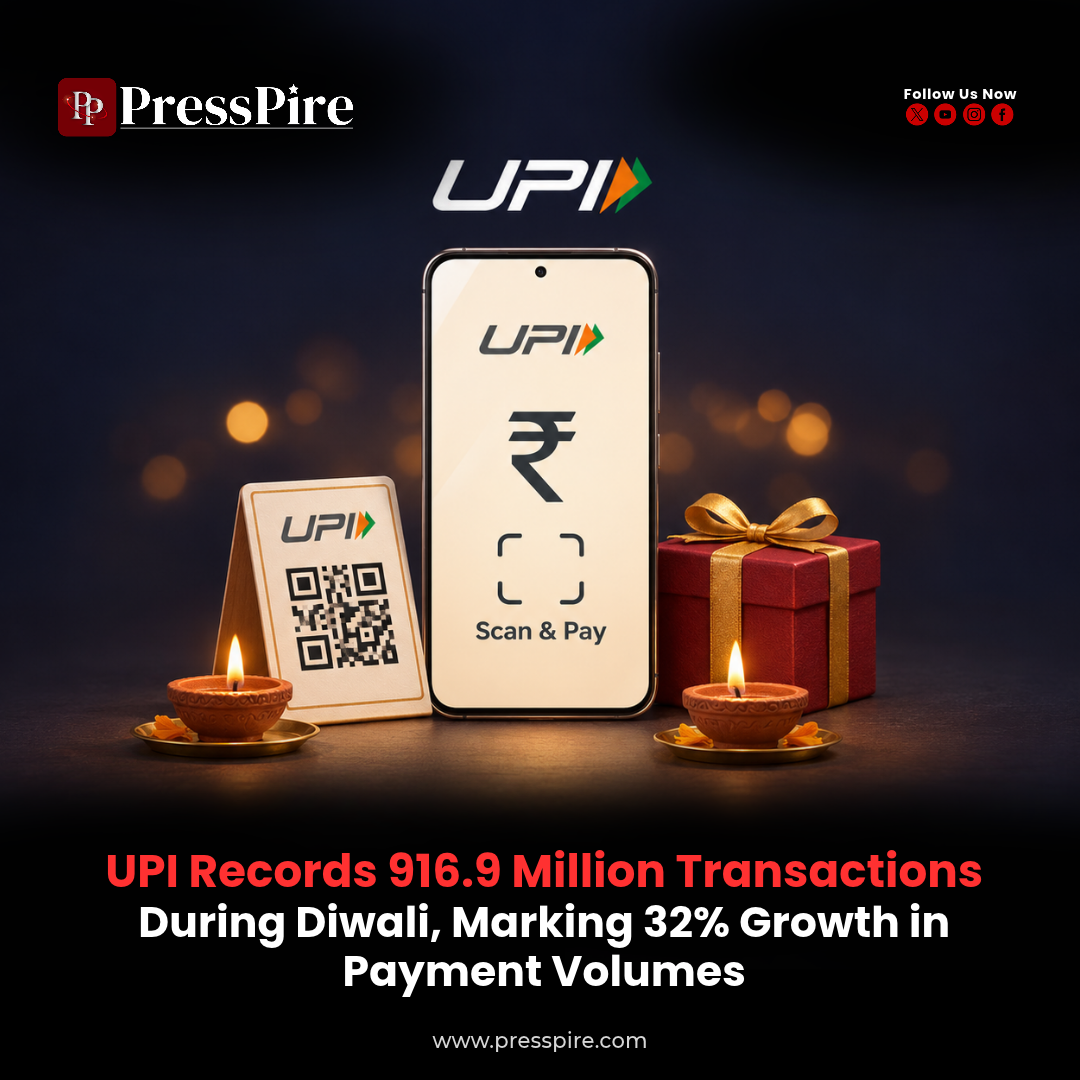
UPI transactions reached 916.9 million on Diwali, November 8, 2026, marking approximately 32% year-on-year growth in payment volumes. The figure puts India’s digital payment network at the centre of another busy festive period.
According to National Payments Corporation of India data cited in a November 10 Press Trust of India report, the value of transactions on the day reached ₹90,029.43 crore.
The increase in transaction count was considerably stronger than the rise in payment value. That distinction helps explain what the headline measures: more transfers moved through UPI, while the total money transferred increased at a slower pace.
The Diwali figures offer a useful view of how digital payments support consumers and businesses—and why transaction growth brings demands on banks, payment applications and customer support.
Understanding the Diwali UPI Transactions Data
The reported year-on-year comparison shows growth in both transaction volume and transaction value, although at very different rates.
| Measure | Diwali 2026 | Reported year-earlier comparison | Change |
|---|---|---|---|
| Transaction volume | 916.9 million | 695.7 million | Approximately 31.8% |
| Transaction value | ₹90,029.43 crore | ₹88,350.79 crore | Approximately 1.9% |
Percentage changes are calculated from the reported totals. The headline rounds volume growth to 32%.
The current transaction count is equivalent to 91.69 crore payments in a single day.
However, transaction volume measures the number of payments processed. It does not represent the number of individual users, because one person can make several payments.
Similarly, the value figure represents money transferred through the network. It should not be treated as a direct measure of retail sales or the revenue earned by payment companies.
These distinctions make the data more useful when assessing UPI’s role in the wider economy.
Why Volume Growth and Value Growth Tell Different Stories
Transaction volume answers a straightforward question: how many payments took place?
Transaction value answers another: how much money moved through those payments?
When the number of payments grows much faster than their combined value, the average amount per transaction falls.
Using the published figures, the average UPI transaction on Diwali was approximately ₹982, compared with about ₹1,270 in the reported year-earlier comparison.
These are calculated averages across all transactions included in the totals. They are not estimates of the average shopping bill or the amount spent by each household.
A lower average transaction amount can reflect changes in the mix of payments. More small transfers, a different balance between personal and merchant payments, or fewer large transfers can all affect the result.
The aggregate figures do not establish which factor contributed most. They show that payment activity expanded more strongly than the total value transferred.
For businesses analysing festive demand, transaction counts and payment values therefore need to be read together.
Payment Activity Was Higher Before Diwali
The day before the festival recorded even greater activity.
On November 7, 2026, UPI processed 975.8 million transactions, with a total value of ₹1,36,118 crore. Both measures exceeded the figures recorded on Diwali itself.
This makes the period before the festival an important part of the story.
For merchants, preparation may involve staffing payment counters, checking transaction notifications and ensuring that payments can be matched with orders. Banks and payment providers also need to plan for demand across the surrounding days.
A festival date provides a clear reporting milestone, but the operational workload extends beyond that single day.
The comparison also explains why the Diwali figure should not automatically be described as the network’s highest daily transaction count.
October Provides a Broader View of UPI Growth
The festive activity followed a substantial month for India’s payment network.
NPCI’s October 2026 statistics recorded approximately 25.47 billion UPI transactions, with a combined value of ₹31.53 lakh crore. The monthly table also listed 758 banks live on UPI.
Based on the published monthly volume, October averaged approximately 821.5 million transactions per day. Diwali’s transaction count was about 11.6% above that daily average.
This comparison provides context rather than a direct measure of festival-driven growth. A monthly average includes weekdays, weekends and other variations in payment activity.
Even so, it shows that the Diwali total emerged from a network already processing hundreds of millions of transactions each day.
A useful assessment of UPI therefore needs both perspectives: daily figures reveal peaks, while monthly data helps establish the underlying level of activity.
How UPI Supports Everyday Payments
The Unified Payments Interface, developed by NPCI, enables instant payments through participating banks and payment applications.
It supports transfers between individuals as well as payments from customers to merchants. Common payment methods include UPI IDs and QR codes.
For a shopper, the visible process may involve opening an application, scanning a merchant’s code, checking the details and authorising the payment.
Behind that interaction, several organisations perform different roles. The application provides the customer interface, banks handle the relevant accounts, and NPCI provides the network connecting participants.
This shared arrangement allows customers and merchants to transact across participating institutions.
The practical value comes from making a payment method available across many situations. A consumer can use UPI for purchases and personal transfers without learning a completely different process for each recipient.
That familiarity helps explain why UPI is relevant to busy shopping periods, when customers may complete several payments across different businesses.
What Digital Payments Mean for Small Businesses
For a small retailer, accepting a digital payment is one part of running the business.
The merchant also needs to identify which customer paid, confirm the amount received and connect the payment with the correct purchase.
During busy periods, these tasks become more demanding. Several customers may pay similar amounts within a short time, while staff are also managing stock, packaging orders and serving the next person.
A useful merchant payment service therefore needs to support more than the initial transfer.
Practical requirements include:
- Clear confirmation: Helping staff establish whether a payment has been received.
- Transaction records: Making it easier to review receipts and identify individual payments.
- Order matching: Connecting digital receipts with the goods or services sold.
- Refund handling: Supporting purchases that are cancelled, returned or adjusted.
- Payment support: Providing a route to resolve pending or disputed transactions.
These are operational implications of higher payment activity, rather than outcomes measured by the Diwali totals.
For merchants, the benefit of digital payments depends partly on how well these everyday tasks are handled.
The Infrastructure Behind Rising UPI Transactions
A large daily transaction count creates work across the payment network.
Payment applications need to respond to customers. Banks need to process requests and update accounts. Network services need to route messages, while participating organisations must communicate the final payment status.
The number of transactions matters because each payment requires processing, even when the amount transferred is small.
This helps explain why strong volume growth has an operational significance separate from growth in payment value. A greater number of smaller payments can increase processing demand without producing a similar increase in the money transferred.
Daily totals also do not show how evenly activity was distributed. A network may face much heavier demand during particular hours than the day’s average suggests.
Capacity planning therefore requires more detailed information about peak traffic, response times and payment outcomes.
The Diwali figures demonstrate the scale of activity. Assessing service quality requires additional measures.
Why Reliability Matters Alongside Growth
A customer at a checkout needs a clear answer about whether a payment succeeded.
Uncertainty can interrupt the purchase. The merchant may be unable to confirm receipt, while the customer may see a pending status or a debit that needs clarification.
NPCI’s ecosystem reporting distinguishes between different payment outcomes. Technical declines can arise from system or network problems, while business declines can include issues such as an incorrect PIN or a breached transaction limit.
These categories matter because they point to different causes and different remedies.
NPCI’s UPI Help framework also provides a basis for checking payment status and raising transaction-related concerns through participating applications.
For the wider payment ecosystem, useful measures of progress include successful completion, clear status updates, effective reversals and accessible complaint handling.
The headline transaction count alone cannot establish that every participant delivered the same level of service during the festival.
What the Figures Mean for India’s Fintech Businesses
Higher payment activity can create demand for services around the transaction itself.
Merchants may need better reporting, payment notifications, accounting integrations and tools that connect receipts with orders. Larger businesses may require systems capable of matching payments across multiple locations.
For fintech companies, these needs provide possible areas for product development.
However, transaction growth does not automatically translate into the same rate of revenue growth. A payment provider’s commercial performance depends on its services, customer relationships, pricing arrangements and operating costs.
The opportunity is to solve identifiable business problems around payments.
A product that saves a merchant time when checking receipts or resolving a refund can offer value beyond displaying the total number of transactions processed.
What Comes Next for UPI?
The Diwali figures reinforce UPI’s importance as a channel for moving money across India.
They also show why payment growth needs to be examined carefully. Transaction frequency, total value, average payment size and service quality describe different aspects of the network.
For consumers, the priority is a payment that completes with a clear confirmation. For merchants, it is the ability to accept money, identify receipts and manage transactions as part of daily business.
The next phase of UPI’s development will depend on how consistently those needs are met as activity expands.
Festive peaks provide a visible measure of scale. The lasting value comes from making digital payments dependable throughout the year.
For more insights navigate: PressPire | Stories That Shape the Future
Read previous article here : sarvam-ai-sashikumar-sreedharan-president-cbo/
Follow PressPire on Facebook | Instagram | LinkedIn | YouTube
PressPire | Stories That Shape the Future