
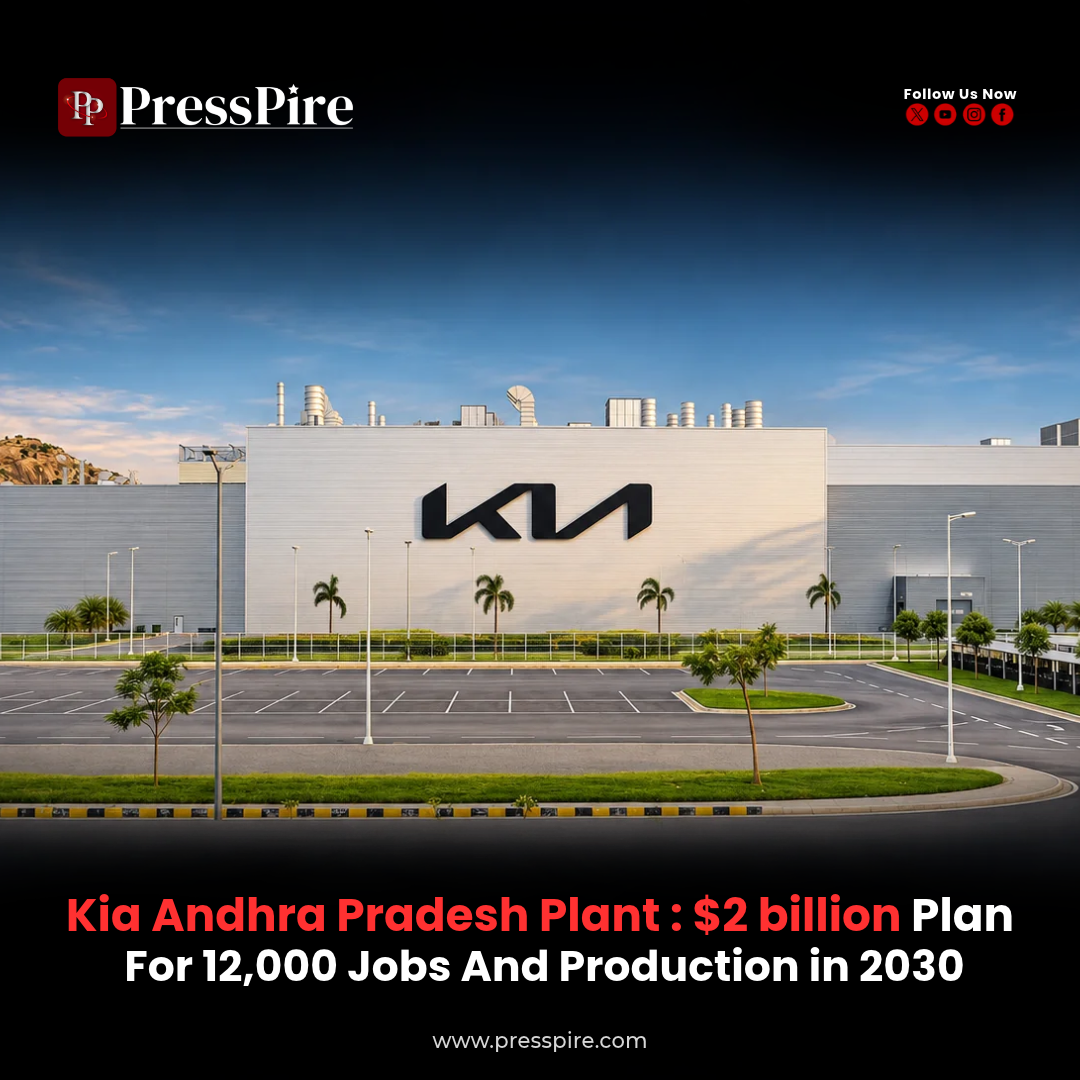
Kia and its suppliers are preparing a second manufacturing facility in Anantapur, expanding the company’s plans for vehicle production and regional employment.
The proposed Kia Andhra Pradesh plant forms part of a $2 billion investment plan involving the automaker and its supplier partners. Announced on 12 November 2026, the project follows a memorandum of understanding with the state government for a second manufacturing facility in Anantapur.
Production is targeted for early 2030. The expansion would give the company more room to introduce vehicles and serve customers in India and overseas.
For Andhra Pradesh, the opportunity extends to component manufacturing, industrial employment and services surrounding the factory. Delivering those benefits will depend on turning the announced investment into operating facilities, supplier orders and sustained production.
What the Kia Andhra Pradesh plant plan includes
The company’s announcement sets out the following proposed project:
| Project element | Announced plan |
|---|---|
| Combined investment | $2 billion from Kia and supplier partners |
| Location | Anantapur, Andhra Pradesh |
| Site area | 465 acres, including supplier facilities |
| Additional annual capacity | 2 lakh vehicles |
| Expected employment | Approximately 12,000 direct and indirect jobs |
| Target for production | Early 2030 |
These figures describe the company’s proposed expansion.
The announcement does not mean the entire investment has already been spent or that recruitment for all projected positions has taken place.
Why Kia is expanding in Anantapur
Kia’s manufacturing relationship with Andhra Pradesh began with its first agreement with the state government in April 2017. Mass production at the existing Anantapur facility started in August 2019.
The proposed Kia Andhra Pradesh plant would build on that established presence. From an operational perspective, expanding in an existing manufacturing region can offer advantages through supplier familiarity, workforce experience and knowledge of local infrastructure.
The financial commitment also builds on earlier spending. Kia and its suppliers invested $2.9 billion in the first operation; adding the proposed investment would bring their combined commitment across both facilities to approximately $5 billion.
That total includes supplier investment. It therefore represents the scale of the wider manufacturing project, including the businesses supporting vehicle production.
How much production capacity could increase
The Kia Andhra Pradesh plant expansion would add 2 lakh vehicles of annual capacity to the existing 4.3 lakh, bringing the combined figure to approximately 6.3 lakh vehicles a year.
Using those announced figures, the addition represents an increase of about 46.5% in annual manufacturing capacity.
Installed capacity describes the volume a manufacturing operation is equipped to produce under its operating assumptions. Actual output depends on customer demand, production schedules, the mix of vehicles and component availability.
For Kia, the business value will come from using the additional capacity efficiently. A larger factory network creates room for growth, while also increasing the importance of matching production with vehicles that customers want to buy.
Sales growth provides the commercial context
The Kia Andhra Pradesh plant proposal comes during a period of rising vehicle dispatches.
According to sales figures reported by ETAuto, Kia recorded 33,462 domestic wholesales in October 2026, an increase of 13.22% from a year earlier. January–October wholesales reached 2,86,470 vehicles, up 21.31% and already exceeding the company’s full-year 2025 total.
Wholesales measure dispatches to dealers. They provide evidence of the company’s distribution activity, while retail registrations are a separate measure of purchases by end customers.
The recent performance helps explain the commercial interest in expansion. However, a plant scheduled for the next decade needs a longer demand outlook than one strong sales season. Product development, pricing and the strength of the dealer network will influence how much of that growth can be sustained.
Supporting combustion-engine and electric models
The Kia Andhra Pradesh plant is intended to support new models across internal combustion engine and electric powertrains.
The broader strategy provides useful context. At its CEO Investor Day in April 2026, Kia outlined a target of 4.1 lakh annual vehicle sales in India by 2030, alongside a planned expansion of its model range and electrified offerings.
The production-capacity figure and the India sales target measure different things. Manufacturing capacity can also support exports and provide room to adjust production as demand changes.
From a planning perspective, supporting different powertrains could help the company respond to changes in customer preferences. The eventual balance will depend on model demand, manufacturing economics and the pace at which buyers adopt electric vehicles.
The plant announcement does not identify a complete list of models assigned to the new facility.
How production and suppliers fit together
Supplier participation is central to the Kia Andhra Pradesh plant investment. A vehicle factory depends on a coordinated flow of components, equipment and services.
Kia’s plans include stamping, welding, painting and assembly. These cover the main stages of turning sheet metal and supplied components into a finished vehicle:
- Stamping shapes metal into panels.
- Welding joins structural sections to form the body.
- Painting adds protective coatings and the exterior finish.
- Assembly brings together the body, powertrain, interiors and other systems.
The supplier facilities included in the project matter because production requires components to arrive in the correct quantities, at the right time and to agreed quality standards.
The commercial implication is that commissioning the main factory is only part of the work. Supplier readiness and manufacturing quality must develop alongside it for the operation to produce vehicles consistently.
What the employment estimate means for Andhra Pradesh
The Kia Andhra Pradesh plant could support employment both within the manufacturing operation and across businesses supplying or servicing it.
The projected job figure combines direct and indirect employment. It therefore covers a broader economic effect than positions on the automaker’s own payroll.
Potential opportunities would depend on the work required across production, engineering, maintenance, quality control and supporting services. The announcement does not provide a detailed breakdown of hiring by occupation or employer.
For the region, the depth of the benefit will depend on how effectively local workers and businesses participate. Relevant technical training, dependable infrastructure and suppliers capable of meeting automotive quality requirements will help determine that outcome.
What will determine the project’s success
The Kia Andhra Pradesh plant now has a defined investment proposal and a target production window. Progress can be assessed through construction, equipment installation, supplier preparation, workforce training and vehicle-production readiness.
The business challenge will continue after commissioning. New capacity must be supported by competitive models, steady orders and reliable delivery. If demand develops more slowly than expected, a larger manufacturing base can be harder to use efficiently.
For Andhra Pradesh, the meaningful results will be operating supplier facilities, sustained jobs and production that supports business activity over time. For Kia, success will mean converting the expansion into vehicles that sell in domestic and overseas markets.
For more insights navigate: PressPire | Stories That Shape the Future
Read previous article here : banofi-banana-waste-leather-alternative/
Follow PressPire on Facebook | Instagram | LinkedIn | YouTube
PressPire | Stories That Shape the Future