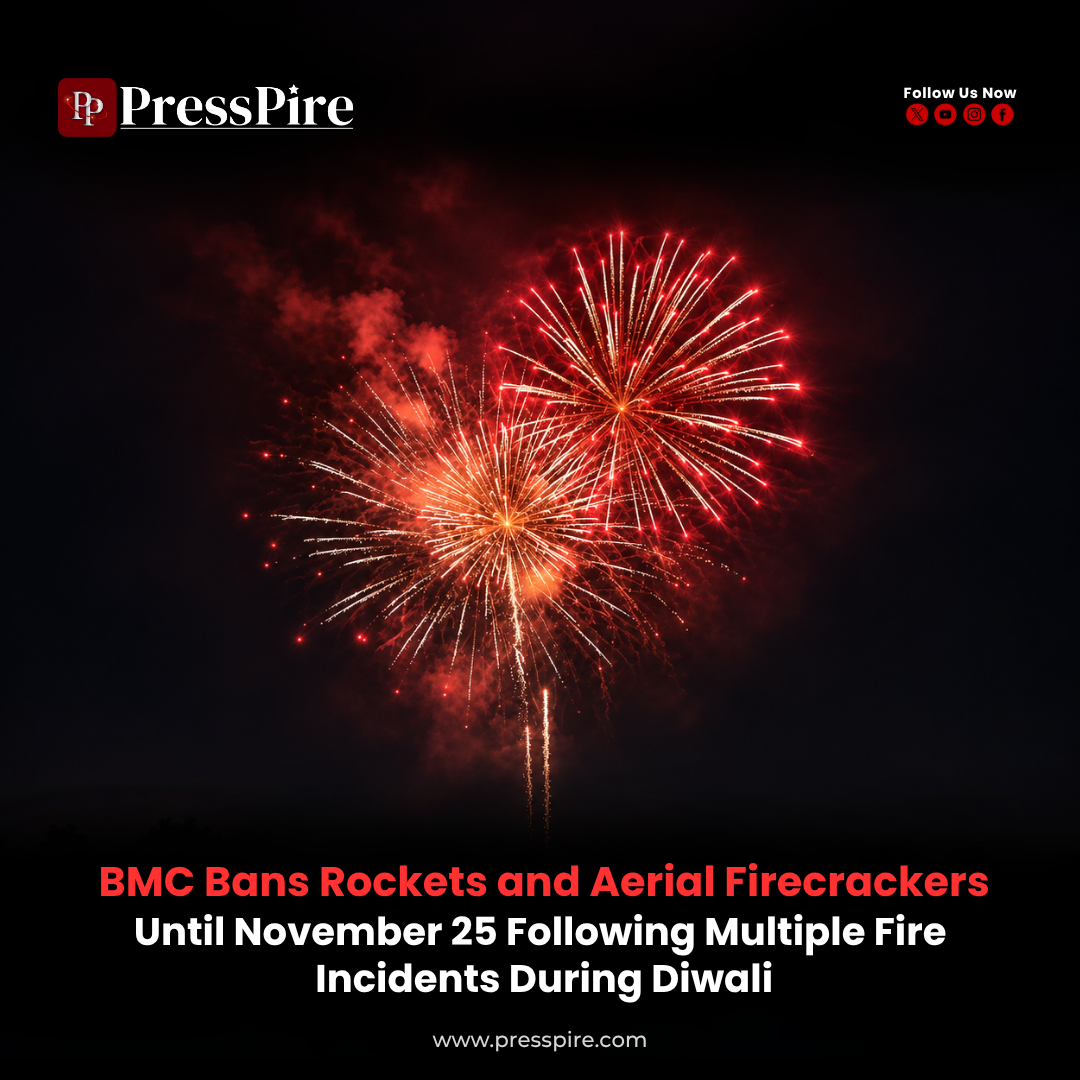
BMC Bans Rockets and Aerial Firecrackers in Mumbai Until November 25 After Fires
The restriction covers public and private premises within BMC limits following a surge in fire incidents during Diwali.
The Brihanmumbai Municipal Corporation (BMC) has banned the use of rockets and similar aerial firecrackers across Mumbai until November 25, 2026, following multiple fire incidents during Diwali celebrations.
The BMC firecracker ban took effect on November 9 and will remain in force until 11:59 pm on November 25. It applies throughout the civic body’s jurisdiction, including residential buildings, terraces, balconies, courtyards, parking areas and slum settlements.
The restriction follows concerns that burning fireworks can land on buildings and combustible materials, triggering fires in densely populated neighbourhoods.
BMC Firecracker Ban: Key Details
| Detail | What the restriction covers |
|---|---|
| Prohibited fireworks | Rockets and similar firecrackers that fly into the air |
| Geographical scope | Areas within BMC jurisdiction |
| Starting date | November 9, 2026 |
| Ending time | 11:59 pm on November 25, 2026 |
| Properties covered | Public and private premises |
| Main reason | Prevention of fire incidents and protection of life and property |
| Other firecrackers | Their use remains subject to existing laws, official directions and court orders |
The order was issued through the Urban Disaster Management Authority, Brihanmumbai, with Additional Municipal Commissioner Prajakta Lavangare-Verma acting as its chairperson-in-charge.
Why Mumbai Has Restricted Aerial Firecrackers
The disaster management authority identified the danger posed by rockets and other fireworks that travel through the air before falling onto surrounding properties.
Their burning remains can reach rooftops, balconies, windows and materials that catch fire easily. This creates risks for people and buildings beyond the place where a firecracker is launched.
The order highlights conditions that make Mumbai particularly vulnerable: densely populated neighbourhoods, high-rise buildings, closely packed residential and commercial structures, narrow roads and congested settlements.
Authorities said these conditions can turn firecracker-related incidents into serious threats to life and property. The temporary prohibition is intended to reduce the possibility of further fires during the remaining festive period.
Fire Brigade Received 142 Calls on Diwali Day
According to BMC figures cited in news reports, the Mumbai Fire Brigade received 142 fire calls on November 8, of which 137 were attributed to firecrackers.
The 137 figure covers incidents linked to firecrackers overall. It does not establish that every incident involved a rocket or another aerial firework.
Major fires were reported in areas including Dongri, Marol and Vidyavihar, placing considerable demands on firefighting teams. Reports described damage to shops, huts, a garage and parts of commercial premises.
The concentration of incidents during Diwali provided the immediate background to the November 9 restriction.
Private Terraces and Housing Societies Are Covered
The ban extends to private property as well as public spaces.
Residential terraces, rooftops, balconies, courtyards and parking areas fall within its scope. Housing society premises and other private compounds within BMC limits are therefore covered by the restriction on launching rockets and similar aerial fireworks.
The order also applies to slum settlements and other premises across the civic jurisdiction.
This broad coverage reflects the authority’s concern that fireworks launched from one property can endanger surrounding buildings. The location from which a rocket is launched does not contain the risk to that property alone.
Other Firecrackers Remain Subject to Existing Rules
The November 9 order specifically addresses rockets and similar aerial firecrackers.
It states that the use of other varieties will continue to be governed by existing laws, directions from competent authorities and court orders.
Residents should therefore read the new restriction alongside those continuing requirements. Its focus on aerial fireworks does not provide unrestricted permission to use other firecrackers.
The geographical scope is also specific: this order applies within BMC limits. Restrictions issued by neighbouring municipal or district authorities have their own terms and timelines.
Civic Departments Asked to Publicise and Implement the Order
The preventive restriction was issued under the Disaster Management Act, 2005.
Police officials, municipal assistant commissioners and fire services have been directed to support its implementation. Civic authorities have also called for wide publicity so residents understand which fireworks are prohibited and how long the restriction remains effective.
Communication is particularly relevant for housing societies and densely populated neighbourhoods, where celebrations take place close to other homes and commercial properties.
The order remains scheduled to operate through November 25, 2026, with the stated objective of preventing additional fire-related emergencies and protecting residents and property.
For more insights navigate: PressPire | Stories That Shape the Future
Read previous article here : odisha-pumped-storage-project-4708-crore/
Follow PressPire on Facebook | Instagram | LinkedIn | YouTube
PressPire | Stories That Shape the Future