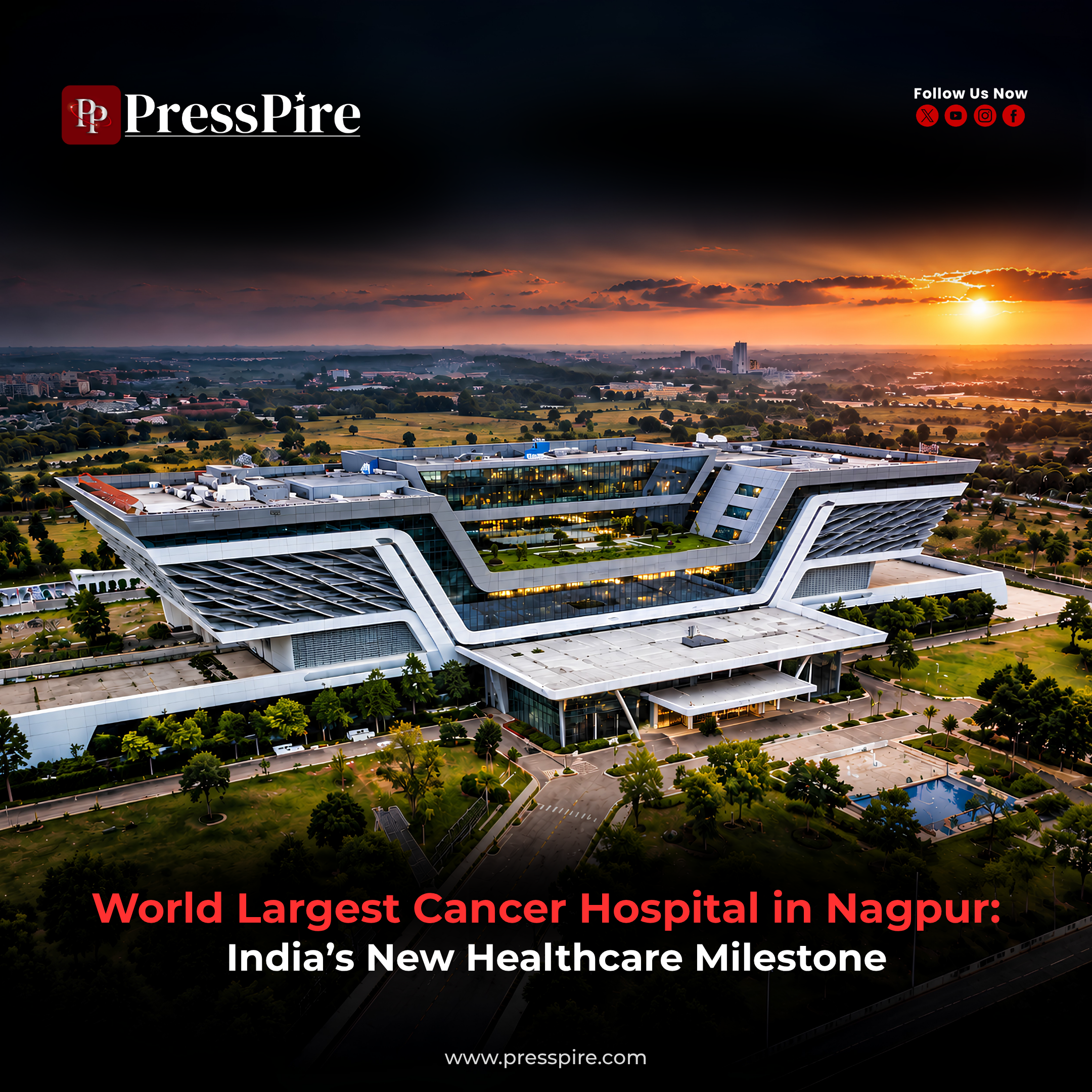
World Largest Cancer Hospital in Nagpur: India’s New Healthcare Milestone
World Largest Cancer Hospital in Nagpur marks a significant milestone in India’s healthcare journey as the country expands its capacity for advanced cancer diagnosis, treatment, and research. The development reflects India’s growing focus on building specialised medical infrastructure capable of addressing the rising demand for oncology services.
Cancer has become one of the major healthcare challenges globally, with increasing demand for early detection, advanced therapies, and comprehensive treatment facilities. In India, the need for specialised cancer centres has grown due to rising patient numbers and the importance of improving access to quality healthcare beyond major metropolitan cities.
Nagpur’s emergence as a major healthcare destination highlights the changing landscape of medical infrastructure in India. Large-scale oncology facilities are helping decentralise cancer treatment and provide patients with access to advanced care closer to their regions.
World Largest Cancer Hospital in Nagpur Strengthens India’s Oncology Infrastructure
World Largest Cancer Hospital in Nagpur represents the expansion of India’s specialised healthcare ecosystem.
Historically, many patients from central and smaller cities had to travel to major metropolitan centres such as Mumbai, Delhi, and Bengaluru for advanced cancer treatment.
The development of large oncology hospitals aims to reduce this dependency by bringing specialised services closer to patients.
Modern cancer hospitals typically integrate multiple areas of treatment, including:
- Medical oncology
- Radiation oncology
- Surgical oncology
- Diagnostic imaging
- Pathology services
- Rehabilitation support
Such integrated healthcare models allow patients to receive diagnosis, treatment, and follow-up care within a single medical ecosystem.
Nagpur Emerges as a New Hub for Advanced Cancer Treatment
The growth of cancer healthcare infrastructure in Nagpur reflects the city’s expanding role as a medical centre in central India.
Nagpur’s geographic location makes it accessible for patients from multiple states, including Maharashtra, Madhya Pradesh, Chhattisgarh, and surrounding regions.
A large-scale cancer treatment facility in the region can support patients who previously needed to travel long distances for specialised medical care.
Healthcare accessibility is an important factor in cancer outcomes because early diagnosis and timely treatment can significantly influence patient management.
Advanced Technology Is Transforming Cancer Diagnosis and Treatment
Modern cancer hospitals are increasingly adopting advanced medical technologies to improve treatment accuracy and patient outcomes.
Technology-driven oncology care includes:
Advanced Imaging Systems
Imaging technologies help doctors detect tumours, understand disease progression, and plan treatment strategies.
Precision Radiation Therapy
Modern radiation techniques allow doctors to target cancer cells more accurately while reducing damage to surrounding healthy tissues.
Robotic and Minimally Invasive Surgery
Advanced surgical technologies can support complex procedures with improved precision.
Digital Healthcare Systems
Electronic medical records and data-driven systems help improve coordination between healthcare teams.
The integration of technology has become a key feature of modern cancer treatment facilities.
India’s Growing Need for Large-Scale Cancer Care Facilities
India’s healthcare system faces increasing demand for specialised cancer treatment due to population growth, lifestyle changes, and improved disease detection.
Cancer care requires long-term medical support involving multiple specialists and continuous monitoring.
Large healthcare institutions play an important role by providing:
- Specialist doctors
- Advanced diagnostic equipment
- Research facilities
- Patient support services
- Training opportunities for medical professionals
The expansion of oncology infrastructure is an important step toward improving healthcare accessibility across the country.
World Largest Cancer Hospital in Nagpur Supports Research and Medical Innovation
World Largest Cancer Hospital in Nagpur also highlights the importance of medical research and innovation in fighting cancer.
Cancer treatment continues to evolve through research in areas such as:
- Immunotherapy
- Targeted therapies
- Precision medicine
- Early detection methods
Research-focused healthcare institutions can contribute to improving treatment approaches and developing better solutions for different types of cancer.
Collaboration between hospitals, universities, pharmaceutical companies, and research organisations plays an important role in advancing oncology care.
Healthcare Infrastructure Beyond Metro Cities Is Expanding
The development of large medical facilities outside major cities reflects a broader transformation in India’s healthcare sector.
For decades, advanced medical services were concentrated mainly in metropolitan areas. However, increasing investment in regional healthcare infrastructure is changing this pattern.
Cities such as Nagpur are becoming important healthcare destinations because they combine accessibility, growing infrastructure, and increasing medical expertise.
This expansion can help reduce regional healthcare inequalities and improve access to specialised treatment.
Challenges in Building World-Class Cancer Care Infrastructure
While advanced cancer hospitals represent significant progress, several challenges remain.
Healthcare institutions must continue focusing on:
Affordable Treatment Access
Advanced medical care needs to remain accessible to patients across different economic backgrounds.
Skilled Healthcare Workforce
Large hospitals require experienced doctors, nurses, technicians, and support staff.
Continuous Technology Upgrades
Medical technology evolves rapidly, requiring ongoing investment and training.
Addressing these challenges will be important for ensuring that healthcare expansion delivers long-term benefits.
World Largest Cancer Hospital in Nagpur Represents India’s Healthcare Future
World Largest Cancer Hospital in Nagpur reflects India’s ambition to build stronger healthcare systems through specialised medical infrastructure and advanced technology.
The growth of large oncology centres demonstrates a shift toward decentralised healthcare, where patients can access quality treatment closer to their homes.
As India continues investing in medical innovation, research, and healthcare accessibility, specialised institutions will play an important role in shaping the future of cancer care.
For more insights navigate: PressPire | Stories That Shape the Future
Read previous article here: https://presspire.com/?p=1087
Follow PressPire on Facebook | Instagram | LinkedIn | YouTube
PressPire | Stories That Shape the Future