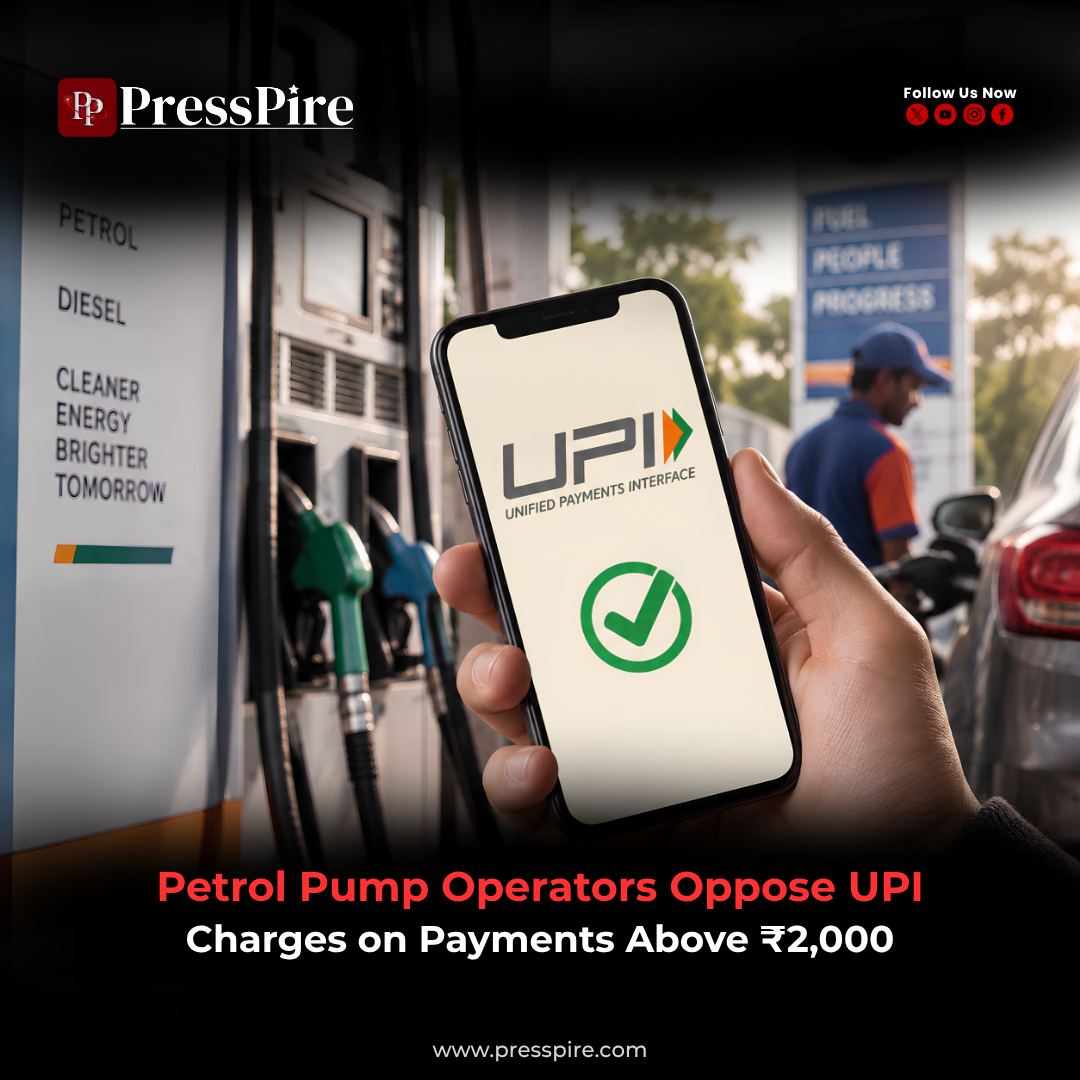
Petrol Pump Operators Oppose UPI Charges on Payments Above ₹2,000 as fuel retailers raise concerns over proposed transaction costs on digital payments. The issue has gained attention as petrol pump dealers highlight the impact of additional charges on businesses that process a large volume of UPI transactions every day.
Unified Payments Interface (UPI) has become one of India’s most widely used digital payment systems, allowing customers to make instant bank-to-bank payments through mobile applications. Fuel stations across the country have adopted UPI payments as customers increasingly prefer cashless transactions.
However, petrol pump operators argue that additional charges on UPI payments could increase operational costs for fuel retailers, especially when profit margins remain limited in the fuel retail business.
The discussion comes at a time when India continues to expand digital payments while businesses evaluate the costs associated with maintaining cashless payment systems.
Petrol Pump Operators Oppose UPI Charges as Digital Payment Costs Rise
Petrol Pump Operators Oppose UPI Charges on Payments Above ₹2,000, highlighting concerns about the financial impact of transaction-related costs.
Fuel stations handle thousands of customer transactions daily, with many customers using digital payment methods for convenience.
Petrol pump dealers operate with relatively low margins compared with the total value of fuel transactions. Because of the high volume of payments, even small transaction-related costs can become significant for businesses.
Operators have raised concerns that additional UPI charges may affect their operating expenses and create challenges for fuel retailers.
UPI Has Become a Major Payment Method at Fuel Stations
Petrol Pump Operators Oppose UPI Charges as UPI has become an important part of India’s digital payment ecosystem.
Since its launch in 2016, UPI has transformed everyday payments by enabling quick and simple transactions through smartphones.
At petrol pumps, UPI payments offer several advantages:
Faster Transactions
Customers can complete payments quickly without handling cash.
Reduced Cash Management
Digital payments reduce the need for businesses to manage large amounts of physical cash.
Greater Convenience
Customers can pay using multiple banking and payment applications.
The widespread adoption of UPI has made it an essential payment option for many businesses, including fuel retailers.
Petrol Pump Operators Raise Concerns Over Additional Transaction Charges
Petrol Pump Operators Oppose UPI Charges because dealers believe additional costs could impact their business operations.
Fuel retail is a high-volume business where thousands of transactions take place daily. Petrol pump operators argue that payment-related charges could add financial pressure.
Dealers have highlighted concerns including:
- Increased operating expenses
- Impact on business margins
- Additional costs for digital payment acceptance
They have requested that digital payment systems remain affordable to encourage continued adoption among consumers and businesses.
Why UPI Costs Matter for Small and Large Fuel Retailers
Petrol Pump Operators Oppose UPI Charges as payment expenses can affect businesses operating on volume-based models.
Unlike some retail businesses that earn higher margins on individual products, fuel stations typically depend on large transaction volumes.
A small additional cost per transaction can accumulate significantly over time.
For fuel retailers, managing expenses such as:
- Employee costs
- Electricity and infrastructure
- Maintenance
- Technology systems
- Payment processing costs
is an important part of business operations.
India’s Digital Payment Growth Creates New Policy Discussions
Petrol Pump Operators Oppose UPI Charges during a period when India’s digital payment ecosystem continues expanding rapidly.
UPI has become a key part of India’s digital infrastructure and has supported the growth of cashless transactions across sectors.
However, the expansion of digital payments also creates discussions around:
- Payment infrastructure costs
- Merchant affordability
- Consumer convenience
- Business sustainability
Balancing the growth of digital payments with the concerns of businesses remains an important policy discussion.
Petrol Pump Operators and the Future of Digital Transactions
Petrol Pump Operators Oppose UPI Charges as businesses continue adapting to India’s changing payment landscape.
Digital payments are expected to remain a major part of the economy as consumers increasingly prefer online transactions.
For businesses, the challenge is creating payment systems that are:
Affordable
Merchants need cost-effective solutions to continue accepting digital payments.
Reliable
Payment systems must work efficiently for daily operations.
Accessible
Small businesses should be able to participate in the digital economy.
The concerns raised by petrol pump operators reflect broader questions about how digital payment ecosystems can support both consumers and businesses.
UPI Charges Debate Highlights India’s Cashless Economy Transition
Petrol Pump Operators Oppose UPI Charges as India continues its transition toward a digital-first economy.
The growth of UPI has changed how consumers and businesses exchange money. From local shops to large retailers, digital payments have become part of everyday commerce.
At the same time, businesses are seeking sustainable models that allow them to offer digital payment options without creating additional financial pressure.
The discussion around UPI charges highlights the evolving relationship between technology, payments, and business operations in India.
For more insights navigate: PressPire | Stories That Shape the Future
Read previous article here: https://presspire.com/?p=1085
Follow PressPire on Facebook | Instagram | LinkedIn | YouTube
PressPire | Stories That Shape the Future