
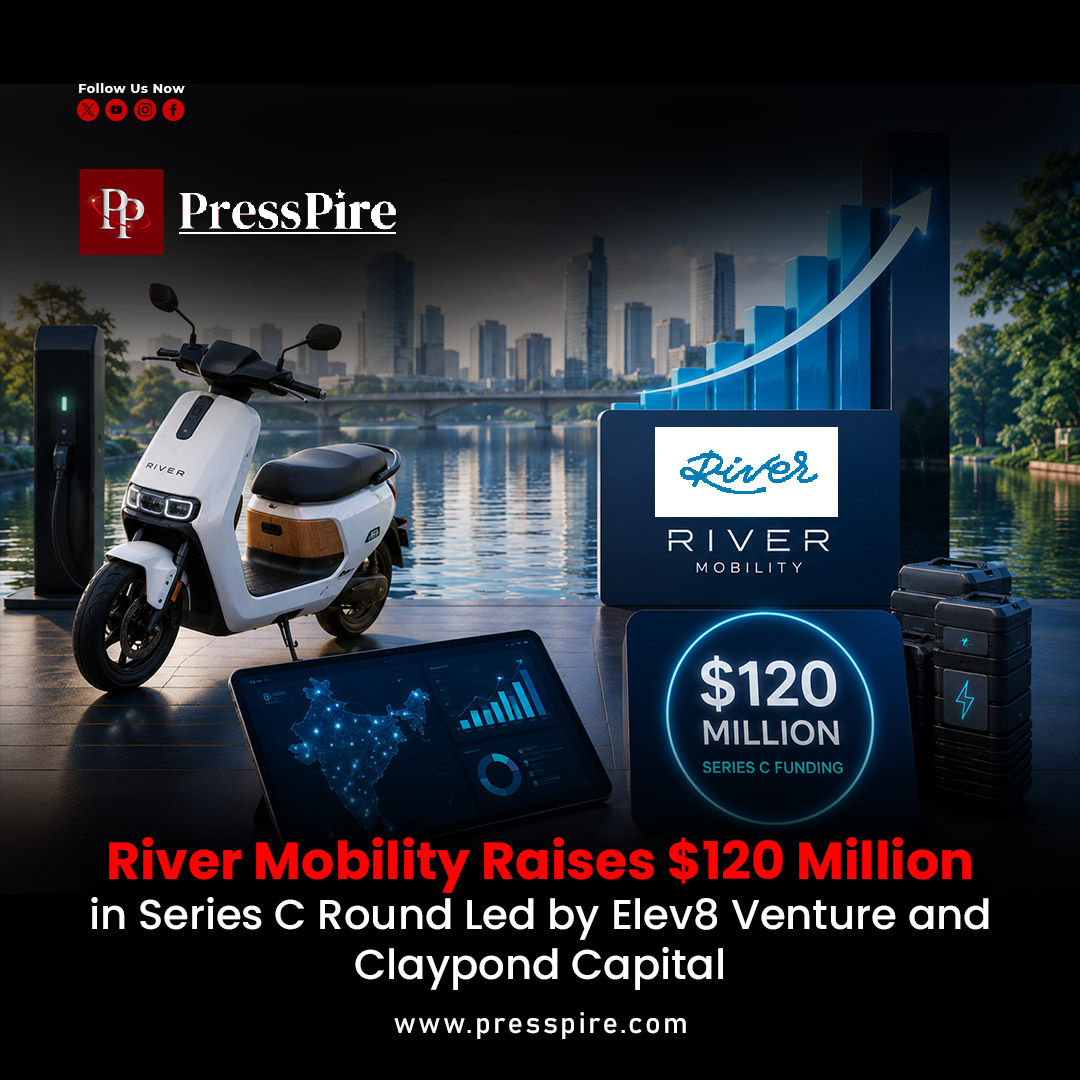
River Mobility Raises $120 Million in Series C Round Led by Elev8 Venture and Claypond Capital
River Mobility raises $120 million in Series C funding led by Elev8 and Claypond to expand EV manufacturing, launch new scooters and scale across India. River Mobility has raised $120 million in Series C funding led by Elev8 Venture Partners and Claypond Capital. The Bengaluru-based electric vehicle startup will use the capital to expand manufacturing, develop new electric scooters and strengthen its presence in India’s growing electric two-wheeler market.
River Mobility Raises $120 Million in Series C Funding
India’s electric mobility sector has attracted another major investment as River Mobility raises $120 million in Series C funding, giving the Bengaluru-based electric vehicle startup fresh capital to accelerate manufacturing, develop new products and expand its footprint across the country.
The funding round was led by Elev8 Venture Partners and Claypond Capital, with existing investors including Yamaha Motor Co., Al-Futtaim Group and Mitsui & Co. also participating. More than 85% of the round came through equity, while the remaining portion was raised through debt.
Founded in 2021, River Mobility has been building its position in India’s electric two-wheeler market with its flagship River Indie electric scooter. The company is now preparing for a much larger expansion, including a new manufacturing facility that could eventually produce up to 80,000 electric scooters every month.
River Mobility Raises $120 Million
The River Mobility funding marks an important turning point for the electric vehicle startup. The $120 million Series C round is the company’s largest disclosed funding round and gives it the financial strength to move from product development and early market expansion towards a more aggressive growth phase. River Mobility plans to use the fresh capital to expand its existing manufacturing operations in Karnataka, build a new production facility and develop additional electric scooter models. The company’s latest fundraise also reflects increasing investor interest in India’s electric mobility sector, particularly as consumers become more comfortable with electric two-wheelers. For River Mobility, the funding is not simply about raising capital; it is about creating the infrastructure needed to support a much larger business. The company now has to translate investor confidence into higher production, stronger sales and a broader customer base.
River Mobility Plans Bigger Manufacturing
A major focus of the River Mobility Series C funding will be manufacturing expansion. The company currently has a production capacity of around 10,000 scooters a month at its existing Karnataka facility. It plans to expand that factory while building another manufacturing plant with a potential capacity of up to 80,000 scooters every month. The proposed increase represents a significant jump in production capability and shows how seriously River Mobility is preparing for its next growth stage. Manufacturing scale will become particularly important as the company introduces more products and expands its distribution network. Higher capacity could allow River Mobility to respond faster to demand while improving its ability to serve customers across different parts of India. However, scaling production also brings new challenges, including maintaining quality, managing supply chains and ensuring consistent after-sales support. The success of the company’s manufacturing strategy will therefore play a major role in determining whether its latest funding can translate into sustainable growth.
River Mobility Builds on River Indie
The River Indie remains central to River Mobility’s journey so far. Designed as a utility-focused electric scooter, the Indie has helped the startup differentiate itself in a market increasingly crowded with electric two-wheelers. River Mobility has positioned the scooter around practicality, versatility and everyday urban use rather than treating it simply as an electric alternative to a petrol scooter. According to government vehicle-registration data cited by Reuters, River had sold 27,533 Indie scooters as of July 2026. The company expects its annual sales to more than double, and potentially triple, compared with the 28,000 units sold in 2025. These numbers indicate that River Mobility is still operating at a smaller scale than India’s largest electric two-wheeler manufacturers, but its sales trajectory is moving in the right direction. The next challenge will be turning the Indie’s early market acceptance into a much larger and more consistent customer base.
River Mobility Targets India’s EV Market
The timing of the River Mobility $120 million funding is significant because India’s electric two-wheeler market continues to develop rapidly. Rising interest in cleaner transportation, evolving consumer preferences and improvements in electric vehicle technology are creating new opportunities for manufacturers. River Mobility, however, is entering a market where customers already have several established choices. Electric scooters from Ather Energy, TVS Motor and Bajaj Auto have achieved considerably larger sales volumes, giving those companies strong advantages in distribution, manufacturing and brand recognition. River Mobility is attempting to compete differently by combining utility-focused design with a premium positioning. The company’s strategy is particularly relevant as Indian consumers increasingly look beyond basic affordability when choosing an electric scooter. Range, storage, design, performance, charging convenience and service support are all becoming important purchasing factors. River Mobility’s ability to address these expectations while maintaining competitive pricing will determine how effectively it can capture the next wave of India’s EV demand.
River Mobility Expands Its Electric Scooter Portfolio
Another important part of River Mobility’s growth strategy is the expansion of its product portfolio. The company plans to introduce a second premium utility electric scooter by mid-2027 and is already developing a third model. This move could help River Mobility reach more customers and reduce its dependence on a single product. A wider portfolio would also allow the company to address different consumer requirements, price points and usage patterns. Product expansion is particularly important in India’s electric two-wheeler market because larger manufacturers already offer multiple models. River Mobility will therefore need to ensure that its upcoming scooters have clear reasons for customers to choose them over competing products. At the same time, new launches will need to retain the design and utility characteristics that have helped the River brand stand apart. If executed effectively, the new models could increase sales volumes while making better use of River Mobility’s expanding manufacturing and distribution infrastructure.
River Mobility Gains Investor Confidence
The latest River Mobility funding also demonstrates continued investor confidence in the company’s long-term potential. The startup has attracted a diverse group of strategic and financial backers, including Yamaha Motor Co., Mitsui & Co., Al-Futtaim Group, Toyota Ventures, Marubeni Ventures, Maniv and Lowercarbon Capital. Yamaha’s backing is particularly notable because it connects River Mobility with an established global automotive company. Existing investors participating again in the Series C round provides another indication that the company has retained support as it moves towards a larger operating scale. Earlier reports had indicated that River was seeking between $80 million and $100 million from investors including Claypond Capital and Elev8 Venture Partners. The eventual $120 million round is larger than those earlier expectations, giving River additional financial capacity for its manufacturing and product roadmap.
River Mobility Faces Strong EV Competition
Despite the size of its latest fundraise, River Mobility faces intense competition in India’s electric two-wheeler market. Ather Energy, TVS Motor and Bajaj Auto have already established substantial market positions. Reuters reported that by July 2026, Ather had sold 200,121 electric two-wheelers, while TVS and Bajaj had sold 307,760 and 263,959 units respectively, according to Vahan data. River’s 27,533 units are significantly lower, highlighting the scale of the challenge ahead. The company will need to increase production while simultaneously expanding dealerships, service infrastructure and brand awareness. Electric vehicle customers are increasingly evaluating the entire ownership experience rather than only the vehicle itself. Reliable servicing, spare parts availability, charging support and software experience can all influence purchasing decisions. River Mobility therefore has to build more than scooters. It has to build an ecosystem that can support customers as the company expands into new cities and markets.
River Mobility’s Growth Road Ahead
The River Mobility Series C funding gives the company an opportunity to accelerate at a critical stage of its journey. Founded by Aravind Mani and Vipin George in 2021, River has moved from developing its first electric scooter to building a wider manufacturing and product strategy. Its revenue also grew more than fourfold in fiscal 2026, according to CEO Aravind Mani, after the company reported revenue of about ₹1 billion in fiscal 2025. The next phase will test whether River Mobility can turn rapid growth into a sustainable business. Manufacturing expansion, new electric scooters and stronger distribution could significantly increase its market presence, but each will require careful execution. The company will also need to compete against manufacturers with deeper pockets and much larger customer networks. For River Mobility, the $120 million investment provides the resources. The next challenge is converting those resources into products customers want, factories that can deliver them and a brand that can compete nationally.
River Mobility Enters a New Phase
The River Mobility $120 million Series C funding represents a major milestone for the Bengaluru-based electric vehicle startup. Led by Elev8 Venture Partners and Claypond Capital, the funding will support manufacturing expansion, new electric scooter launches and River Mobility’s broader growth ambitions in India.
The company now has the capital and investor backing to enter a significantly larger phase of its journey. Its ability to scale production, expand its product range and build a dependable customer ecosystem will determine how far it can go.
As India’s electric mobility market continues to evolve, River Mobility is betting that distinctive design, practical electric scooters and aggressive expansion can help it move from an emerging EV startup to a recognised name in India’s electric two-wheeler industry.
For more insights navigate: PressPire | Stories That Shape the Future
Read previous article here: https://presspire.com/meta-apology/
Follow PressPire on Facebook | Instagram | LinkedIn | YouTube
PressPire | Stories That Shape the Future